
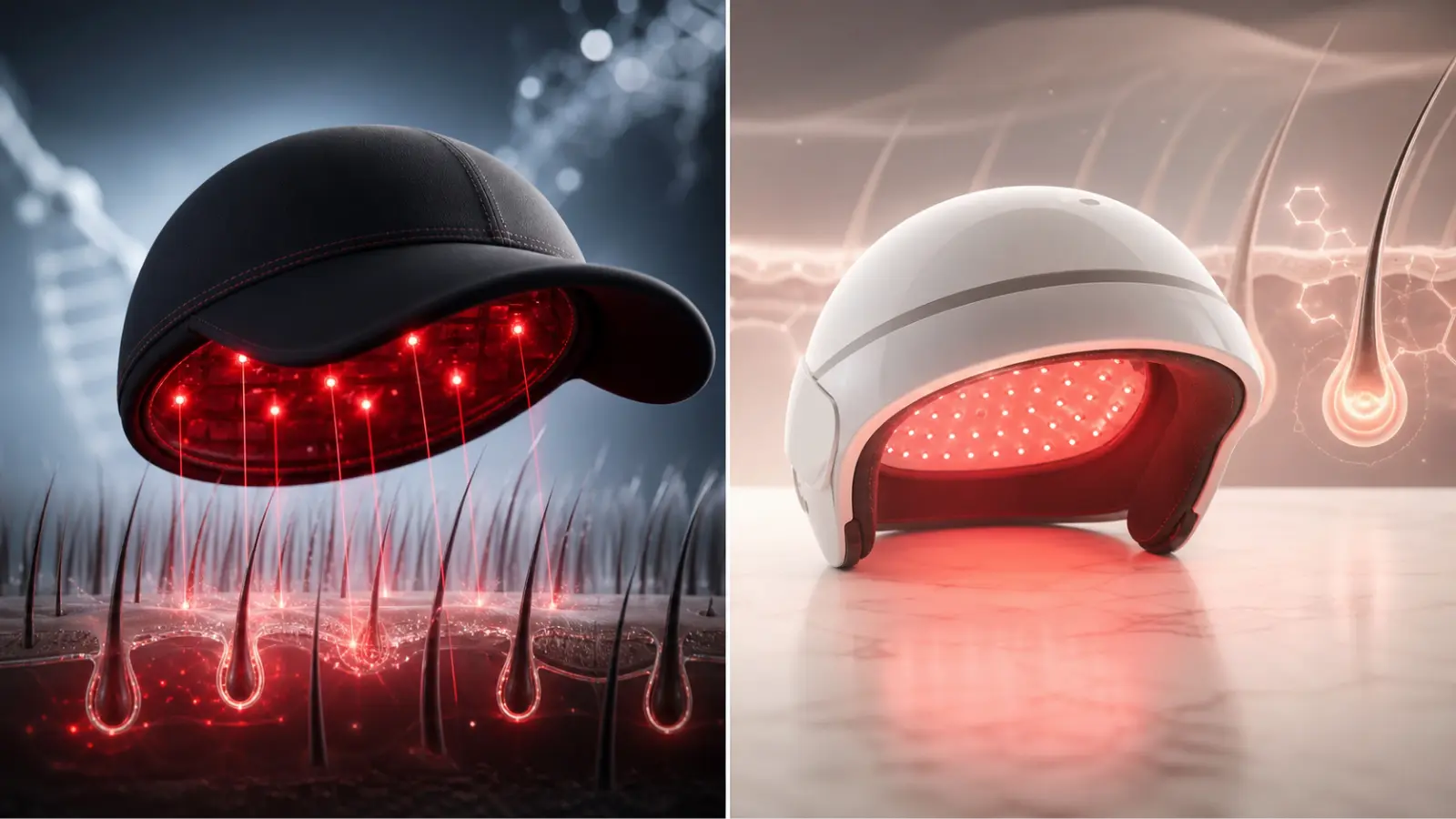
If you’re shopping for a red light therapy cap or helmet for hair growth, you’ll quickly encounter a fundamental choice: laser diodes (LLLT — Low Level Laser Therapy) or LEDs (Light Emitting Diodes). Brands argue passionately for both. Here’s what the science actually says.
The Key Difference: Coherence
The fundamental distinction between lasers and LEDs is coherence. Laser light is coherent — all photons travel in the same direction, same phase, same wavelength. LED light is non-coherent — it scatters in multiple directions and covers a broader wavelength band.
This matters in theory because coherent light penetrates tissue differently — it maintains intensity over distance rather than diffusing. In practice, when you’re treating the scalp (tissue depth of 3–5mm to reach follicles), the difference in effective penetration between a 650nm laser and a high-quality 650nm LED is smaller than the marketing suggests.
What the Research Shows
The Case for Lasers
The strongest early clinical and regulatory evidence for home-use light devices for androgenetic alopecia came largely from laser-based devices in the red-light range, especially around 650–655 nm. The 2013 Lanzafame et al. study in Lasers in Surgery and Medicine used a helmet-like TOPHAT655 device combining 655 nm lasers and LEDs and reported a significant increase in hair counts versus sham. The 2014 Jimenez et al. multicenter randomized, sham-controlled study evaluated FDA-cleared HairMax LaserComb devices and found significant terminal hair-density improvements in both men and women.
Because many early FDA-cleared hair-growth devices were laser-based, lasers have a longer and more direct regulatory history for hair-growth claims than many LED-only devices. Brands such as HairMax, Capillus, Kiierr, and Theradome have built their positioning around laser-based 510(k)-cleared devices. That said, FDA clearance means substantial equivalence for a specified intended use; it should not be framed as FDA “approval” or as definitive proof that lasers outperform LEDs.
The Case for LEDs
LED technology has narrowed the practical gap with laser-based devices, but the clinical evidence is still stronger for laser-diode hair-growth devices because more trials and FDA-cleared products have used lasers. Reviews of low-level light/laser therapy suggest that red-light photobiomodulation can improve hair density in androgenetic alopecia, while emphasizing that optimal wavelength, dose, power, and treatment parameters remain unsettled. Current evidence does not clearly prove that coherence alone makes lasers clinically superior to LEDs, but there also is not strong head-to-head clinical evidence showing that LEDs and lasers perform equivalently for hair growth under matched conditions.
LEDs have practical advantages: lower manufacturing cost (more emitters per dollar), broader coverage per diode, no risk of coherent beam concentration, and more design flexibility. High-quality LED devices like the iRestore (laser + LED hybrid) and Revian Red (LED-only clinical system) have produced positive outcomes in both clinical and consumer settings.
Practical Comparison
| Laser Diodes | LEDs | |
|---|---|---|
| Light coherence | Coherent | Non-coherent |
| Penetration depth | Slightly better at depth | Comparable at scalp depth |
| Clinical evidence | More studies, older literature | Growing, equivalent outcomes |
| FDA clearances | More (historical head start) | Growing (iRestore, others) |
| Cost per emitter | Higher | Lower |
| Coverage flexibility | Lower (point source) | Higher (broader emission) |
| Heat risk | Low (LLLT) | Very low |
The Honest Verdict
For scalp hair growth applications, the laser vs LED distinction is largely academic if both are delivering the right wavelength (650–660nm) at adequate dose. The practical factors that matter more are: total emitter count (coverage), session time, device quality, and how consistently you’ll use it.
If you want the most clinically validated choice with the longest regulatory track record: choose a laser-diode device (Kiierr272Premier or Capillus Pro). If you want maximum coverage, lower cost, and a device that’s still FDA cleared: a high-quality LED option like iRestore is a legitimate alternative.
What About Red Light Panels for Hair?
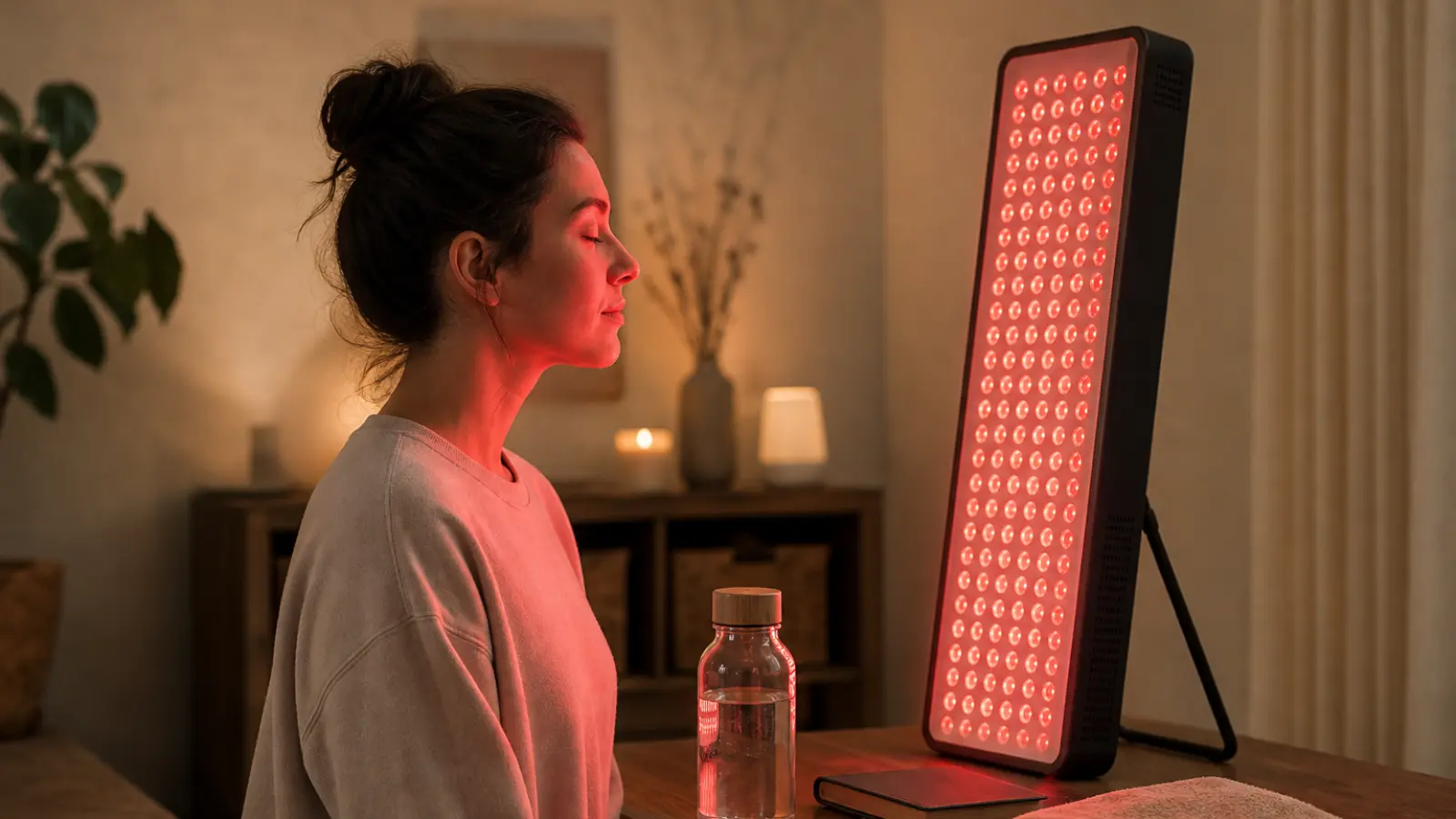
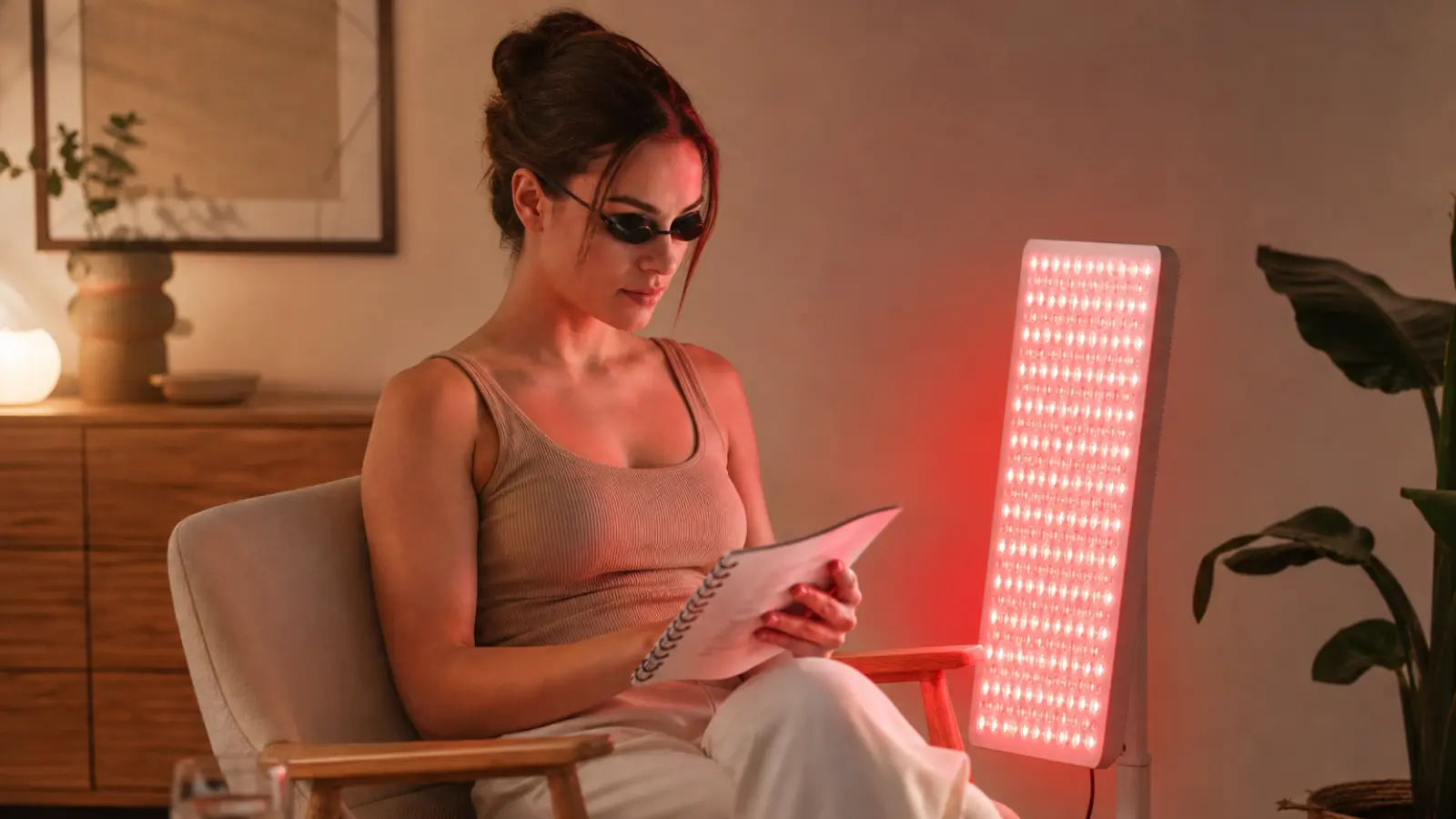
If you already own a MitoPRO 1500X or similar panel, you can use it for scalp therapy. Position the panel above your head while seated, targeting the 630nm and 660nm channels at your scalp for 10–15 minutes per session. You won’t match the hands-free convenience of a cap, but the therapeutic wavelengths and dose are equivalent to what the research uses — and you get full-body benefits in the same session.
Affiliate Disclosure: Some links on this page are affiliate links. If you purchase through them, we may earn a small commission at no extra cost to you. We only recommend products we have independently evaluated.