
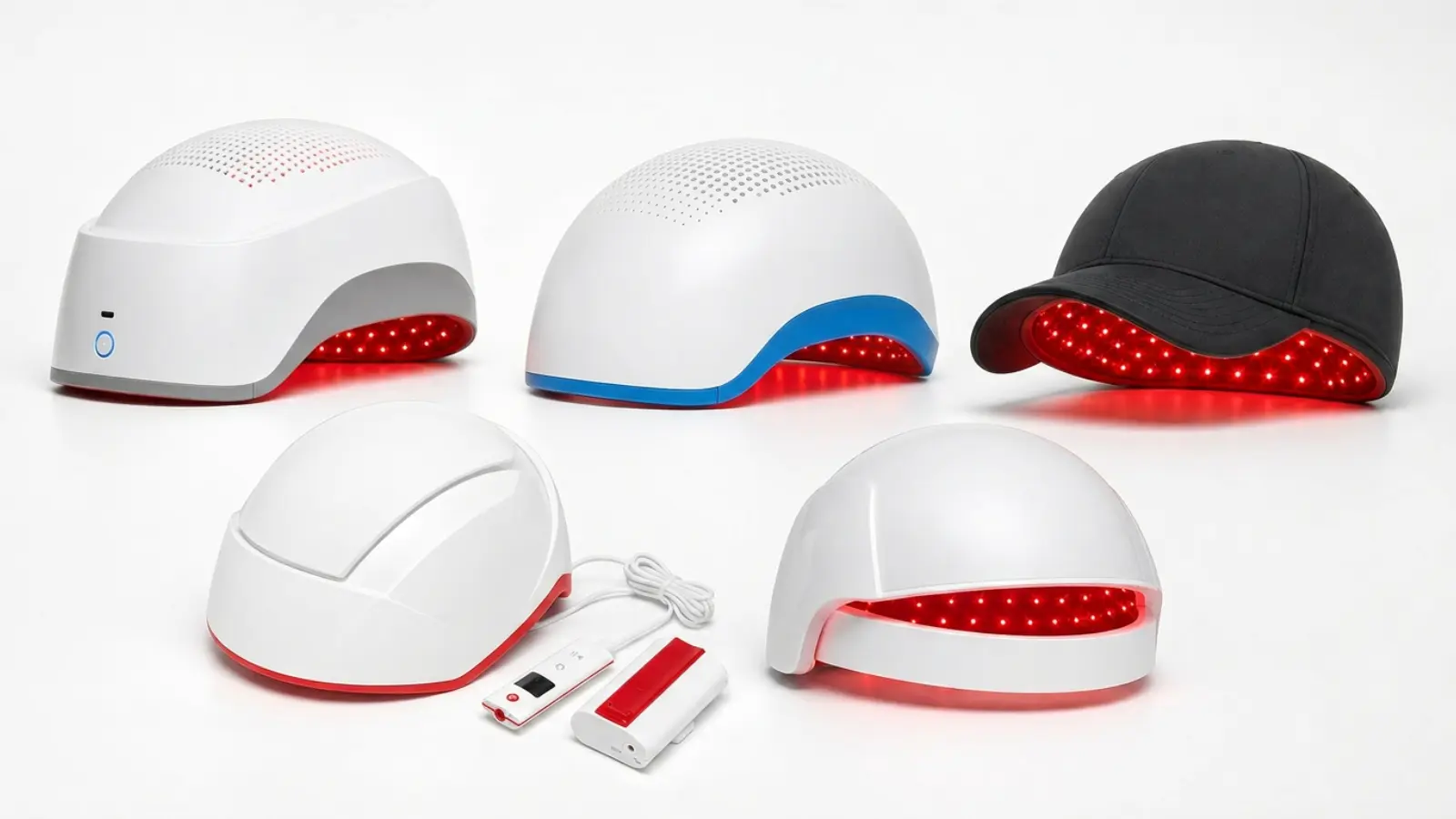
Red light therapy helmets cover the entire scalp in one session, making them the most efficient wearable format for androgenetic alopecia (pattern hair loss) and general hair thinning. Here are the five best options for 2026, ranked by clinical backing, coverage, and value.
New to photobiomodulation? Explore the complete Red Light Therapy Guide covering wavelengths, dosing, treatment distance, near infrared light, and how modern red light therapy panels work.
Quick note on the science: The most-studied wavelengths for hair-growth photobiomodulation are in the red-light range, especially around 650nm for laser devices and roughly 630 to 660nm for LED-based systems. Research suggests these wavelengths may help stimulate follicle activity, support cellular energy production, and prolong the anagen, or growth, phase of the hair cycle.
We cover the laser vs. LED debate in detail here, but for helmets and caps, most top-tier devices now use laser diodes, high-quality LED arrays, or a combination of both at hair-relevant wavelengths.We cover the laser vs LED debate in detail here — but for helmets, most top-tier devices now use laser diodes or high-quality LED arrays at these wavelengths.
Top 5 at a Glance
| Helmet | Technology | FDA Status | Price (approx) |
|---|---|---|---|
| iRestore Professional | Laser + LED (282 emitters) | FDA Cleared | ~$899 |
| Theradome PRO LH80 | Laser (80 lasers) | FDA Cleared | ~$995 |
| Kiierr272Premier Cap | Laser (272 diodes) | FDA Cleared | ~$1129 |
| HairMax Lumina | Laser (272 medical-grade) | FDA Cleared | ~$1999 |
| iRestore Essential | Laser + LED (120 emitters) | FDA Cleared | ~$499 |
#1 Best Overall: iRestore Professional
The iRestore Professional is one of the most feature-complete hair growth helmets on the market. With 282 total laser and LED emitters designed to cover the scalp, it offers strong coverage at a relatively accessible price point compared with many laser-only caps. The device is FDA cleared, and iRestore cites clinical-study data showing meaningful improvements in hair count with its light-therapy system. Its hands-free helmet design makes treatment simple, with 25-minute sessions that can be done while reading, working, or relaxing.
Best for: Users wanting broad scalp coverage, a strong feature set, and good overall value in a helmet-style device.
Cons: Low powered LEDs mixed with laser diodes.
Verdict: The overall value leader in the helmet category.
#2 Most Clinically Focused: Theradome PRO LH80
The Theradome PRO LH80 uses 80 laser diodes at a longer red wavelength than many competing devices. Theradome positions this 680nm laser-only system around clinical precision, consistent scalp coverage, and hands-free use. The PRO LH80 is FDA cleared and features a dome-style design with a built-in air foil for heat management, and user replaceable rechargeable battery. Its laser-only approach means fewer total emitters than some hybrid laser/LED helmets, but the device is built around a focused protocol and a well-established brand presence in the LLLT hair-growth category.
Best for: Users who prefer a laser-only helmet from a clinically focused brand.
Cons: 80 laser diodes may not be enough for diffuse thinning.
Verdict: A premium, research-oriented option for users who want a dedicated laser helmet rather than a hybrid LED/laser system.
#3 Best Cap-Style Helmet: Kiierr272Premier
The Kiierr272Premier blurs the line between a helmet and a cap. It looks more like a discreet baseball cap but houses 272 medical-grade 650nm laser diodes underneath the cover. The major advantage is wearability: you can use it while working, reading, or doing household tasks in a way that may feel more natural than a full dome helmet. The device is FDA cleared and is typically used for 30-minute sessions every other day.
Best for: Users who want a high-diode-count laser device in a more discreet cap-style format.
Cons: Poor ventilation and heat management may diode performance and life expectancy.
Verdict: The strongest pick for people who want helmet-level coverage in a more wearable design.
#4 Best Premium Laser Cap: HairMax Lumina 272
HairMax is one of the original names in at-home laser hair growth. Its LaserComb was the first FDA-cleared light therapy device for hair loss in 2007, and the Lumina 272 continues that legacy in a flexible cap-style format. The HairMax Lumina uses 272 medical-grade laser diodes at 650nm, with no LEDs, and is designed for short treatment sessions compared with many other devices. At around $1,999, it sits firmly in the premium category, but it offers one of the highest laser-diode counts available in a home-use hair growth device.
Best for: Users who want a premium laser-only cap from one of the most established LLLT hair-growth brands.
Cons: High price tag, overkill for most hair loss types.
Verdict: A high-end laser cap with strong brand credibility and a large diode count, but at a significantly higher price.
#5 Best Entry Point: iRestore Essential
The iRestore Essential is the more affordable entry point in the iRestore lineup. It uses 120 total light emitters: 51 lasers and 69 LEDs. That makes it less powerful and less densely covered than the iRestore Professional, but it still gives users access to an FDA-cleared hands-free helmet format at a much lower price. The tradeoff is coverage and intensity: users looking for maximum scalp coverage may prefer the Professional model, while beginners may appreciate the lower cost of entry.
Best for: Users who want to try an FDA-cleared hair growth helmet without committing to a higher-end device.
Cons: Low powered LEDs mixed with laser diodes. Low laser diode count may be insufficient for diffuse thinning.
Verdict: The best budget-friendly helmet option for beginners or cautious first-time users.
Can a Red Light Panel Replace a Hair Helmet?
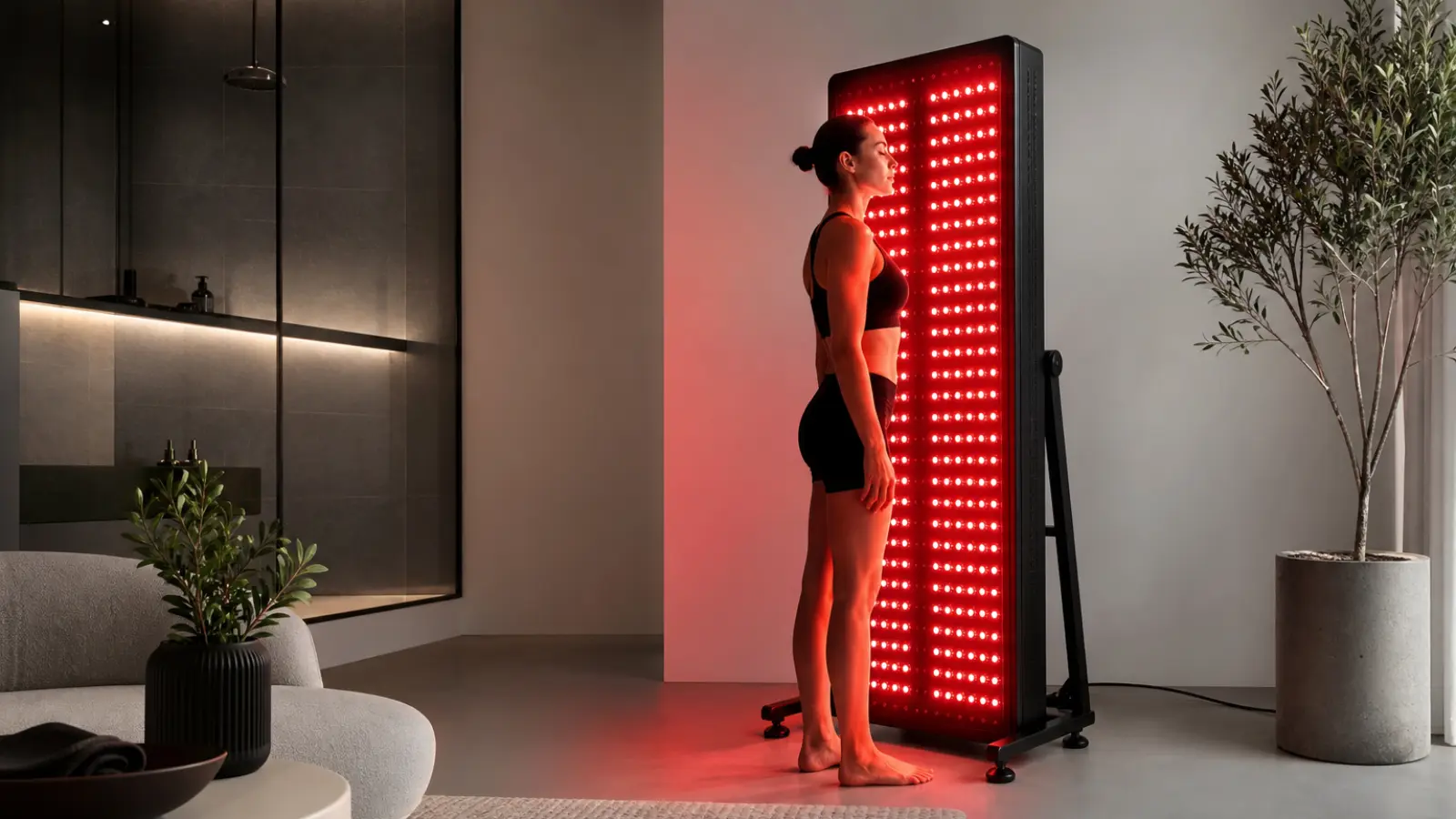
If you already own a full-body panel like the MitoPRO 1500X, you can absolutely use it for scalp therapy — position the panel above your head while seated, targeting the 630nm and 660nm wavelengths at your scalp for 10–15 minutes. You won’t get the same even coverage as a dedicated helmet, but you’ll hit the therapeutic wavelengths and dose targets used in the research. For users who want systemic RLT benefits and hair growth support, this is a cost-effective two-in-one approach.
Affiliate Disclosure: Some links on this page are affiliate links. If you purchase through them, we may earn a small commission at no extra cost to you. We only recommend products we have independently evaluated.