
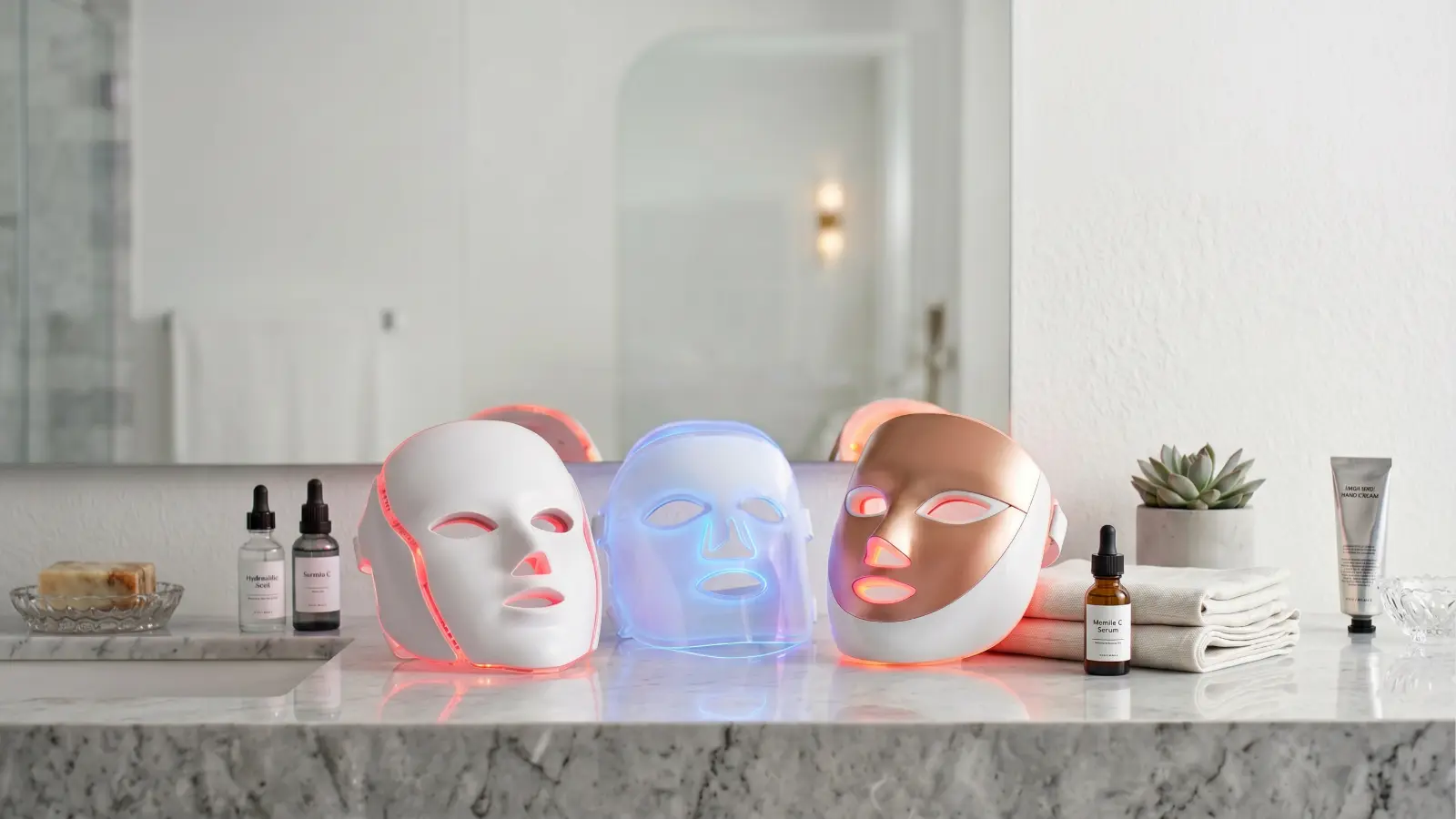
The LED face mask market has matured rapidly. After years of gimmicky silicone masks with questionable specs, a handful of genuinely effective devices have emerged. Here’s our ranked list for 2026 — based on wavelength accuracy, build quality, clinical backing, and value.
Our Top Picks at a Glance
| Mask | Wavelengths | Best For | Price |
|---|---|---|---|
| Mito Red MitoGLOW | 4 (630, 660, 830, 850nm) | Most wavelength coverage | ~$475 |
| Omnilux Contour Face | 2 (633nm, 830nm) | Dermatologist-recommended | ~$395 |
| CurrentBody Skin LED | 2 (633nm, 830nm) | Flexible fit, value | ~$470 |
| Hooga LED Face Mask | 2 (660nm, 850nm) | Budget pick | ~$158 |
| Omnilux Clear | Blue + red | Acne-focused | ~$395 |
#1 Most Advanced: Mito Red MitoGLOW
The MitoGLOW stands out as the only consumer face mask to include four distinct therapeutic wavelengths: 465nm, 590nm, 633nm, and 830nm. Most competitors offer two. The air cushion standoff design maintains proper therapeutic distance from the skin (critical for consistent dosing), and five treatment modes let you customize protocols by wavelength combination and pulsing pattern.
The brand’s track record on panels — particularly the MitoPRO 1500X and MitoADAPT MAX 4.0 — gives us confidence in their LED quality and commitment to spectral accuracy. For users who take the wavelength science seriously, the MitoGLOW is the most capable mask on the market.
#2 Best Clinical Track Record: Omnilux Contour Face
Omnilux has FDA clearance and a body of published clinical research that most competitors lack. The Contour Face uses 633nm and 830nm — the two wavelengths with the strongest collagen synthesis and anti-aging evidence. The flexible silicone design conforms to facial contours better than rigid masks. At $395, it’s not cheap, but the brand’s clinical credibility justifies the premium.
Key limitation: one mode only, two wavelengths only. There’s no protocol flexibility and no NIR-only or pulsed options.
#3 Best for Value and Flexibility: CurrentBody Skin LED Mask
CurrentBody’s flexible LED mask uses the same 633nm and 830nm wavelength pair as Omnilux and offers a very similar clinical profile at a comparable price. The flexible design earns high marks for comfort and LED-to-skin contact. A solid choice if Omnilux is out of stock or for users who prioritise flexibility over brand prestige.
#4 Best Budget: Hooga LED Face Mask
For under $160, the Hooga mask delivers the two core wavelengths (660nm red, 850nm NIR) that underpin most LED mask research. Build quality is functional rather than premium, and there’s no FDA clearance or clinical backing. But for users starting out or testing whether face mask therapy is right for them before committing to a premium device, it covers the fundamentals.
#5 Best for Acne: Omnilux Clear
The Omnilux Clear adds blue light (415nm) to the red wavelength — targeting acne-causing P. acnes bacteria alongside collagen and inflammation pathways. FDA cleared for acne treatment, with published clinical studies. If acne is your primary goal, the Clear is the most clinically validated device in the mask format.
What to Avoid
The mask market is flooded with cheap silicone devices making inflated claims. Red flags: vague wavelength claims (“red light, blue light, green light”), no LED count or irradiance data, claims to treat everything from acne to hair loss simultaneously, and prices under $50. A mask that doesn’t specify its wavelengths in nanometres is not worth your time.
Also worth noting: any mask claiming irradiance above 50–60 mW/cm² at the skin surface should be questioned. There are no industry standards for how LED mask irradiance is measured. Some brands test with the LEDs touching the measuring device — figures that are meaningless in practice.
Affiliate Disclosure: Some links on this page are affiliate links. If you purchase through them, we may earn a small commission at no extra cost to you. We only recommend products we have independently evaluated.