
Red light therapy dosing is one of the most misunderstood parts of photobiomodulation. More power does not automatically mean better results, and excessively long sessions can sometimes be less effective than shorter, properly dosed treatments.
In PBM research, dose is usually measured in joules per square centimeter (J/cm²), which estimates how much light energy reaches a specific area of tissue during a session.
Quick Takeaways
- PBM dose is measured in joules per square centimeter (J/cm²)
- More light is not always better
- Irradiance changes significantly with distance
- Session time matters just as much as panel power
- Most PBM protocols use repeated consistent sessions
Quick Reminder: Total PBM dose depends on irradiance, treatment distance, session time, beam angle, and consistency — not just panel wattage or advertised irradiance numbers.
Understanding PBM Dose (J/cm²)
The standard PBM dosing unit is joules per square centimeter (J/cm²), which estimates how much light energy is delivered to a given area during treatment.
Dose Formula
Dose (J/cm²) = Irradiance (mW/cm²) × Time (seconds) ÷ 1000
For example, a device delivering 50 mW/cm² for 10 minutes (600 seconds) produces an approximate dose of 30 J/cm².
Example Dose Calculation
(50 × 600) ÷ 1000 = 30 J/cm²
Why Irradiance Numbers Can Be Misleading
One of the biggest challenges in PBM dosing is the lack of industry standard irradiance testing. Researchers, manufacturers, and reviewers often use different sensors, distances, beam angles, and testing methodologies, while some studies rely directly on manufacturer specifications without independent verification.
As a result, advertised irradiance values can vary dramatically and may not reflect real world treatment distances or practical PBM use conditions.
Distance Matters
As treatment distance increases:
- irradiance decreases
- coverage area increases
- dose delivery changes significantly
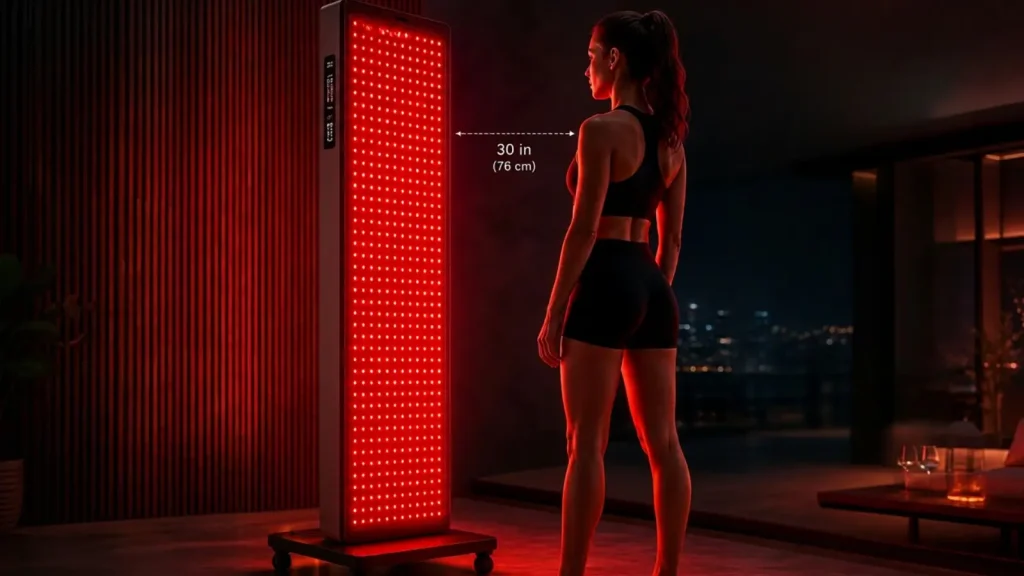
Irradiance decreases rapidly as treatment distance increases.
| Distance | Relative Irradiance | Coverage Area |
|---|---|---|
| 2–3 inches | Highest | Smallest |
| 6–12 inches | Moderate | Balanced |
| 18–36 inches | Lower | Largest |
The Biphasic Dose Response
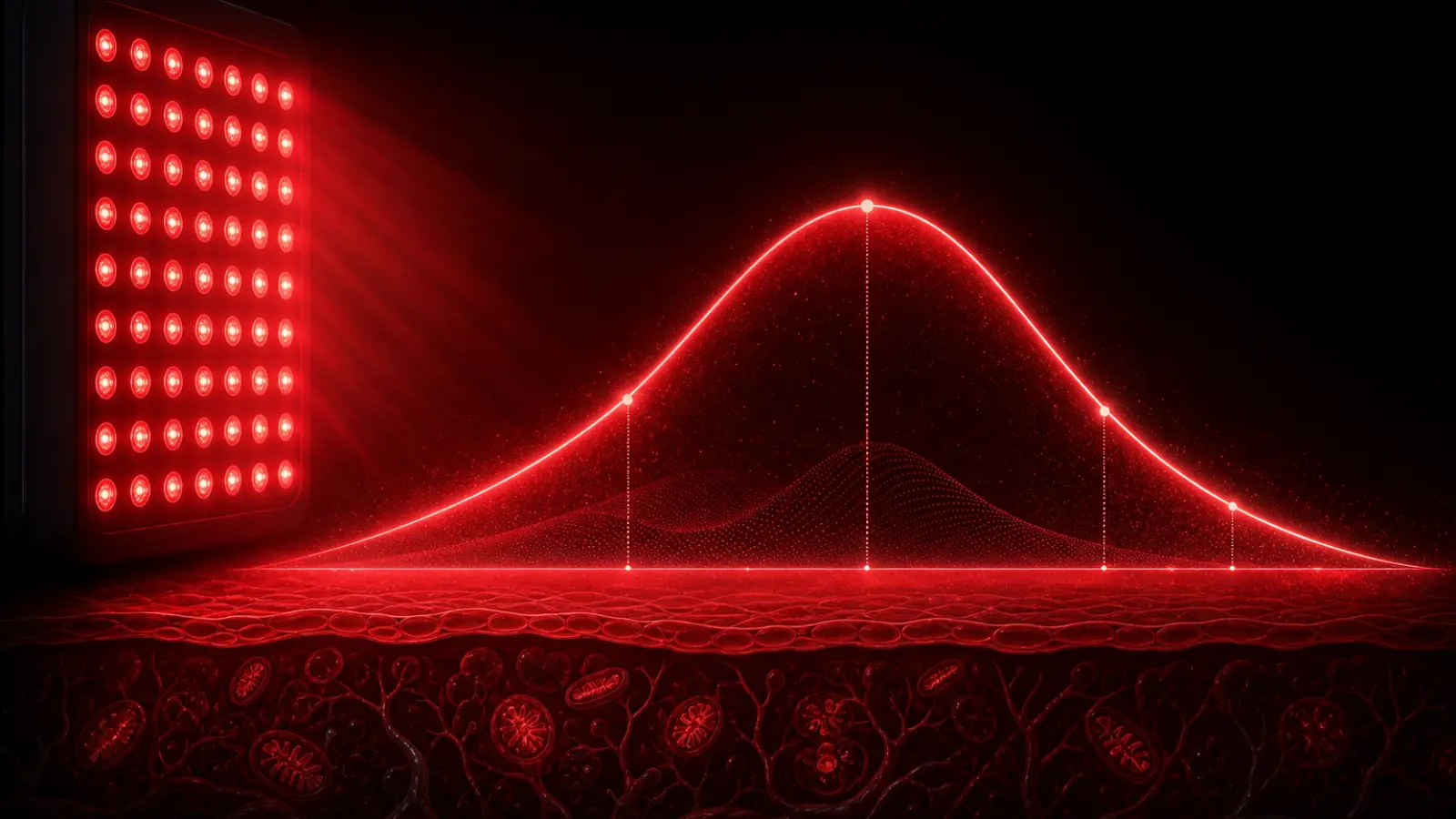
One of the most important PBM concepts is the biphasic dose response, sometimes called the Arndt-Schulz curve. In simple terms, insufficient light may produce little effect, while excessively high doses may reduce effectiveness.
Researchers believe this occurs because cellular responses to light are not linear. At lower and moderate doses, photobiomodulation may help stimulate beneficial biological activity, while excessively high exposure may create diminishing returns or temporary inhibition of those same responses. This is one reason why longer sessions and extremely high irradiance are not always more effective in PBM applications.
The practical takeaway is that consistent moderate dosing is often more important than maximizing intensity or session duration.
More Light Is Not Always Better
PBM appears to follow a biphasic dose response, meaning too little light may produce minimal benefit, while too much light may reduce the desired effect. The goal is consistent, moderate exposure rather than maximum intensity.
Practical Dose Ranges
Dose recommendations vary widely depending on wavelength, tissue depth, treatment distance, beam angle, irradiance, and the specific treatment target. Skin-focused applications often use lower doses than deeper muscle or joint protocols, while treatment distance can dramatically change the amount of light energy reaching the tissue.
Because of these variables, PBM dosing is rarely as simple as following one universal J/cm² target. Two devices with the same advertised irradiance may deliver very different real-world doses depending on optics, wavelength distribution, and treatment distance.
For most users, the goal should not be chasing the highest possible dose or irradiance number. Consistent moderate exposure at practical treatment distances is generally a more realistic approach than maximizing intensity or session duration.
| Application | Approximate Dose Range | Typical Session Length |
|---|---|---|
| Skin Health | 3–6 J/cm² | 5–10 minutes |
| Muscle Recovery | 6–10 J/cm² | 10–20 minutes |
| Joint Areas | 10–20 J/cm² | 15–30 minutes |
| Full Body Sessions | 10–30 J/cm² | 10–20 minutes |
Session Frequency
Many PBM protocols use repeated treatments several times per week rather than infrequent longer sessions. Consistency is typically more important than occasional high-dose exposure.
General Frequency Guidelines
- 3–5 sessions per week for most wellness routines
- Daily use is common in some protocols
- Consistency usually matters more than intensity
- Lower doses often work better for longer-term routine
Common Dosing Mistakes
Sitting Too Close
Extremely close distances can create uneven exposure and unnecessarily high intensity.
Overly Long Sessions
Longer sessions do not automatically produce better PBM outcomes.
Consistent Scheduling
Repeated moderate sessions are commonly used in PBM research protocols.
Track Your Distance
Treatment distance can significantly affect delivered irradiance and dose.
Final Thoughts
Red light therapy dosing is ultimately about balance rather than maximum intensity. Irradiance, distance, session duration, wavelength, and treatment consistency all work together to determine total PBM dose.
Instead of chasing extreme irradiance numbers or excessively long sessions, most users will likely benefit more from consistent moderate exposure at practical treatment distances.
Medical Disclaimer: This article is intended for general wellness and educational purposes only and is not medical advice. Research on photobiomodulation and red light therapy is ongoing, and responses may vary between individuals. Consult a qualified healthcare professional regarding injuries, chronic pain, eye conditions, or medical concerns before beginning any new wellness protocol.
Frequently Asked Questions
What is the ideal PBM dose for red light therapy?
There is no single universal PBM dose. Ideal exposure depends on wavelength, irradiance, treatment distance, tissue depth, and the intended application. Most protocols focus on moderate consistent dosing rather than maximum intensity.
How is red light therapy dose calculated?
PBM dose is typically measured in joules per square centimeter (J/cm²) using irradiance and treatment time. The standard formula is:
Dose (J/cm²) = Irradiance (mW/cm²) × Time (seconds) ÷ 1000
Why do irradiance numbers vary between brands?
There are currently no universal PBM testing standards. Manufacturers and reviewers often use different sensors, distances, beam angles, and testing methodologies, which can produce dramatically different irradiance readings.
Can too much red light therapy reduce effectiveness?
Possibly. PBM appears to follow a biphasic dose response, meaning insufficient light may produce little effect while excessively high doses may become less effective over time.
What treatment distance is commonly used for red light therapy?
Many PBM protocols use treatment distances between approximately 2 and 12 inches depending on the device type, irradiance level, and treatment target. Closer distances increase intensity while farther distances increase coverage area.
Research References
Hamblin MR. Mechanisms and applications of photobiomodulation. https://pmc.ncbi.nlm.nih.gov/articles/PMC5523874/
World Association for Photobiomodulation Therapy (WALT) dosage recommendations. https://waltpbm.org/documentation-links/recommendations/
Huang YY et al. Biphasic dose response in low level light therapy. https://pmc.ncbi.nlm.nih.gov/articles/PMC3315174/