

Quick Answer
Transcranial photobiomodulation, or tPBM, uses red or near infrared light on the head to support brain function. Early research suggests it may help support mitochondrial energy production, cerebral blood flow, inflammation balance, attention, working memory, and executive function. The evidence is promising, but larger clinical trials are still needed.
What Is Transcranial Photobiomodulation?
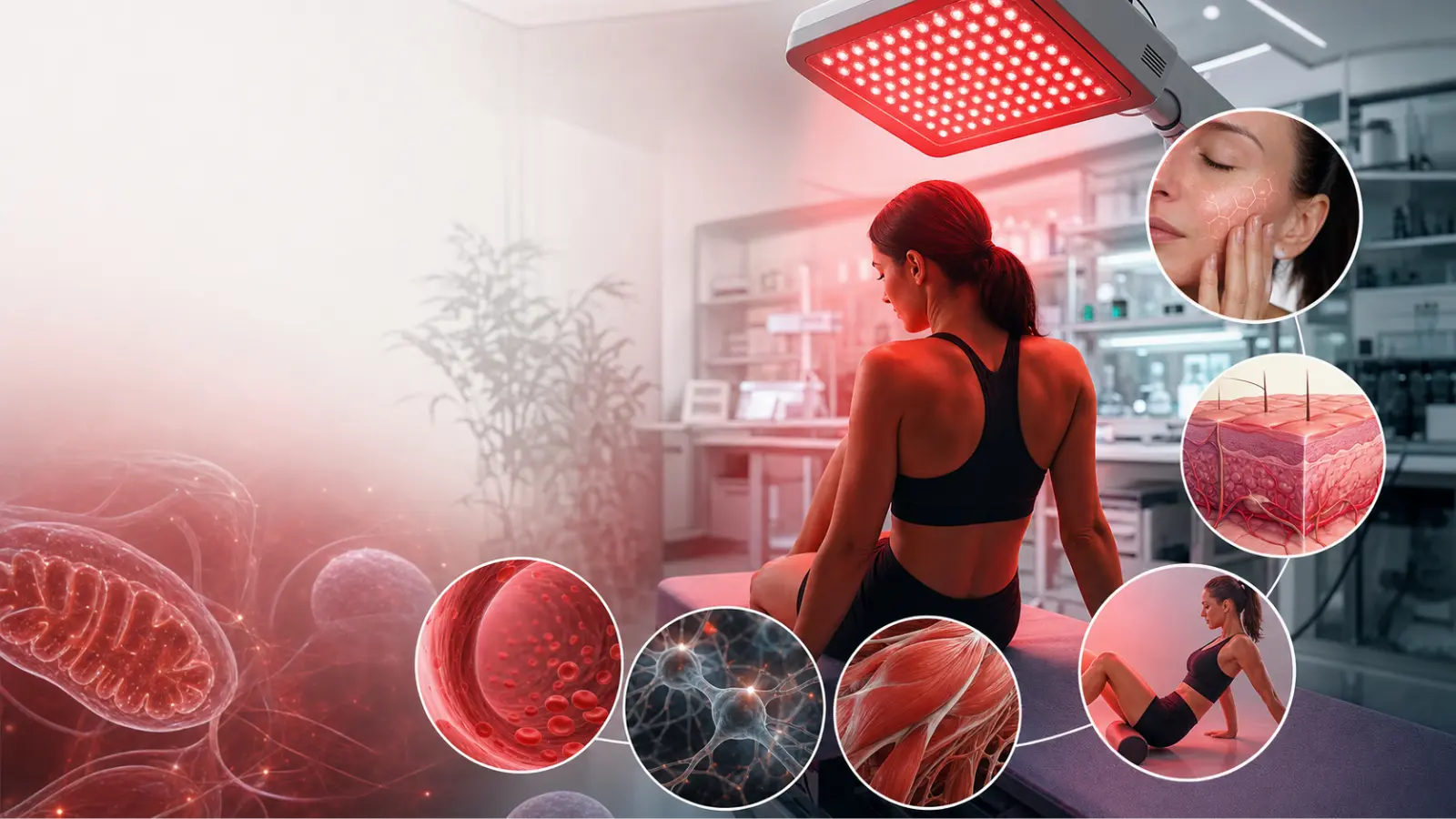
Transcranial photobiomodulation is a non invasive approach that applies red or near infrared light to the scalp or forehead. Unlike traditional body focused red light therapy, tPBM is specifically designed to target the brain through the skull.
The wavelengths most commonly studied for brain applications are in the near infrared range, particularly around 810nm and 1064nm. Researchers focus on these wavelengths because they tend to experience less scattering and lower absorption in superficial layers compared to visible red light, allowing a greater percentage of light energy to penetrate deeper toward cortical regions with less conversion to heat.
However, only a portion of the emitted light reaches the brain, and penetration depends on factors such as wavelength, power, beam design, hair, skull thickness, and dosing parameters.
How Near Infrared Light May Affect the Brain
The leading theory behind tPBM involves mitochondria, the energy producing structures inside cells.
Near infrared light appears to interact with cytochrome c oxidase, an enzyme involved in mitochondrial respiration. This interaction may support ATP production, nitric oxide signaling, oxygen utilization, oxidative stress balance, and inflammatory regulation.
Quick Mechanism Overview
| Mechanism | Why It Matters |
|---|---|
| ATP production | Neurons require large amounts of energy for signaling and repair |
| Nitric oxide signaling | May help support circulation and oxygen delivery |
| Oxidative stress modulation | Relevant because oxidative stress is linked to aging and neurological decline |
| Inflammation balance | Chronic neuroinflammation is associated with cognitive dysfunction |
| Cerebral oxygen metabolism | Important for focus, cognition, and neurological resilience |
The brain is one of the body’s most energy demanding organs, and many neurological conditions are associated with mitochondrial dysfunction, inflammation, and impaired metabolism. This is why researchers view the brain as a compelling target for photobiomodulation.
Can Red Light Therapy Improve Focus and Cognition?
Several small human studies suggest that transcranial photobiomodulation may support attention, working memory, executive function, and processing speed in healthy adults. Research involving 1064nm transcranial infrared stimulation has also reported improvements in sustained attention and executive performance after prefrontal cortex treatment.
However, many studies involve small sample sizes and differing protocols, so larger placebo controlled trials are still needed.
Key Takeaways
- Early human studies show encouraging cognitive findings.
- Attention, working memory, and executive function are the most studied areas.
- 1064nm is one of the most researched wavelengths for cognitive applications.
- Most studies remain relatively small and exploratory.
- tPBM is promising, but not yet considered a proven cognitive enhancement tool.
Evidence by Application
| Application | Current Evidence Level | Research Findings |
|---|---|---|
| Healthy cognition | Early to moderate | Studies suggest possible benefits for attention, memory, and executive function |
| Mild cognitive impairment | Early | Pilot studies show encouraging cognitive and biomarker changes |
| Alzheimer’s disease | Preliminary | Animal and early human studies are promising but not definitive |
| Traumatic brain injury | Promising | Animal evidence is strong and early human studies are encouraging |
| Mood and fatigue | Emerging | Mechanistic rationale exists but more trials are needed |
Cognitive Enhancement in Healthy Adults
Human research on healthy adults is one of the more developed areas within tPBM.
Studies involving prefrontal cortex stimulation have reported improvements in attention, working memory, psychomotor performance, and executive function. Some research also suggests temporary increases in cerebral blood flow and oxygen metabolism.
Reviews of the literature generally conclude that tPBM shows promise for cognitive support, although the field still lacks standardized protocols regarding wavelength, dosage, timing, and treatment frequency.
Key Takeaway
The evidence for cognitive enhancement is encouraging but still early. The direction of the research is positive, but the field has not yet reached the level of large scale clinical consensus.
How Strong Is the Research Today?
While transcranial photobiomodulation is generating significant interest in neuroscience and wellness research, the evidence level varies depending on the application being studied.
The strongest human evidence currently involves cognitive performance and brain metabolism in healthy adults, where several small studies have reported improvements in attention, working memory, and executive function.
Research involving traumatic brain injury is encouraging, particularly in animal and early human studies. Alzheimer’s and dementia research remains earlier stage, but the biological rationale and preliminary findings continue to drive interest.
Current Evidence Snapshot
Encouraging early human studies involving attention and working memory
Strong animal evidence and promising pilot studies in humans
Preliminary but biologically plausible research direction
Traumatic Brain Injury Research
Traumatic brain injury is one of the most actively studied clinical applications of photobiomodulation.
Animal studies consistently report reductions in neuroinflammation, improved neurological recovery, and better functional outcomes after PBM treatment. Researchers believe these effects may involve mitochondrial support, inflammation regulation, and improved cerebral metabolism.
Human evidence is still preliminary but promising. Pilot studies in mild and chronic TBI populations have reported improvements in sleep quality, mood, cognition, and post concussion symptoms. However, most human studies remain relatively small and exploratory.
Quick Summary
| What Researchers Observe | Why It Matters |
|---|---|
| Reduced neuroinflammation | Inflammation is strongly linked to TBI symptoms |
| Improved mitochondrial function | Brain recovery requires high energy availability |
| Better sleep and mood outcomes | Common issues after concussion and TBI |
| Improved cognitive performance | Potential support for recovery and daily function |
Larger randomized controlled trials are currently underway and will likely shape the future direction of the field.
Alzheimer’s Disease and Dementia Research
Alzheimer’s disease and mild cognitive impairment are major areas of interest for transcranial photobiomodulation researchers.
In animal models, PBM has been associated with reductions in amyloid beta accumulation, tau related pathology, oxidative stress, and inflammation. Researchers are also exploring whether tPBM may support cerebral blood flow and mitochondrial function in aging brains.
Human research is still early, but pilot studies in mild cognitive impairment and Alzheimer’s disease have reported encouraging cognitive and imaging related findings.
Is tPBM Proven for Alzheimer’s Disease?
No. Transcranial photobiomodulation is not currently considered a proven treatment for Alzheimer’s disease or dementia.
The research is promising and biologically plausible, but larger sham controlled clinical trials are still needed before strong conclusions can be made.
Which Wavelengths Matter Most for Brain Applications?
Wavelength selection matters because the light must penetrate skin, tissue, and skull before reaching brain tissue.
| Wavelength | Relevance for Brain Applications |
|---|---|
| 660nm | Common in red light therapy but less favored for transcranial penetration |
| 810nm | One of the most studied wavelengths in brain PBM research |
| 830nm | Commonly used near infrared wavelength with deeper tissue penetration |
| 850nm | Frequently included in NIR therapy devices |
| 940nm | Emerging wavelength with deeper penetration characteristics |
| 1064nm | Widely studied in transcranial laser research |
Researchers often focus on 810nm and 1064nm because they appear capable of reaching cortical tissue more effectively than shorter visible wavelengths.
MitoADAPT MAX 4.0 and Brain Focused Applications
The MitoADAPT MAX 4.0 LED panel series includes a significant amount of 810nm output, one of the most researched wavelengths in transcranial photobiomodulation studies. The panel also includes 830nm, 850nm, and 940nm near infrared wavelengths, all of which are associated with deeper tissue penetration and broader photobiomodulation applications.
Its multi wavelength near infrared design makes it relevant for users interested in recovery, wellness, performance, and emerging brain health applications.
Pros and Cons of tPBM for Brain Health
| Pros | Cons |
|---|---|
| Non invasive and generally well tolerated | Human evidence is still early |
| Strong mitochondrial and metabolic rationale | Research protocols are not standardized |
| Encouraging results in cognition and TBI studies | Consumer devices differ from research systems |
| Active and rapidly growing research field | Optimal dosing remains unclear |
| Potential support for cerebral metabolism and circulation | Not a substitute for medical treatment |
Practical Considerations
Practical considerations matter because transcranial photobiomodulation research is still evolving. If you are exploring tPBM for brain health, these guidelines can help you approach the research more realistically and safely.
How to Explore tPBM for Brain Health
- Focus on evidence based wavelengths such as 810nm and near infrared ranges commonly used in research.
- Avoid exaggerated claims involving cures, reversal of disease, or guaranteed cognitive enhancement.
- Understand that most human research is still preliminary.
- Consider consistency and dosing carefully because photobiomodulation effects appear highly dose dependent.
- Consult a healthcare professional if you have neurological conditions, seizure disorders, photosensitivity concerns, or implanted medical devices.
Final Thoughts
Transcranial photobiomodulation is an emerging area of neuroscience and photobiomodulation research focused on how near infrared light may support brain metabolism, circulation, cognition, and neurological recovery.
Early studies suggest potential benefits for attention, working memory, executive function, mood, traumatic brain injury recovery, and mild cognitive impairment. However, the research is still early and larger sham controlled clinical trials are needed before definitive conclusions can be made.
Key Takeaways
- tPBM research focuses on near infrared light and brain function.
- 810nm and 1064nm are among the most studied wavelengths.
- Early studies suggest possible cognitive and neurological benefits.
- Traumatic brain injury and mild cognitive impairment are major research areas.
- Larger placebo controlled studies are still needed.
Medical Disclaimer: This article is intended for general wellness and educational purposes only and is not medical advice. Research on photobiomodulation and red light therapy is ongoing, and responses may vary between individuals. Consult a qualified healthcare professional regarding injuries, chronic pain, eye conditions, or medical concerns before beginning any new wellness protocol.
Affiliate Disclosure: Some links on this page are affiliate links. If you purchase through them, we may earn a small commission at no extra cost to you. We only recommend products we have independently evaluated.
FAQ
What is transcranial photobiomodulation?
Transcranial photobiomodulation, or tPBM, is the use of red or near infrared light applied to the head to support brain function. Researchers are studying whether specific wavelengths can influence mitochondrial energy production, cerebral blood flow, inflammation balance, and cognitive performance.
Can red light therapy improve memory and focus?
Early human studies suggest that transcranial photobiomodulation may support attention, working memory, and executive function, particularly when near infrared light is applied to the prefrontal cortex. However, the research is still developing and larger placebo controlled trials are needed.
Which wavelengths are most studied for brain applications?
The most commonly studied wavelengths for brain focused photobiomodulation are 810nm and 1064nm. Researchers also study 830nm, 850nm, and other near infrared wavelengths because of their potential for deeper tissue penetration.
Is red light therapy proven for Alzheimer’s disease?
No. Transcranial photobiomodulation is not currently considered a proven treatment for Alzheimer’s disease or dementia. Early animal studies and small human trials are promising, but much larger clinical studies are still needed.
Does the MitoADAPT MAX 4.0 include brain focused wavelengths?
The MitoADAPT MAX 4.0 includes a significant amount of 810nm output along with 830nm, 850nm, and 940nm near infrared wavelengths. These wavelengths are associated with deeper tissue penetration and are commonly discussed in photobiomodulation research.
Research References
Hamblin MR. Shining light on the head. Photobiomodulation for brain disorders. BBA Clinical. 2016;6:113 to 124. https://www.sciencedirect.com/science/article/pii/S2214647416300381
Barrett DW, Gonzalez Lima F. Transcranial infrared laser stimulation produces beneficial cognitive and emotional effects in humans. Neuroscience. 2013;230:13 to 23. https://pubmed.ncbi.nlm.nih.gov/23200785/
Salehpour F, Mahmoudi J, Kamari F, Sadigh-Eteghad S, Rasta SH, Hamblin MR.Brain Photobiomodulation Therapy: A Narrative Review.Molecular Neurobiology. 2018;55(8):6601–6636.
DOI: 10.1007/s12035-017-0852-4 https://link.springer.com/article/10.1007/s12035-017-0852-4
Cassano P, Petrie SR, Hamblin MR, Henderson TA, Iosifescu DV. Review of transcranial photobiomodulation for major depressive disorder: targeting brain metabolism, inflammation, oxidative stress, and neurogenesis. Neurophotonics. 2016;3(3):031404. https://doi.org/10.1117/1.NPh.3.3.031404
Chao LL. Effects of home photobiomodulation treatments on cognitive and behavioral function and neuroimaging measures in persons with dementia. Photobiomodulation, Photomedicine, and Laser Surgery. 2019;37(3):133 to 141. https://doi.org/10.1089/photob.2018.4555