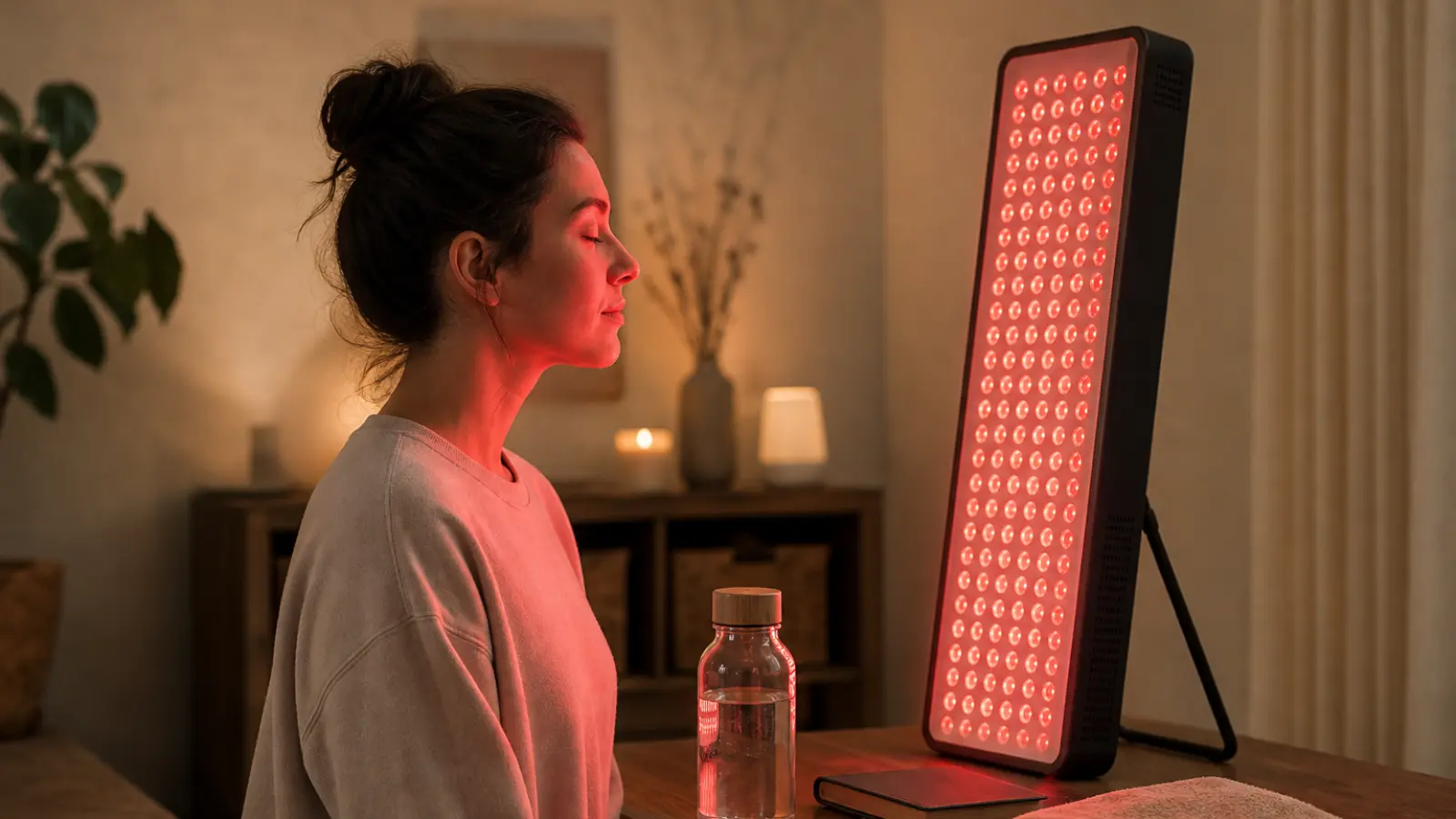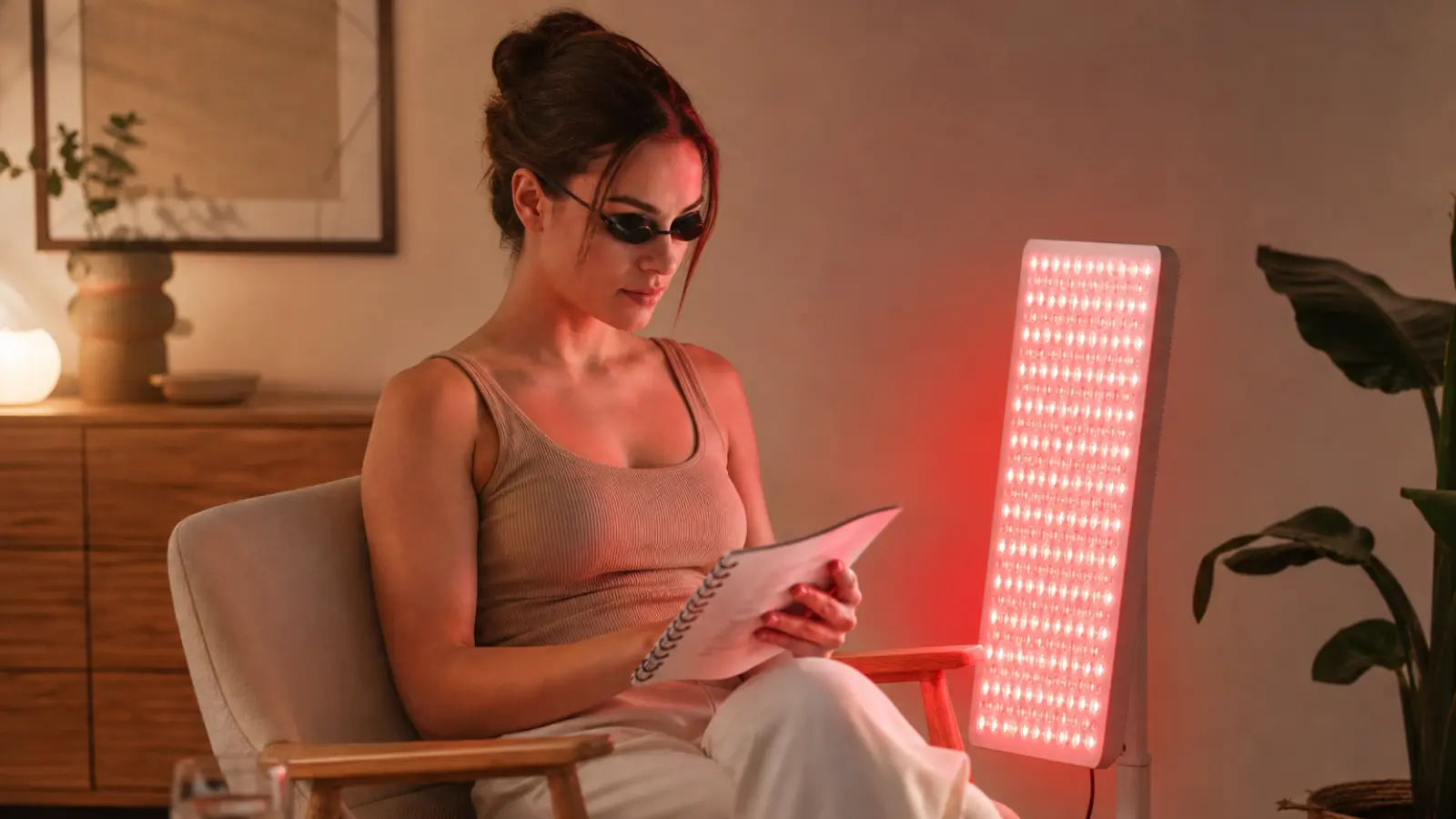

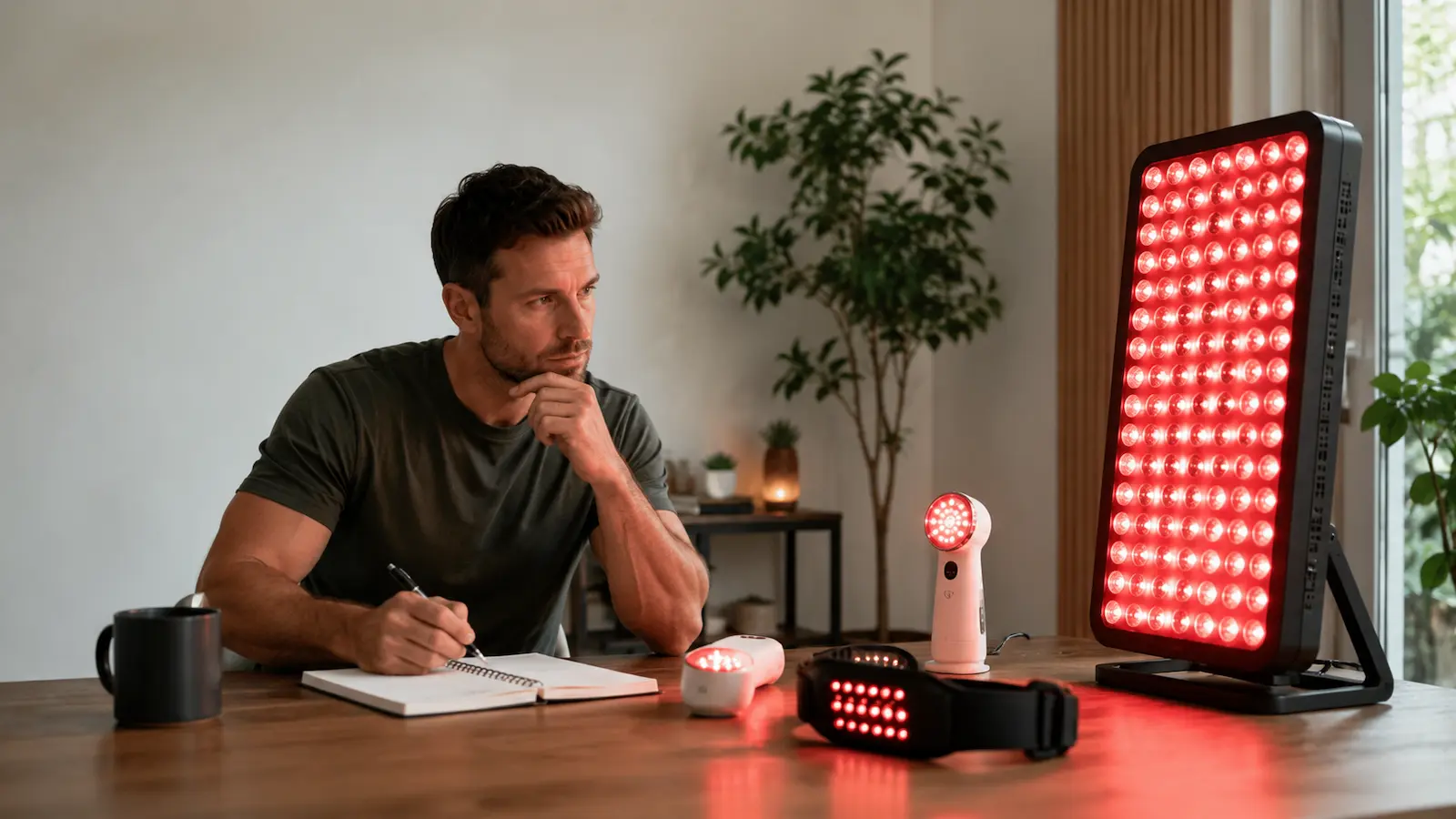
The red light therapy market has exploded. Today you can find everything from $30 wands to $5,000 full-body panel setups, and almost all of them claim to support recovery, skin health, inflammation, sleep, or general wellness.
The problem is that not every red light therapy device is built to do the same job.
A small wand may be useful for a targeted area. A face mask may be great for skin. A large panel may be better for broader body coverage. But buying the most expensive device does not automatically mean you are getting the best results.
This guide breaks down what actually matters, what is mostly marketing, and how to choose the right red light therapy device without overspending.
Quick Answer: What Actually Works?
Red light therapy works best when the device matches your goal.
For skin and face treatments, look for red wavelengths around 630nm to 660nm. For joints, muscle recovery, and deeper tissue applications, near-infrared wavelengths around 810nm to 850nm are commonly used. A good full-body panel usually combines red and near-infrared light so you can treat both surface and deeper tissue targets.
The biggest mistake is buying based only on price, LED count, or exaggerated irradiance claims. The smarter approach is to look at wavelength, measured output, treatment area, distance, transparency, and how you will actually use the device.
What Matters Most When Buying a Red Light Therapy Device
| Factor | Why It Matters | What to Look For |
|---|---|---|
| Wavelength | Determines the tissue target | 630nm to 660nm for skin, 810nm to 850nm for deeper tissue |
| Irradiance | Determines how much light reaches the skin | Realistic measurements at actual treatment distances |
| Treatment area | Determines how much of the body you can treat at once | Small for targeted use, larger panels for broader coverage |
| Dose | More is not always better | Consistent sessions, reasonable distance, no overdoing it |
| Transparency | Helps separate real specs from marketing | Spectral data, third-party testing, clear documentation |
| Ease of use | A device only works if you use it consistently | Simple setup, good size, practical treatment time |
What Actually Works
1. Correct wavelengths
Most red light therapy research focuses on red and near-infrared wavelengths. Red light in the 630nm to 660nm range is commonly used for skin, surface tissue, and cosmetic applications. Near-infrared light in the 810nm to 850nm range is commonly used when the goal is deeper tissue exposure, such as muscle, joints, or recovery. Longer wavelengths such as 590nm, 940nm and 1050nm to 1070 nm are showing promise in more recent studies.
That does not mean every device needs every wavelength. But it does mean you should be skeptical of devices that avoid listing wavelengths clearly.
2. Enough power at the distance you actually use
Many brands advertise irradiance at close range because the number looks better. But if you stand 12 to 18 inches away from a panel, the output reaching your body may be much lower than the headline spec.
A useful brand will tell you how the device performs at realistic distances, not just at the best possible testing distance.
3. A treatment area that matches your goal
This is where many people waste money.
If you want to treat one knee, one shoulder, or your face, you do not need a giant full-body panel. A smaller targeted device can make sense.
If you want broad coverage for daily recovery, sleep support, general wellness, or full-body use, a small handheld device will feel inefficient. You will either under-treat large areas or spend too much time moving the device around.
4. Consistency
A mid-priced device you use five days per week is more valuable than a premium setup that is annoying to use.
The best red light therapy device is not always the one with the highest specs. It is the one that delivers a reasonable dose, covers the area you care about, and fits into your routine.
What Does Not Matter as Much as People Think
1. The highest possible irradiance number
Higher output is not always better. Photobiomodulation appears to follow a biphasic dose response, which means too little light may not do much, but too much light may also be counterproductive.
That is why chasing the highest irradiance number can be misleading. The goal is usable dosing, not just maximum output.
2. LED count by itself
A device with more LEDs is not automatically better. LED quality, wavelength accuracy, beam angle, power density, panel size, and treatment distance all matter.
LED count is only useful when it is paired with real performance data.
3. Exotic wavelengths
Some newer devices add amber, blue, green, or multiple near-infrared wavelengths. These may have specific use cases, but the core of most red light therapy research still centers around red and near-infrared light.
Extra wavelengths are not bad, but they should not be the main reason you buy a device.
4. “Medical-grade” marketing
The phrase “medical-grade” is often used loosely in consumer wellness marketing. A better question is whether the company publishes real specifications, independent testing, safety information, and practical treatment guidance.
Pros and Cons of Different Device Types
| Device Type | Pros | Cons | Best For |
|---|---|---|---|
| Small wand | Affordable, portable, easy for small areas | Small treatment area, time-consuming | Spot treatment |
| Face mask | Convenient, hands-free, skin-focused | Limited to face and sometimes neck | Skin and beauty routines |
| Belt or wrap | Good contact with joints or muscles | Limited coverage, quality varies | Back, knee, shoulder, localized pain |
| Mid-size panel | Good balance of price and coverage | May require multiple positions | Most home users |
| Large panel | Best broad coverage, efficient sessions | Higher cost, more space needed | Full-body routines |
| Multi-panel setup | 360-degree coverage, advanced use | Expensive and unnecessary for most people | Heavy users, clinics, biohackers |
Buyer Scorecard
Use this before buying any red light therapy device.
| Question | Good Sign | Red Flag |
|---|---|---|
| Are wavelengths clearly listed? | Exact nm values provided | “Red light” with no details |
| Is irradiance measured at realistic distances? | Multiple distance measurements | One big number with no context |
| Is there third-party testing? | Lab data or independent testing shown | Only marketing claims |
| Does the size match your goal? | Clear use case fit | Tiny device marketed as full-body |
| Is the brand transparent? | Spectral data, EMF notes, support | Vague claims and no documentation |
| Is the device easy to use? | Simple routine | Complicated or inconvenient setup |
Our Take on the MitoPRO 1500X
For serious home users, the MitoPRO 1500X is one of the stronger value picks in the full-body panel category.
The main reason is not that it is the cheapest device. It is that it offers a strong mix of coverage, output, wavelength range, and brand transparency for the price.
The current MitoPRO X series uses multiple wavelengths, including 590nm, 630nm, 660nm, 810nm, 830nm, and 850nm. That gives it broader flexibility than a basic two-wavelength panel. Mito also publishes independent lab testing and irradiance data, which is important in a category where inflated specs are common.
That said, it is not the right device for everyone.
If you only want to treat your face or one joint, it may be more panel than you need. If you want a long-term full-body routine, it makes more sense because the larger treatment area saves time and improves consistency.
MitoPRO 1500X Pros
| Pros |
|---|
| Large treatment area for full-body use |
| Multiple red and near-infrared wavelengths |
| Published independent lab testing |
| Strong value compared with many premium panels |
| Better long-term fit than small targeted devices for full-body routines |
MitoPRO 1500X Cons
| Cons |
|---|
| More expensive than entry-level panels |
| Larger than some users need |
| Not necessary for simple spot treatment |
| Requires space and a consistent routine |
| Overkill if you only want facial skincare |
Budget Recommendations
Under $300: Targeted Treatment Only
Hooga HG series table top and body panels.
This price range is best for smaller panels, wands, and targeted devices.
Use this tier if your goal is one joint, one muscle group, your face, or occasional spot treatment. Do not expect a small device to replace a full-body panel.
Best for: face, knees, elbows, shoulders, small treatment zones.
$300 to $700: Best Entry Point for Most Users
Hooga PRO series table top and LED body panels.
This is often the sweet spot for people who want more than a wand but do not need a premium full-body setup.
You can find mid-size panels that cover a meaningful area, offer solid irradiance, and are still practical for daily use.
Best for: general wellness, recovery, partial body coverage, first serious panel.
$700 to $1,200: Serious Full-Body Coverage
Mito Red Light MitoPRO+ and MitoPRO X LED body panels.
This is where larger panels become more attractive.
If you plan to use red light therapy several times per week for recovery, skin, sleep routines, or general wellness, this tier often provides the best long-term cost-per-use.
Best for: committed home users who want efficient full-body sessions.
$1,200+: Specialized or Advanced Setups
Mito Red Light MitoADAPT 4.0 series and PlatinumLED BIOMAX and BIOMAX PRO LED body panels.
Above this price point, you are usually looking at larger panel arrays, 360-degree setups, or specialized devices for specific applications.
These can be legitimate purchases, but they are not necessary for most beginners.
Best for: advanced users, clinics, content creators, high-frequency users, specialized applications.
What We Would Avoid
Avoid buying a red light therapy device based only on a viral ad, a huge irradiance claim, or a before-and-after photo with no context.
Also be careful with devices that do not list wavelengths, do not explain treatment distance, do not publish technical data, or claim to treat almost everything.
Red light therapy can be useful, but it is not magic. The device still needs to deliver the right wavelengths, over the right area, at a usable dose, consistently.
Bottom Line
Stop shopping for the most expensive red light therapy device and start shopping for the right device.
For targeted treatment, a small device may be enough. For facial skincare, a mask may be more convenient. For full-body routines, a larger panel is usually more efficient.
The MitoPRO 1500X is a strong value pick for people who want serious full-body coverage without jumping into ultra-premium pricing. But the best device is always the one that matches your treatment goal, your space, your budget, and your ability to use it consistently.
Affiliate Disclosure
Some links on this page are affiliate links. If you purchase through them, we may earn a small commission at no extra cost to you. This does not change your price. Our goal is to recommend devices based on specs, transparency, usability, and value, not simply the highest commission.