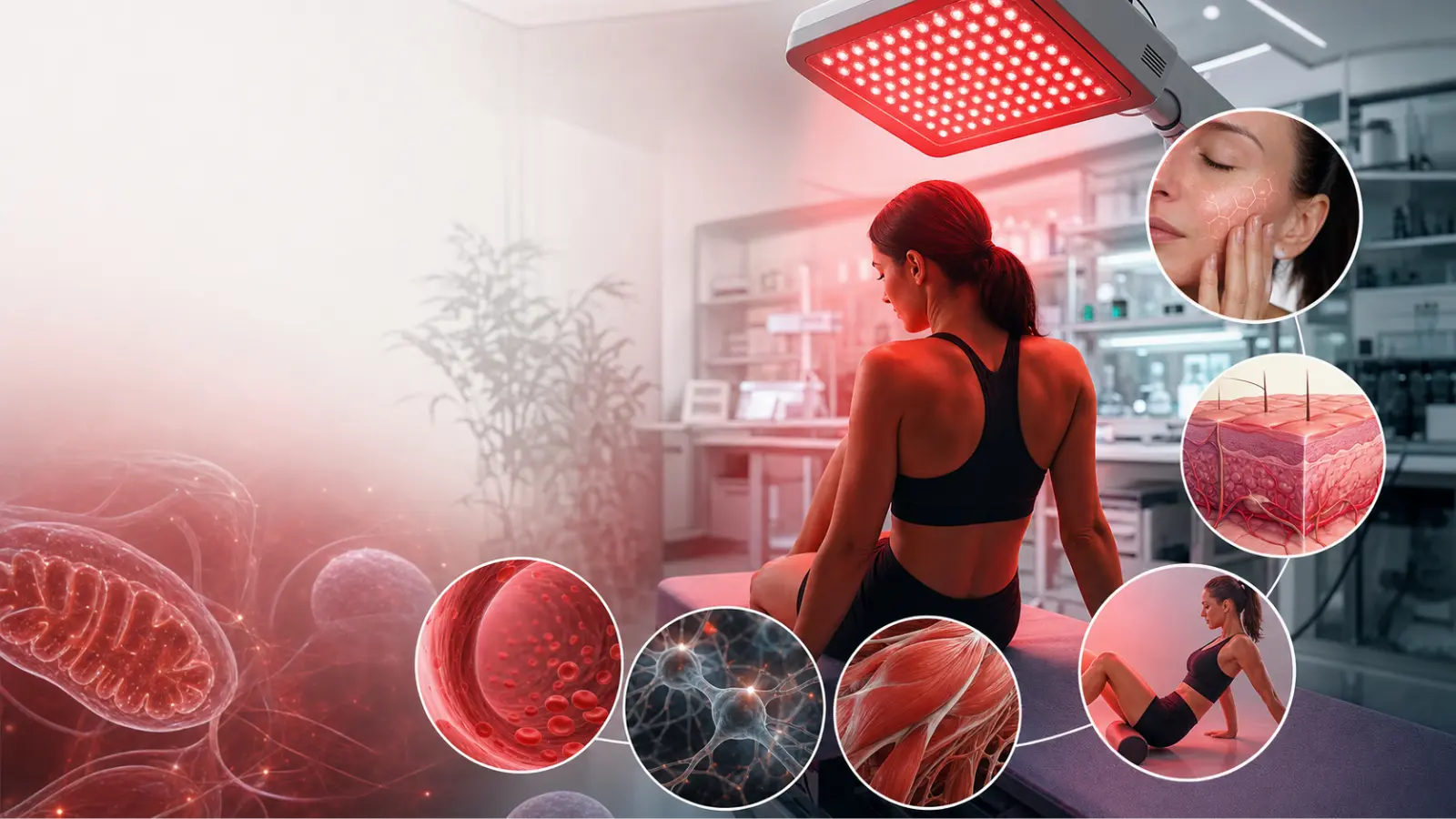

Red light therapy and testosterone is one of the most searched topics in the PBM space, but it is also one of the most misunderstood. Social media and biohacker communities often make dramatic hormonal claims that go far beyond what current human research actually supports.
Interest in red light therapy and testosterone has grown rapidly in recent years, particularly within fitness, recovery, and biohacking communities. However, many online claims go far beyond what current human PBM research actually supports.
What Does the Research Show?
Animal studies suggest PBM may influence testosterone-related pathways, but direct human evidence remains limited. Current research is more supportive of recovery and wellness applications than dramatic testosterone enhancement claims.
Where the Testosterone Claims Started
Much of the excitement surrounding red light therapy and testosterone originated from animal studies involving direct testicular photobiomodulation.
Several rodent studies reported increases in testosterone production after exposure to red or near infrared wavelengths, particularly around 670nm. Researchers proposed that PBM may influence mitochondrial activity inside Leydig cells, which are responsible for testosterone synthesis within the testes.
The proposed mechanisms are biologically plausible and involve:
- mitochondrial energy production
- steroidogenic enzyme activity
- cellular signaling pathways
- oxidative stress regulation
However, translating hormonal findings from rodents to humans is notoriously difficult, especially for endocrine-related outcomes.
The Human Evidence Is Still Limited
Despite the popularity of “testicular red light therapy” online, direct human clinical evidence remains surprisingly scarce.
One frequently cited study from the University of Siena involved bright white light therapy rather than direct red light exposure. Researchers observed hormonal changes in men with hypoactive sexual desire disorder, but the mechanism involved broader circadian and neuroendocrine pathways rather than localized PBM treatment.
At the time of writing, controlled human trials specifically studying direct red light therapy to the testes for testosterone enhancement remain very limited in peer-reviewed literature.
Why Testosterone PBM Research Is Difficult to Interpret
| Why Human Evidence Is Limited | Why It Matters |
|---|---|
| Animal results do not always translate to humans | Hormonal systems behave very differently between species. |
| Endocrine systems are highly complex | Testosterone regulation involves sleep, stress, metabolism, age, and overall health. |
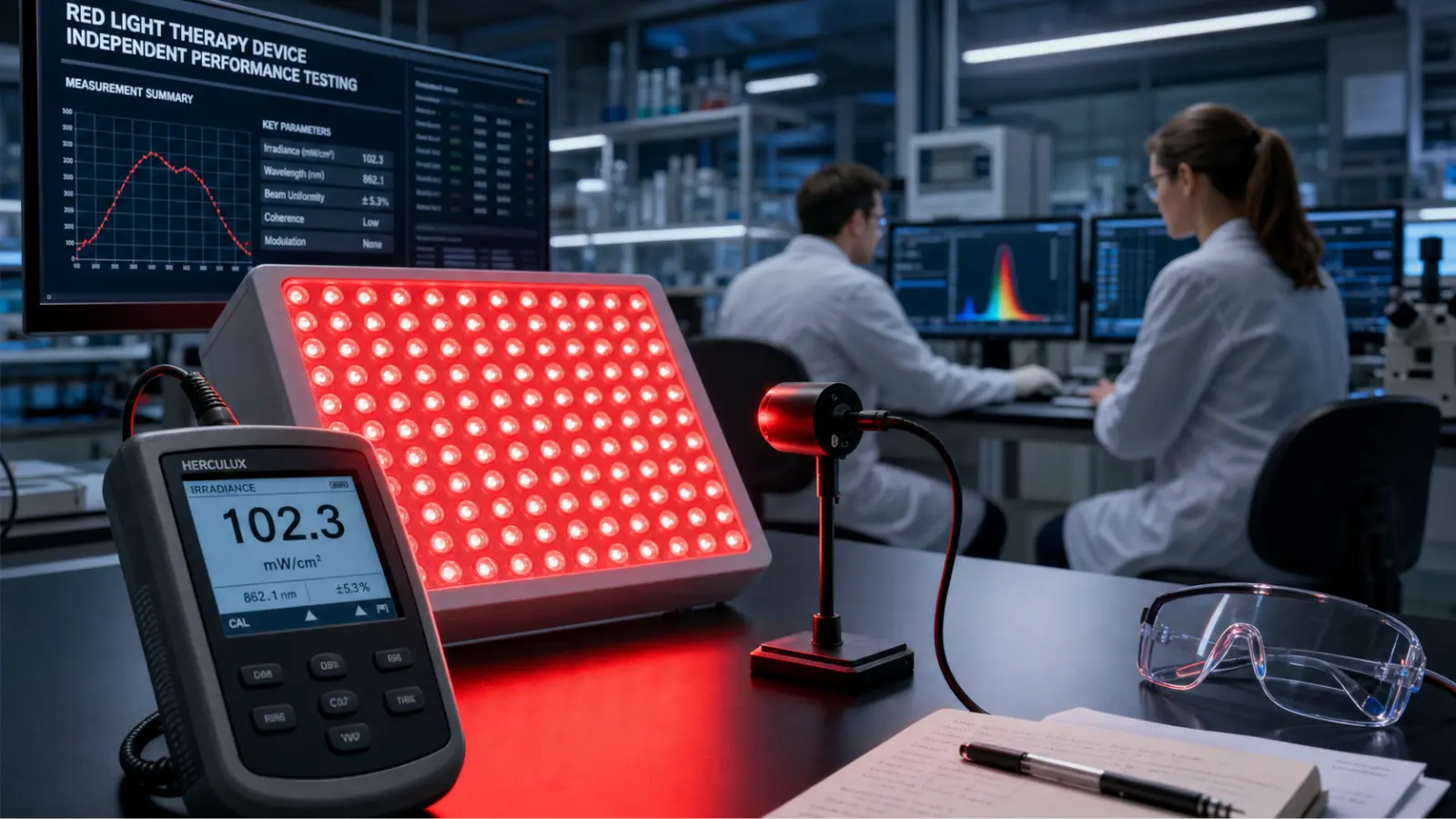
| PBM protocols vary substantially | Wavelength, irradiance, dose, and treatment duration differ widely between studies. |
| Real-world device performance varies | Treatment distance, optics, and output consistency can significantly affect PBM exposure. |
Indirect Pathways That May Support Hormonal Health
While direct testosterone increases remain unproven in humans, several indirect pathways are more reasonably supported within broader PBM research.
Sleep Quality
Healthy testosterone production is strongly connected to sleep quality and circadian rhythm regulation. Some PBM users report improvements in relaxation and sleep-related routines, particularly when sessions are used consistently.
Exercise Recovery
PBM has been studied extensively in exercise recovery and muscle performance contexts. Improved recovery may help support more consistent resistance training, which itself plays a major role in natural testosterone regulation.
Stress and Recovery Balance
Chronic stress and elevated cortisol levels may negatively influence hormonal balance over time. Some PBM research explores recovery-related and stress-related physiological pathways, although outcomes vary substantially between studies.
PBM is more strongly supported for recovery, sleep, and wellness-related pathways than direct testosterone enhancement in humans.
Libido and Sexual Health
There are currently no strong human studies showing that red light therapy directly increases male libido as a primary outcome. Many online claims are extrapolated from the still-unproven idea that PBM significantly increases testosterone in humans.
“If libido improved,
testosterone must have increased.”
Common assumption surrounding PBM and libido claims
The problem is that the first claim itself remains unproven in controlled human studies.
That said, some PBM users subjectively report improvements in energy, mood, recovery, sleep quality, circulation, and overall vitality. Researchers have also explored PBM effects on circulation and nerve-related pathways, which could theoretically influence sexual wellbeing in some individuals. However, these mechanisms remain speculative and are not currently established as clinically proven libido-enhancing effects in humans.
What Is Probably True vs. Probably Overhyped
The conversation around red light therapy and testosterone often mixes promising early science with exaggerated marketing claims. While some animal studies and mechanistic theories suggest PBM may influence testosterone-related pathways, the current human evidence is still limited and far less definitive than many online claims imply.
Separating what is reasonably supported from what remains speculative is important for setting realistic expectations around hormonal health and photobiomodulation.
More Plausible
- Indirect hormonal support through recovery and sleep
- Supportive effects on exercise recovery routines
- Possible mitochondrial and cellular signaling effects
- General wellness and recovery applications
Probably Overhyped
- Massive testosterone increases from PBM alone
- Human-equivalent results based solely on rodent data
- Claims that red light therapy replaces TRT
- Extreme hormonal transformation marketing claims
Practical Perspective
For men interested in hormonal health, the most evidence-supported use of PBM is probably as part of a broader wellness and recovery strategy rather than a direct testosterone optimization protocol.
Consistent sleep, resistance training, recovery management, nutrition, metabolic health, and stress reduction all have substantially stronger human evidence for influencing testosterone levels than direct red light exposure alone.
PBM may still play a supportive role within that larger system, particularly for recovery-focused routines and overall wellness applications.
- PBM is better supported for recovery and wellness than direct testosterone enhancement
- Sleep quality and recovery habits play a major role in hormonal health
- Resistance training remains one of the strongest natural testosterone supports
- Stress management and metabolic health significantly influence hormone balance
- PBM may work best as part of a broader long-term wellness strategy
Final Thoughts
The relationship between red light therapy and testosterone remains scientifically interesting, but the current evidence is far less definitive than many marketing claims suggest.
Animal studies provide plausible mechanisms and promising early data, but controlled human trials on direct testosterone enhancement remain limited. At this stage, PBM is better viewed as a possible supportive wellness tool rather than a proven testosterone optimization therapy.
For most users, realistic expectations and evidence-based skepticism are far more useful than exaggerated hormonal promises.
Medical Disclaimer: This article is intended for general wellness and educational purposes only and is not medical advice. Research on photobiomodulation and red light therapy is ongoing, and responses may vary between individuals. Consult a qualified healthcare professional regarding injuries, chronic pain, eye conditions, or medical concerns before beginning any new wellness protocol.
Frequently Asked Questions
Can red light therapy increase testosterone?
Animal studies suggest PBM may influence testosterone-related pathways, but direct human evidence remains limited and inconclusive at this time.
Does shining red light on the testicles work?
Some rodent studies reported increased testosterone production after direct testicular PBM exposure, but controlled human studies on this specific protocol remain scarce.
Is red light therapy a replacement for TRT?
No. Red light therapy is not established as a replacement for testosterone replacement therapy or other medical hormone treatments.
What is more strongly supported by PBM research?
Current human evidence is generally stronger for recovery, sleep, exercise performance, circulation, and overall wellness applications than direct testosterone enhancement claims.
Can better sleep and recovery support testosterone naturally?
Yes. Sleep quality, stress management, exercise recovery, metabolic health, and resistance training all play important roles in natural testosterone regulation.
Research References
Huang YY et al. Biphasic dose response in low level light therapy https://pmc.ncbi.nlm.nih.gov/articles/PMC3315174/
Light therapy as a treatment for sexual dysfunctions – Beyond a pilot study https://www.sciencedaily.com/releases/2016/09/160918214443.htm
Molecular Mechanisms of Testosterone Synthesis in Leydig Cells https://www.nature.com/nature-index/topics/l4/molecular-mechanisms-of-testosterone-synthesis-in-leydig-cells
The effects of low level laser therapy (LLLT) on the testis in elevating serum testosterone levels in rats https://www.alliedacademies.org/articles/the-effects-of-low-level-laser-therapy-lllt-on-the-testis-in-elevatingserum-testosterone-level-in-rats.pdf