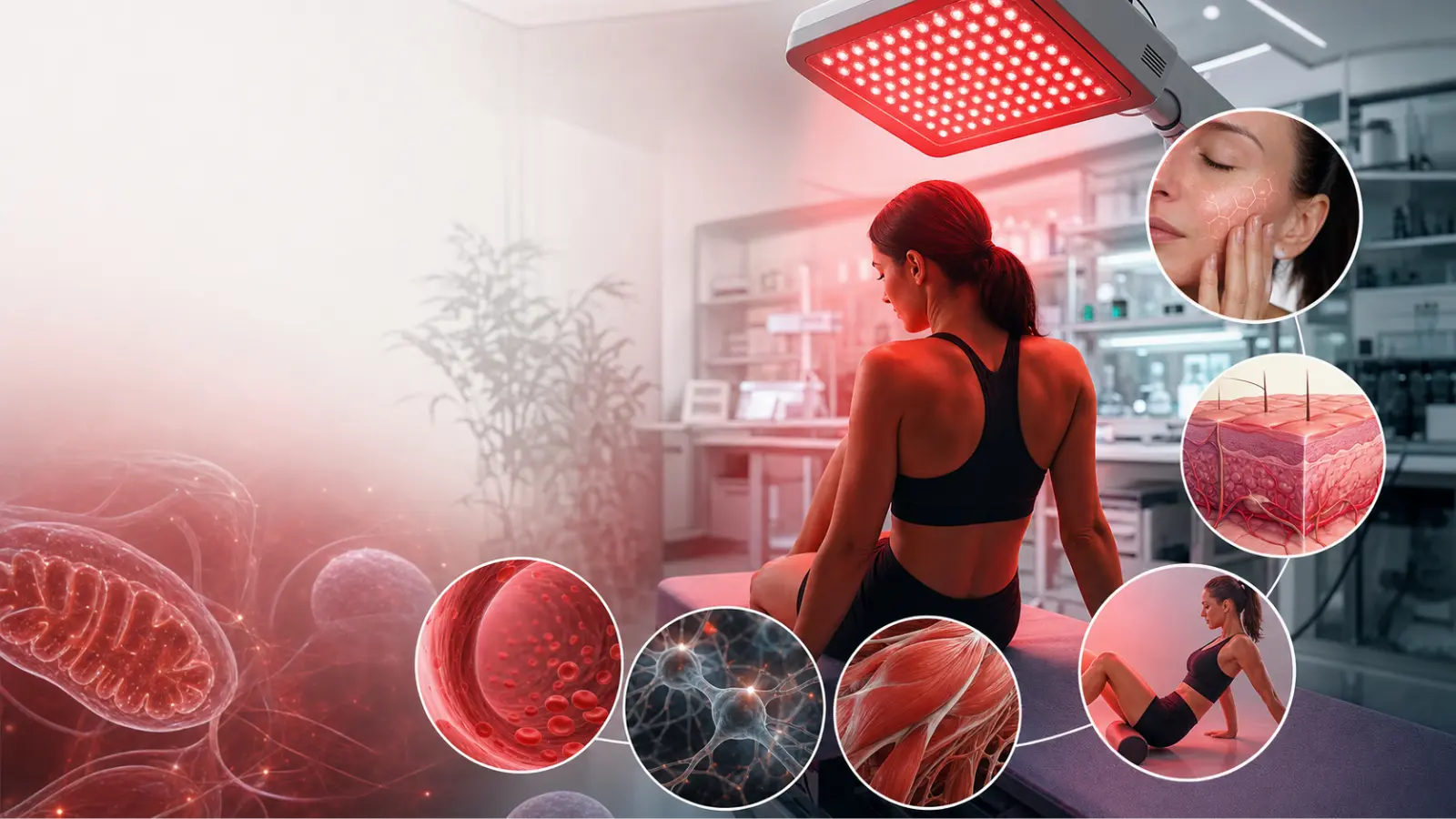


Red light therapy for fertility is an emerging area of photobiomodulation research, but the evidence is still early. A small group of clinical reports, most notably from Japan, suggests that near-infrared light may have potential as an adjunctive therapy for some women with difficult-to-treat infertility.
For women researching PCOS/PMOS, endometriosis, low ovarian reserve, unexplained infertility, or repeated IVF failure, the evidence should be viewed with caution: photobiomodulation may support biological pathways involved in reproductive health, but fertility-specific human evidence remains preliminary.
Terminology Note: PCOS Is Now PMOS
Polycystic ovary syndrome has been renamed Polyendocrine Metabolic Ovarian Syndrome, or PMOS. The older term PCOS is still widely used, so this article uses PCOS/PMOS to help readers connect the familiar name with the updated terminology.
The new name better reflects that this condition is not simply about ovarian cysts. Many women do not have cysts, and the “cysts” often referenced are actually immature follicles. At its core, PMOS is a hormonal and metabolic condition involving insulin resistance, hyperinsulinemia, inflammation, and increased cardiometabolic risk.
Key Takeaways
- Near-infrared light has been studied for female infertility, especially 830nm low-level laser therapy in Japanese clinical reports.
- The fertility evidence is promising but preliminary. Most studies are observational, uncontrolled, or case-based rather than large randomized controlled trials.
- PCOS/PMOS-specific evidence is limited. There are plausible mechanisms, but not enough human data to claim red light therapy treats PMOS-related infertility.
- Endometriosis research is also early. Anti-inflammatory mechanisms are relevant, but reproductive outcome data is sparse.
- Red light therapy should be viewed as a possible adjunct, not a replacement for fertility evaluation, ovulation induction, IVF, or reproductive endocrinology care.
The Japanese Fertility Study
The most-cited fertility research in this area comes from Japanese studies and clinical reports using 830nm near-infrared low-level laser therapy.
These studies are often discussed in connection with women who had long histories of infertility, previous failed assisted reproductive technology attempts, or difficult reproductive diagnoses.
One early Japanese report described pregnancies after 830nm low-level laser therapy in women with difficult infertility histories. Later analyses evaluated broader groups of women receiving photobiomodulation as an adjunctive approach. A 2012 overview also reported pregnancy and live birth outcomes in severely infertile women and noted no adverse events in that cohort.
Quick Answer: Can Red Light Therapy Help Fertility?
Possibly, but it is not proven. Early research suggests near-infrared photobiomodulation may have potential as an adjunctive fertility therapy in some difficult cases. However, current evidence is not strong enough to claim that red light therapy reliably improves fertility, treats PCOS/PMOS, or increases pregnancy rates.
What About PCOS/PMOS Specifically?
PCOS/PMOS is a common endocrine and metabolic condition associated with irregular ovulation, hyperandrogenism, insulin resistance, chronic low-grade inflammation, and oxidative stress.
These factors may affect menstrual regularity, ovulation, egg quality, and fertility.
Photobiomodulation is being explored because it may influence some of the same biological systems involved in PCOS/PMOS. Across broader PBM research, red and near-infrared light have been studied for potential effects on mitochondrial function, inflammatory signaling, oxidative stress, and tissue repair.
Potential Mechanisms Being Studied
1. Mitochondrial Function
Photobiomodulation is believed to interact with light-sensitive components of the mitochondrial respiratory chain. This may influence cellular energy production and redox signaling.
Because oocyte quality is closely linked with mitochondrial function, this is one proposed pathway in fertility research.
2. Oxidative Stress
PCOS/PMOS is associated with increased oxidative stress in several tissues, including the ovarian environment.
PBM has been studied for redox-modulating effects in other contexts, but direct evidence in PMOS-related fertility remains limited.
3. Inflammatory Signaling
PCOS/PMOS and endometriosis both involve inflammatory pathways.
PBM may help regulate inflammatory signaling in some settings, but claims about reducing ovarian inflammation in humans with PMOS should be made cautiously.
4. Blood Flow and Tissue Environment
Some fertility PBM protocols have focused on circulation and tissue health.
Improved blood flow is biologically plausible, but it has not been proven that home abdominal red light therapy reliably improves ovarian or uterine outcomes.
Endometriosis and Fertility: Why PBM Is Being Explored
Endometriosis is another condition where inflammation, pain signaling, oxidative stress, and tissue remodeling may contribute to symptoms and fertility challenges.
For this reason, researchers have also discussed photobiomodulation as a potential supportive approach for endometriosis-related reproductive concerns.
Human evidence remains limited. Some newer case-based research has described photobiomodulation in complex infertility cases that included endometriosis, PCOS/PMOS, low ovarian reserve, previous IVF failure, and later conception.
Red Light Therapy and Endometriosis
Red light therapy is being studied for endometriosis because photobiomodulation may influence inflammation, oxidative stress, pain signaling, and tissue repair. However, human fertility outcome data for endometriosis is still limited, and red light therapy should not be described as a proven endometriosis treatment.
Wavelengths: Why Near-Infrared Light Gets the Attention
The fertility literature most often discusses near-infrared light, especially around 830nm, because NIR wavelengths generally penetrate deeper into tissue than visible red light.
That said, penetration depth is highly variable. It depends on wavelength, power, beam type, skin tone, adipose thickness, treatment distance, treatment area, and whether the device is a laser, LED panel, belt, or pad.
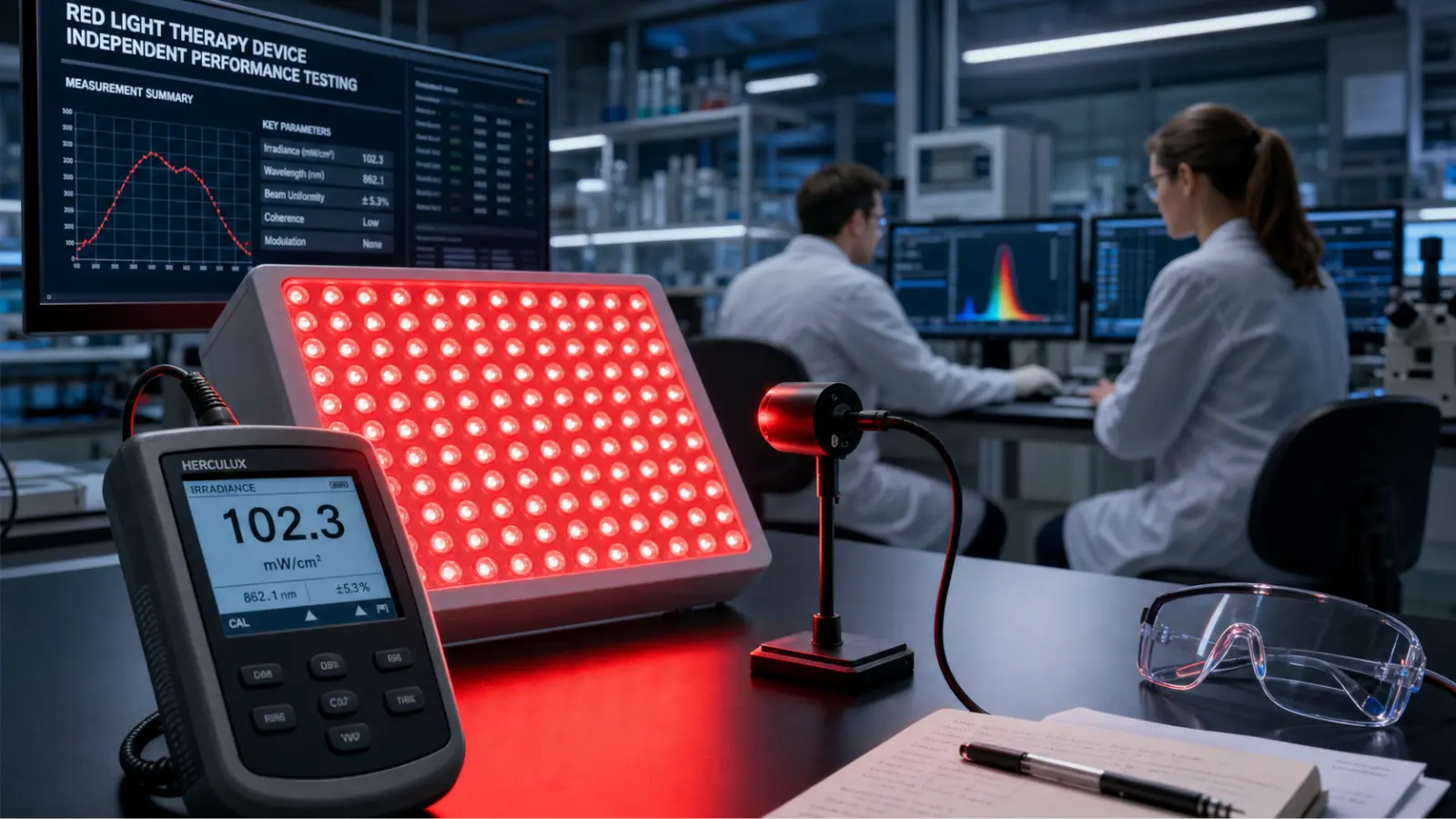
Some modern red light therapy panels do include the same general near-infrared wavelength range studied in fertility photobiomodulation research.
LED Devices for Home Use
The MitoQuad belt can be wrapped around the abdomen area and contains 67% NIR using 810nm and 850nm. The MitoPRO X Series, including the MitoPRO 1500X, includes red and near-infrared wavelengths such as 810nm, 830nm, and 850nm. These wavelengths are commonly discussed for deeper-tissue photobiomodulation.
The MitoADAPT 4.0 Series includes a broader wavelength range, including 810nm, 830nm, 850nm, and 940nm in the near-infrared range.
Important Caveats
Because fertility and pregnancy are medically sensitive areas, anyone trying to conceive, undergoing IVF, using ovulation-inducing medication, managing PCOS/PMOS, or treating endometriosis should speak with a reproductive endocrinologist before using red or near-infrared light over the lower abdomen.
For general wellness use, many people use red light therapy panels or belts on the body for short sessions several times per week.
If using a red light therapy panel as a wellness adjunct, a cautious approach is to follow the manufacturer’s general safety guidance, avoid heat buildup, avoid use directly over the abdomen during pregnancy unless cleared by a clinician, and discontinue use if any discomfort occurs.
Is Red Light Therapy Safe When Trying to Conceive?
Red light therapy is generally considered non-invasive, and some fertility PBM reports have noted no adverse events. However, fertility treatment and early pregnancy are medically sensitive periods. Anyone trying to conceive, undergoing IVF, managing PCOS/PMOS, or treating endometriosis should ask their reproductive endocrinologist before using red or near-infrared light over the abdomen.
Frequently Asked Questions
Can red light therapy improve egg quality?
There is a plausible mitochondrial mechanism, and some early fertility PBM research has discussed oocyte quality. However, there is not enough high-quality human evidence to claim that red light therapy reliably improves egg quality.
Is red light therapy proven for PCOS/PMOS infertility?
No. PCOS/PMOS-specific fertility data is limited. Red light therapy may affect biological pathways that are relevant to PMOS, but it is not a proven PMOS infertility treatment.
What wavelength is most relevant for fertility research?
The Japanese fertility laser studies most often cited in this area used 830nm near-infrared light. Modern panels may include 830nm or nearby NIR wavelengths, but that does not mean they reproduce the same laser protocol or clinical dose.
Can I use a red light panel over my lower abdomen?
Some people use panels over the body for general wellness, but fertility-specific abdominal use should be discussed with a clinician, especially if you are undergoing IVF, taking fertility medications, pregnant, or managing a reproductive condition.
Does red light therapy replace IVF or fertility medication?
No. Red light therapy should not be used as a replacement for medical fertility evaluation or treatment. At most, it should be considered a possible adjunct to discuss with a reproductive endocrinologist.
Affiliate Disclosure: Some links on this page may be affiliate links. If you purchase through these links, we may earn a commission at no additional cost to you.
Medical Disclaimer: This article is for educational purposes only and is not medical advice. Red light therapy is not a proven treatment for infertility, PCOS, endometriosis, or any reproductive disorder. Always consult a qualified healthcare professional or reproductive endocrinologist before beginning any new therapy, especially if you are trying to conceive, undergoing fertility treatment, or pregnant.
Research & References
- Iwahata H, Endoh S, Hirai Y. Treatment of Female Infertility Incorporating Low-Reactive Level Laser Therapy (LLLT): An Initial Report. Laser Therapy. 2006;15(1):37–41.
https://www.jstage.jst.go.jp/article/islsm/15/1/15_1_37/_article - Taniguchi Y, Ohshiro T, Ohshiro T, Sasaki K. Analysis of the Curative Effect of GaAlAs Diode Laser Therapy in Female Infertility. Laser Therapy. 2010;19(4):257–261.
https://www.jstage.jst.go.jp/article/islsm/19/4/19_4_257/_article/-char/en - Ohshiro T. Personal Overview of the Application of LLLT in Severely Infertile Japanese Females. Laser Therapy. 2012;21(2):97–103.
https://www.jstage.jst.go.jp/article/islsm/21/2/21_12-OR-05/_article/-char/en - Ohshiro T. Personal Overview of the Application of LLLT in Severely Infertile Japanese Females. Europe PMC record.
https://europepmc.org/article/MED/24610987 - Teede HJ, Tay CT, Laven JJE, et al. Recommendations From the 2023 International Evidence-based Guideline for the Assessment and Management of Polycystic Ovary Syndrome.
https://pmc.ncbi.nlm.nih.gov/articles/PMC10505534/