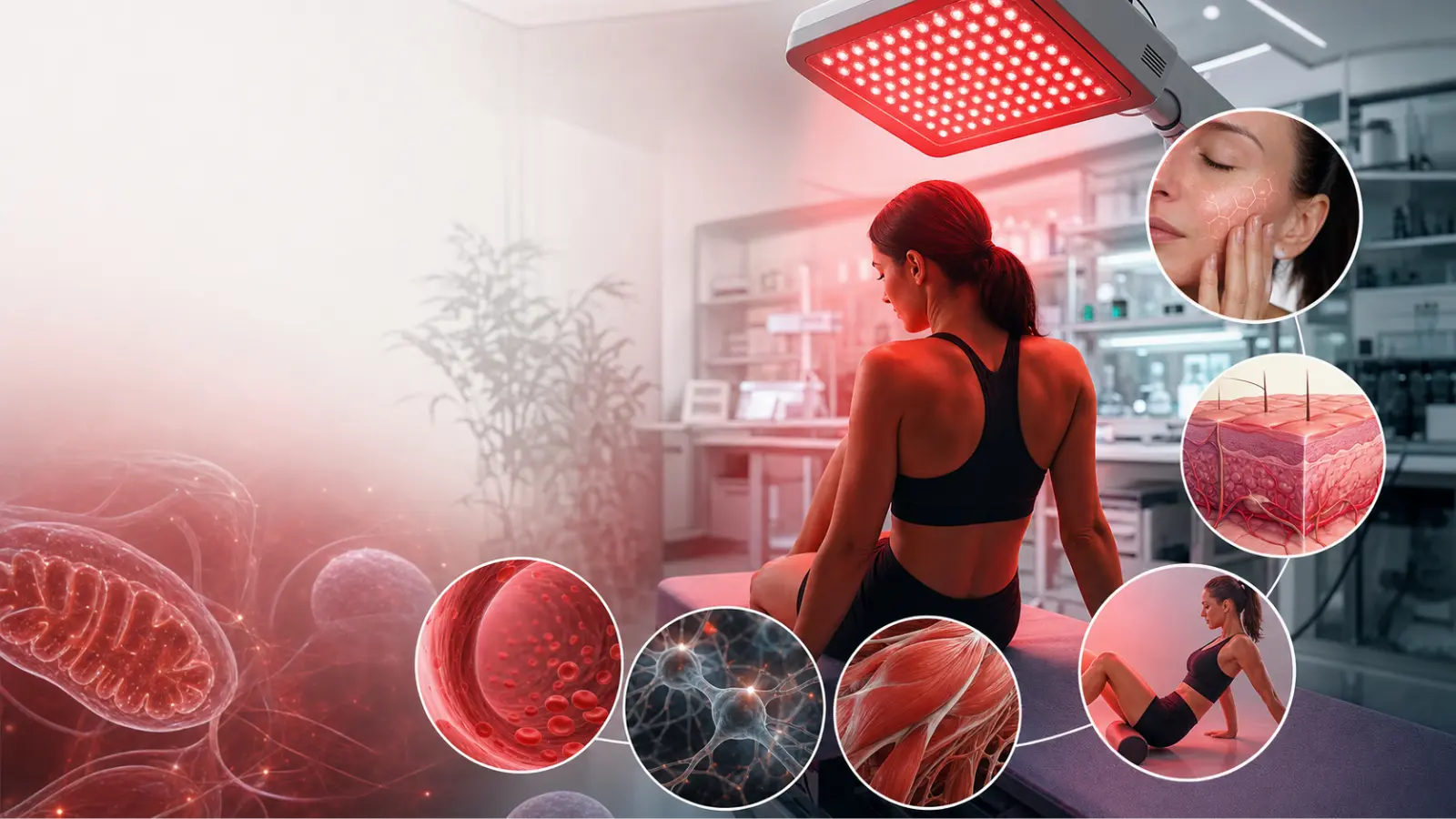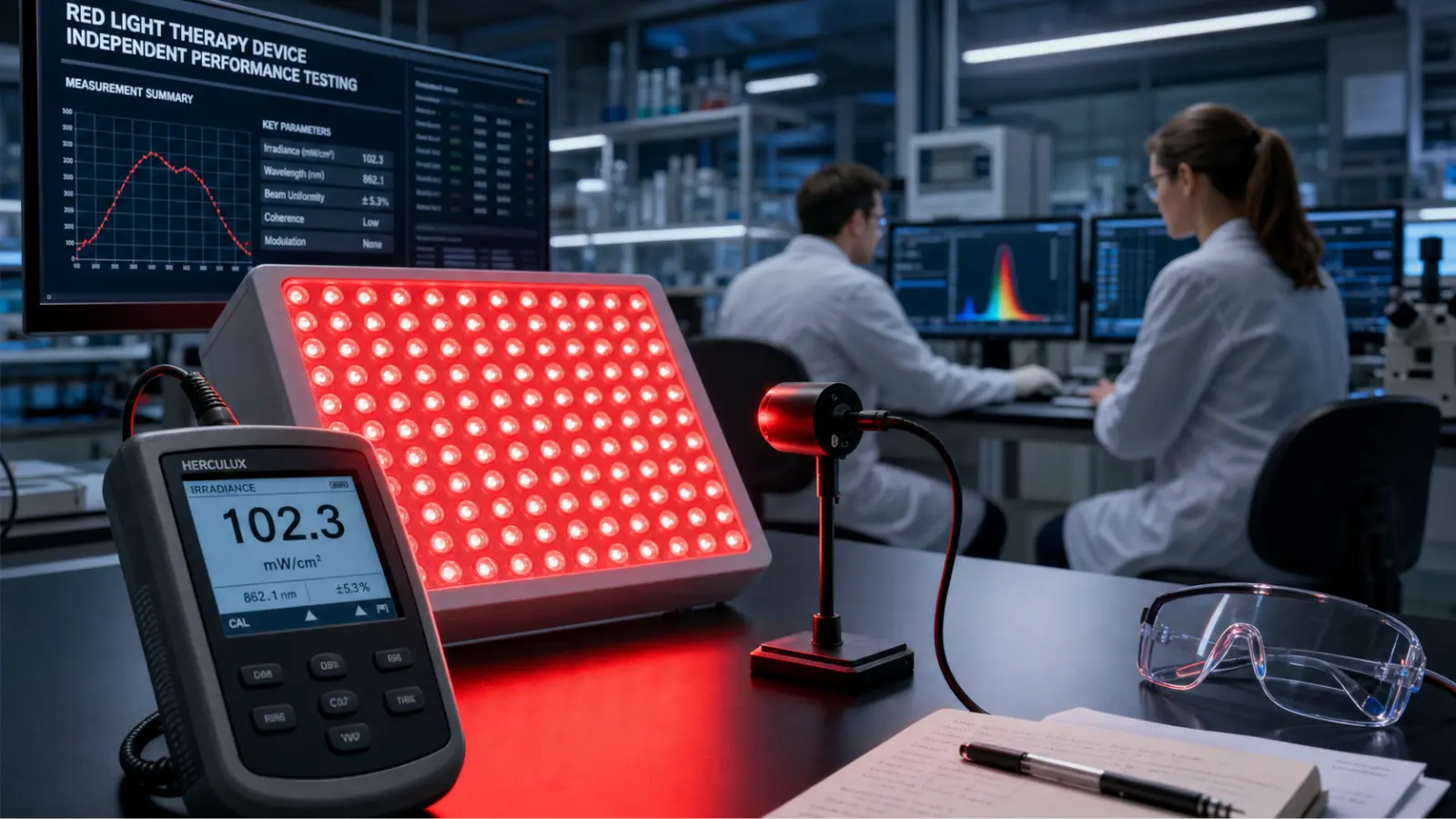

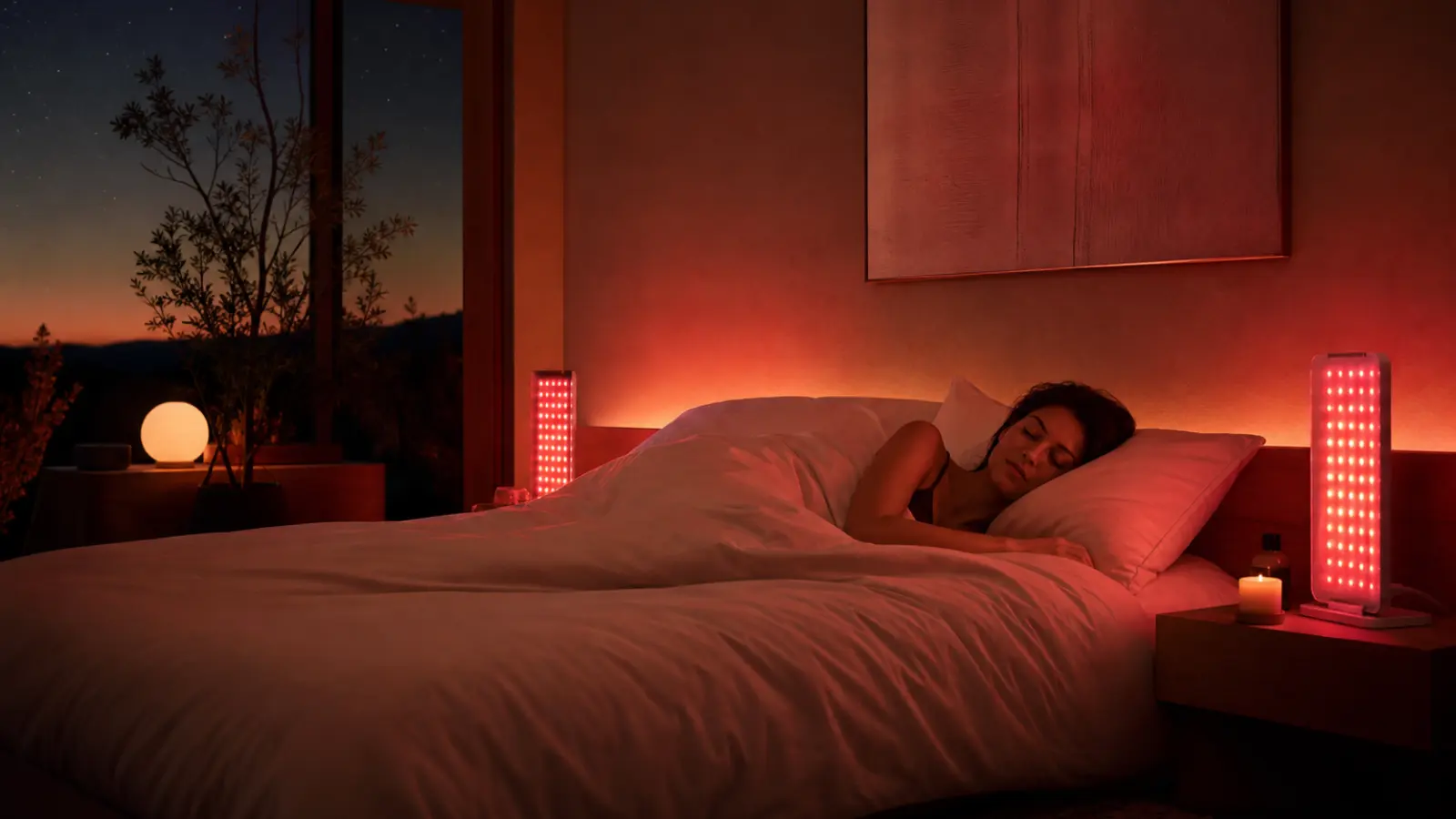
Sleep problems are increasingly common in modern life, especially with constant screen exposure, artificial indoor lighting, stress, and inconsistent schedules disrupting natural sleep patterns.
That’s one reason interest in red light therapy for sleep has grown rapidly in recent years. Unlike blue-rich light, red light appears far less disruptive to melatonin production and circadian rhythm during evening hours.
Early research suggests red light therapy may support relaxation, recovery, and sleep quality, though the current human evidence is still relatively limited and developing.
New to photobiomodulation? Explore the complete Red Light Therapy Guide covering wavelengths, dosing, treatment distance, near infrared light, and how modern red light therapy panels work.
Can Red Light Therapy Help Sleep?
Current evidence suggests red light therapy may support sleep quality primarily because it is less disruptive to melatonin production than blue rich light exposure at night.
- Some studies suggest possible sleep quality improvements
- Recovery related effects may indirectly support sleep
- Researchers still consider the evidence preliminary
Why Light Exposure Matters for Sleep
The body’s circadian rhythm is heavily influenced by light exposure. Specialized retinal cells called intrinsically photosensitive retinal ganglion cells (ipRGCs) are particularly sensitive to blue wavelengths around 480nm.
When these receptors detect blue-rich light at night, the brain receives signals that suppress melatonin production and delay sleep readiness.
Red wavelengths behave differently. Red light between roughly 620–700nm does not strongly stimulate these blue-light-sensitive pathways, which is why red light is often considered more circadian-friendly during evening hours.
What Does Research Actually Show?
Current evidence on red light therapy and sleep is promising but still limited.
Most research falls into several categories:
- circadian rhythm and light exposure studies
- small human sleep studies
- recovery-focused photobiomodulation research
- stress and cortisol-related research
The strongest evidence currently supports the idea that red light is significantly less disruptive to nighttime biology than blue-rich artificial lighting.
One of the most frequently cited human studies was published in the Journal of Athletic Training in 2012. Researchers randomized elite female basketball players to either nightly whole-body red light therapy sessions or a control condition over 14 days.
Researchers observed improvements in Sleep Quality Index (PSQI) scores compared to controls. While the study was relatively small, it remains one of the better-known human trials specifically examining red light therapy and sleep-related outcomes.
| Claim | Evidence Level | Current Consensus |
|---|---|---|
| Red light is less disruptive than blue light at night | Strong | Well-supported by circadian biology research |
| Red light therapy may improve sleep quality | Moderate | Promising but based on relatively small studies |
| Red light therapy increases melatonin | Limited | Not conclusively demonstrated in humans |
| Red light therapy treats insomnia | Insufficient | Not established as a clinical insomnia treatment |
Possible Mechanisms
Researchers have proposed several mechanisms that may explain why red light therapy could support sleep and nighttime recovery.
Melatonin and Circadian Rhythm
Unlike blue rich light, red light appears far less disruptive to nighttime melatonin signaling. One small human study found that 14 days of nightly whole body red light exposure increased melatonin levels from roughly 22 pg/mL to 39 pg/mL alongside improvements in sleep quality.
Cortisol and Relaxation
Elevated evening cortisol levels are associated with stress, hyperarousal, and difficulty falling asleep.
Several photobiomodulation studies have explored cortisol-related pathways and stress regulation, though outcomes vary between studies.
Recovery and Physical Relaxation
Some researchers believe red and near infrared light may indirectly improve sleep quality by supporting muscle recovery, reducing soreness, and promoting physical relaxation after exercise or stress.
How Red Light Therapy May Support Sleep
Circadian Support
Red wavelengths appear less disruptive to melatonin signaling than blue-rich light exposure.
Stress Regulation
Some PBM studies explore cortisol and stress-related pathways connected to relaxation.
Recovery Effects
Reduced soreness and physical tension may indirectly support better sleep quality.
Cellular Signaling
Researchers continue studying mitochondrial and photobiomodulation pathways related to circadian biology.
Recovery and Sleep: An Important Connection
Sleep and recovery influence each other in both directions.
Poor sleep can impair muscle recovery, mood, immune function, and exercise performance. At the same time, soreness, stress, and nervous system activation can make restful sleep more difficult.
Because red light therapy is commonly studied for recovery-related applications, some of its sleep benefits may be indirect rather than purely circadian.
For example:
- reduced muscle soreness may improve nighttime comfort
- relaxation effects may support parasympathetic nervous system activity
- lower perceived stress may improve sleep onset
- improved recovery may support better overall sleep quality
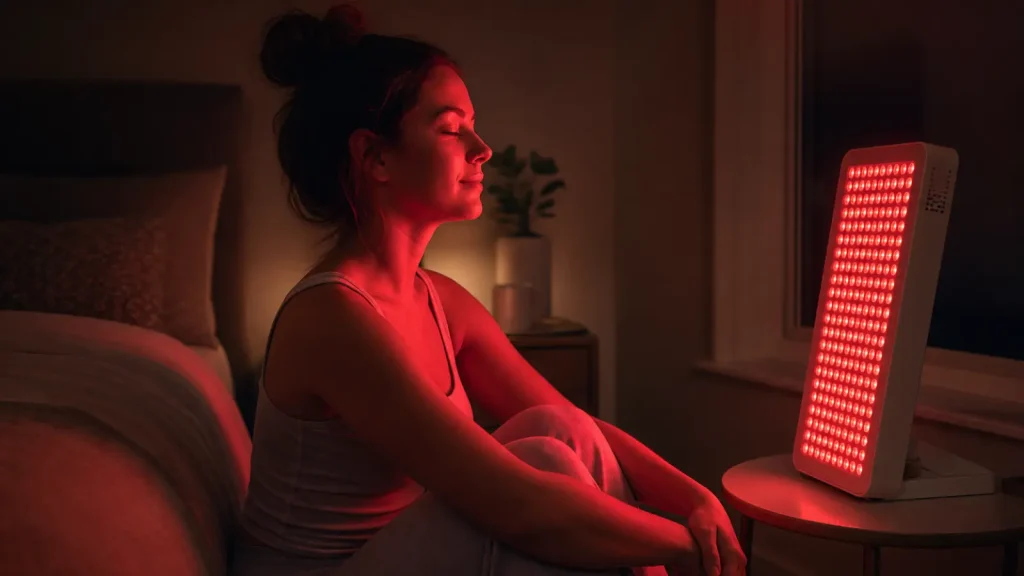
How to Use Red Light Therapy Before Bed
Most evening red light therapy routines focus on consistency rather than intensity.
Many users perform sessions roughly 30 to 90 minutes before bedtime while reducing surrounding screen exposure and bright indoor lighting.
While protocols vary substantially between devices and studies, moderate evening exposure is generally considered more reasonable than aggressive high-dose approaches.
Evening Red Light Therapy Guide
Many evening protocols use sessions before nighttime wind-down routines.
Avoid bright overhead lighting and screens after sessions when possible.
Many users perform sessions lasting roughly 10–20 minutes.
Circadian-related effects generally depend on long-term routine consistency.
What’s Probably True vs. Probably Overhyped
The conversation around red light therapy and sleep often mixes promising early science with exaggerated wellness marketing.
While some small human studies and mechanistic theories suggest possible sleep-related benefits, many claims still go beyond what current evidence actually supports.
Separating what is reasonably supported from what remains speculative is important for setting realistic expectations.
More Plausible
- Red light is less disruptive than blue-rich light at night
- Possible relaxation and recovery support
- Supportive effects on healthy evening routines
- Potential indirect sleep-quality benefits
Probably Overhyped
- Claims that red light therapy cures insomnia
- Guaranteed melatonin increases
- Immediate overnight sleep transformation
- Marketing claims unsupported by large human trials
Practical Perspective
For most people interested in improving sleep quality, the most evidence-supported strategies still involve consistent sleep schedules, reduced nighttime screen exposure, stress management, exercise, and healthy sleep hygiene.
Red light therapy may still play a supportive role within that larger system, particularly for recovery-focused routines and healthier evening lighting habits.
- Red light is generally less disruptive to circadian rhythm than blue-rich light.
- Some early human studies suggest possible sleep-quality benefits.
- Recovery and relaxation effects may indirectly support sleep quality.
- Most current evidence remains preliminary and developing.
- Healthy sleep habits remain more evidence-supported than any standalone PBM protocol.
Medical Disclaimer: This article is intended for general wellness and educational purposes only and is not medical advice. Research on photobiomodulation and red light therapy is ongoing, and responses may vary between individuals. Consult a qualified healthcare professional regarding injuries, chronic pain, eye conditions, or medical concerns before beginning any new wellness protocol.
Affiliate Disclosure: Some links on this page are affiliate links. If you purchase through them, we may earn a small commission at no extra cost to you. We only recommend products we have independently evaluated.
Frequently Asked Questions
Does red light therapy increase melatonin?
Red light itself does not appear to significantly suppress melatonin production the way blue light does. However, direct evidence showing major melatonin increases from red light therapy remains limited.
Is red light better than blue light before bed?
For most people, yes. Blue-rich light strongly influences circadian signaling and melatonin suppression, while red light is generally considered more sleep-friendly during evening hours.
Can red light therapy help insomnia?
There is currently insufficient evidence to conclude that red light therapy is an effective standalone treatment for insomnia. Some small studies suggest possible benefits for sleep quality and relaxation, but larger clinical trials are still needed.
How long before bed should you use red light therapy?
Many users perform sessions roughly 30–90 minutes before bedtime, though optimal timing may vary depending on the individual and device intensity.
Research References
Zhao J, Tian Y, Nie J, Xu J, Liu D. Red light and the sleep quality and endurance performance of Chinese female basketball players. Journal of Athletic Training. https://pmc.ncbi.nlm.nih.gov/articles/PMC3499892/
Figueiro MG, Wood B, Plitnick B, Rea MS. The impact of red light on sleep inertia. Nature and Science of Sleep. 2019;11:45-57. https://www.tandfonline.com/doi/pdf/10.2147/NSS.S195563
Frontiers in Psychiatry. Effects of red light on sleep and mood in healthy subjects. Front Psychiatry. 2023;14:1200350. https://www.frontiersin.org/journals/psychiatry/articles/10.3389/fpsyt.2023.1200350/full