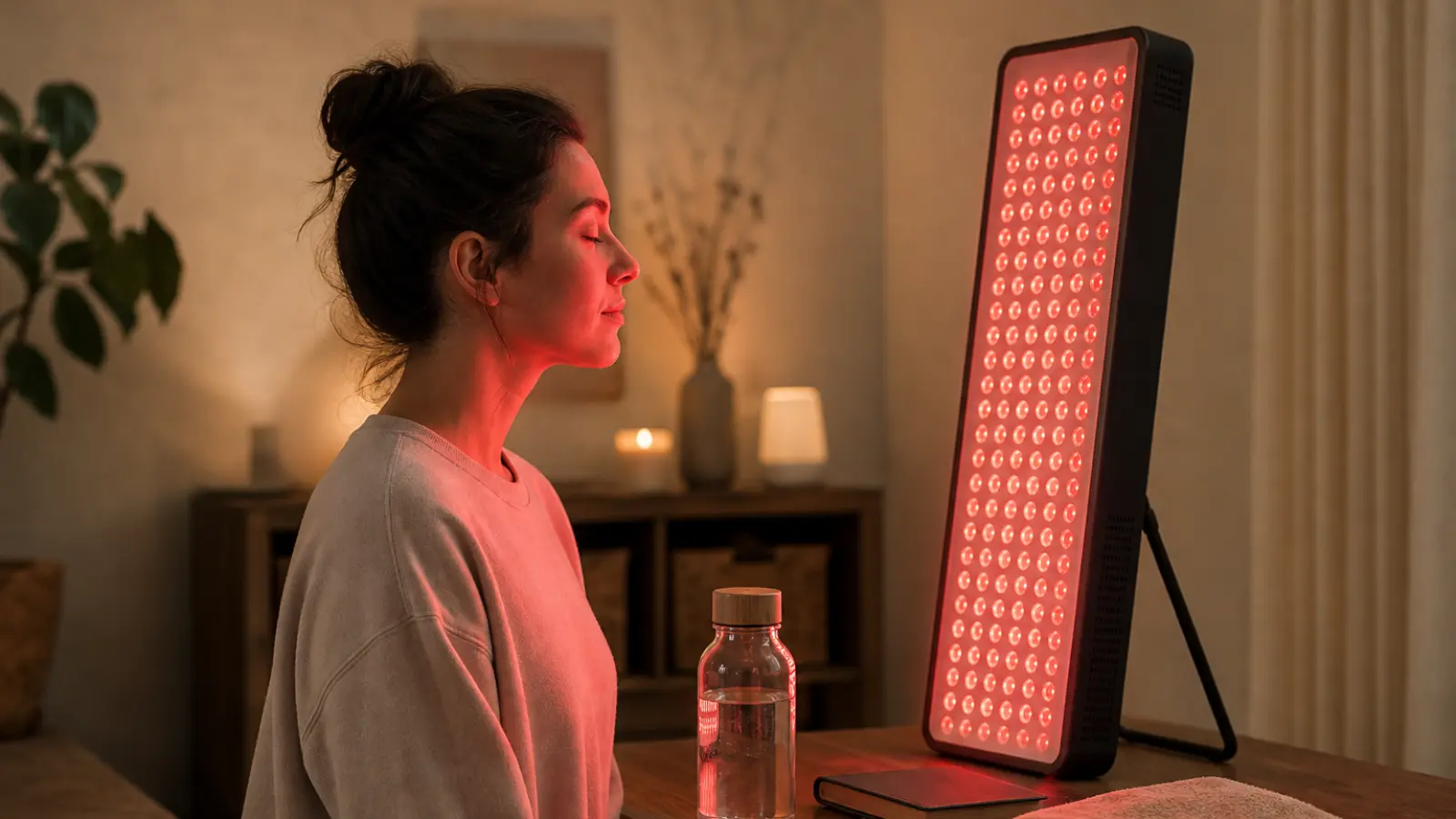

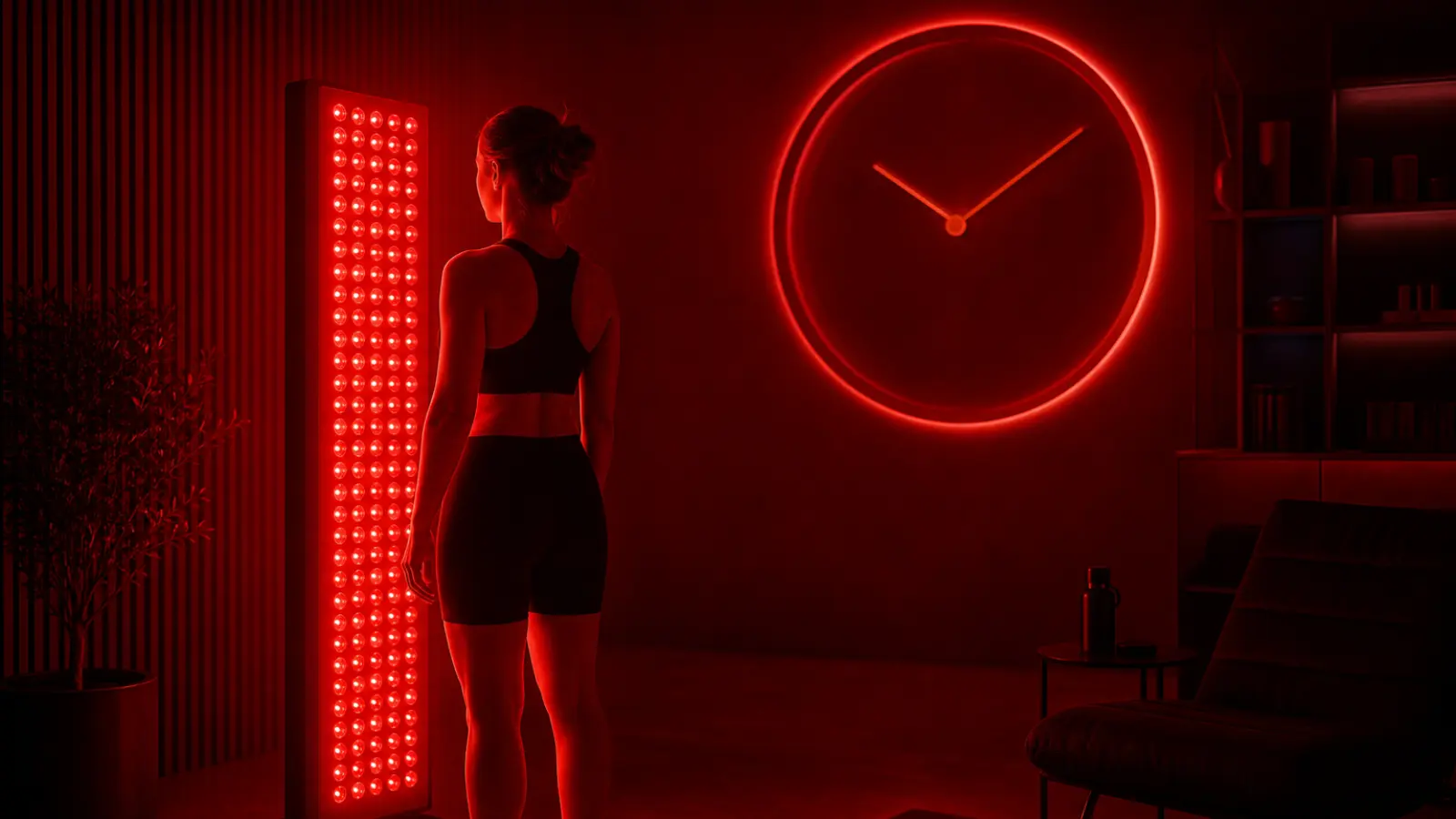
One of the most common questions new PBM users ask is how long red light therapy takes to produce noticeable results. The honest answer depends on several variables including consistency, treatment distance, wavelength, dose, device quality, and the specific treatment target.
Some users notice subtle changes within days, while other outcomes studied in photobiomodulation research may take several weeks of repeated sessions before measurable improvements appear.
New to photobiomodulation? Explore the complete Red Light Therapy Guide covering wavelengths, dosing, treatment distance, near infrared light, and how modern red light therapy panels work.
Quick Takeaways
- Some users notice subtle changes within the first week
- Most PBM studies use repeated sessions over multiple weeks
- Consistency usually matters more than intensity
- Skin and recovery protocols often require ongoing use
- Treatment timelines vary between individuals and applications
PBM results are highly variable and depend on dose, wavelength, treatment consistency, device output, and the specific treatment target. Most published protocols study repeated use over several weeks rather than single sessions.
What Affects Red Light Therapy Timelines?
Several factors can influence how quickly PBM results become noticeable. Two people using similar devices may experience completely different timelines depending on consistency, dose, treatment distance, wavelength selection, and treatment goals.
The specific tissue being targeted also matters. Skin-focused routines, muscle recovery protocols, and joint-related applications may all respond differently depending on tissue depth and the amount of light energy reaching the area. Device quality, irradiance, and overall treatment consistency can also significantly influence real-world results over time.
Consistency
Most PBM protocols use repeated sessions several times per week rather than occasional long treatments.
Dose & Distance
Treatment distance and irradiance significantly affect total delivered PBM dose.
Treatment Target
Skin-focused protocols may follow different timelines than muscle recovery or joint-related applications.
Device Quality
Wavelength accuracy, irradiance, optics, and consistency of output all influence real-world PBM performance.
A Realistic Red Light Therapy Timeline
PBM research often studies cumulative changes over weeks rather than immediate overnight results. Some subjective effects such as warmth, relaxation, temporary soreness relief, or general recovery support may appear relatively early, while more gradual structural or longer-term changes usually require consistent repeated exposure over time.
Many published PBM protocols evaluate outcomes over four to twelve weeks, particularly for skin appearance, recovery, circulation, and joint-related applications. This is one reason why consistency and realistic expectations are important when building a red light therapy routine.
Days 1–7
During the first week, some users report subtle subjective changes such as relaxation, warmth, reduced temporary soreness, improved sleep quality, or general recovery support.
For exercise recovery applications, some studies suggest PBM may help support post-workout recovery timelines when used consistently around training sessions.
Weeks 2–4
By weeks two through four, some users begin noticing more meaningful changes in their primary treatment area depending on the protocol and treatment target.
Skin-focused routines may begin showing gradual texture or tone improvements, while some PBM studies involving joint comfort and recovery protocols report measurable changes within this timeframe.
Weeks 4–12
Many PBM studies run for four to twelve weeks, which is where cumulative changes are more commonly evaluated in the literature.
This timeframe is frequently used in studies involving:
- skin appearance
- exercise recovery
- joint comfort
- tissue recovery
- circulation-related protocols
3–6 Months
Longer-term PBM users often continue treatment as part of an ongoing wellness or recovery routine. Some protocols study repeated exposure over several months to evaluate cumulative effects and maintenance outcomes, including skin-focused and hair growth applications.
Because PBM research varies significantly between devices and treatment protocols, long-term outcomes are difficult to generalize universally.

Most PBM research protocols evaluate repeated treatments over multiple weeks.
Why Consistency Matters
Many PBM studies focus on repeated moderate exposure rather than isolated high-intensity sessions. Consistency appears to play a major role in cumulative PBM protocols, particularly because many biological responses studied in photobiomodulation develop gradually over time rather than immediately after a single session.
This is one reason many PBM routines emphasize shorter repeated sessions several times per week instead of occasional extremely long treatments. Building a sustainable routine is often more practical than maximizing intensity or session duration.
Build a Sustainable PBM Routine
Many users find it easier to maintain shorter consistent sessions several times per week rather than occasional long treatments.
Choosing a realistic schedule that fits daily life is often more practical than chasing maximum intensity or session duration.
When Results Don’t Come
If noticeable changes have not occurred after several weeks of consistent use, several factors may be worth evaluating.
Common reasons PBM results may be delayed
| Potential Issue | Why It Matters |
|---|---|
| Treatment Distance | Being too far from the panel can significantly reduce delivered irradiance and total PBM dose. |
| Inconsistent Use | Many PBM protocols rely on repeated sessions several times per week rather than occasional treatments. |
| Session Duration | Very short sessions may not deliver meaningful PBM dose depending on irradiance and treatment distance. |
| Device Output | Real-world irradiance and wavelength accuracy can vary substantially between devices and testing methods. |
Final Thoughts
Red light therapy timelines vary widely depending on the treatment goal, device quality, PBM dose, and consistency of use. While some users report subtle early changes within days, many published PBM protocols evaluate cumulative outcomes over four to twelve weeks of repeated sessions.
Rather than expecting overnight results, most users should approach PBM as a gradual consistency-based wellness or recovery routine.
Medical Disclaimer: This article is intended for general wellness and educational purposes only and is not medical advice. Research on photobiomodulation and red light therapy is ongoing, and responses may vary between individuals. Consult a qualified healthcare professional regarding injuries, chronic pain, eye conditions, or medical concerns before beginning any new wellness protocol.
Frequently Asked Questions
How long does red light therapy usually take to work?
Some users report subtle subjective changes within days, while many PBM studies evaluate cumulative effects over four to twelve weeks of repeated sessions.
Can red light therapy work after one session?
A single session may produce temporary warmth, relaxation, or recovery-related effects for some users, but most PBM research focuses on repeated consistent exposure over time.
Why do red light therapy timelines vary between people?
PBM timelines can vary depending on wavelength, irradiance, treatment distance, consistency, device quality, and the specific treatment target.
Does using red light therapy longer produce faster results?
Not necessarily. PBM appears to follow a biphasic dose response, meaning excessively long or high-intensity sessions are not always more effective than moderate repeated exposure.
How often should red light therapy be used for consistent results?
Many PBM protocols use repeated sessions several times per week, with consistency generally playing a larger role than occasional high-intensity treatments.
Research References
Hamblin MR. Mechanisms and applications of photobiomodulation. https://pmc.ncbi.nlm.nih.gov/articles/PMC5523874/
Huang YY et al. Biphasic dose response in low level light therapy. https://pmc.ncbi.nlm.nih.gov/articles/PMC3315174/
Unlocking the Power of Light on the Skin: A Comprehensive Review on Photobiomodulation. https://pmc.ncbi.nlm.nih.gov/articles/PMC11049838/