
Top 7 Red Light Therapy Masks (2026)
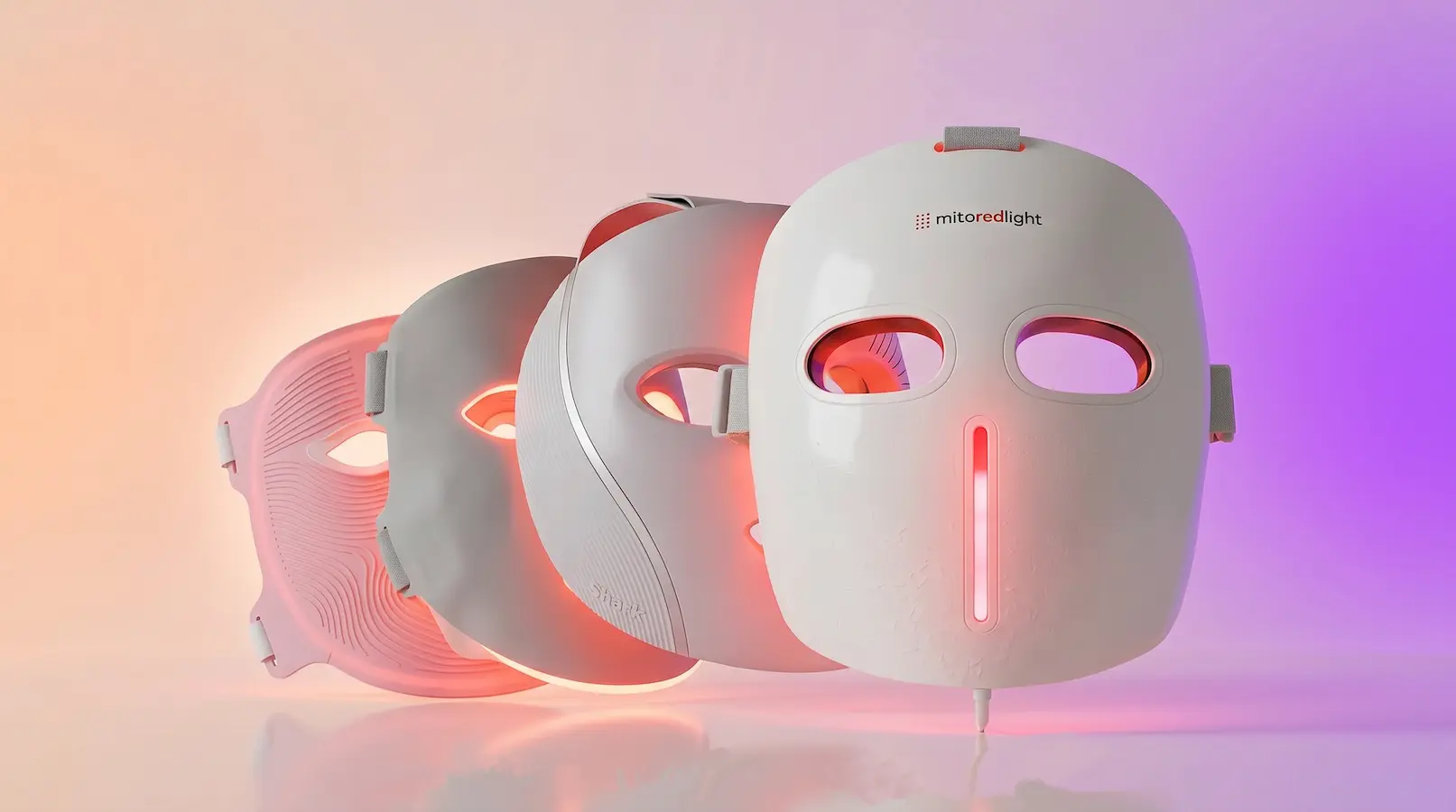
Not all red light therapy masks are built the same. Some are designed for simple anti-aging routines, while others focus on acne, under-eye cooling, faster sessions, multi-wavelength modes, or extended coverage around the jawline, lips, and neck. This guide compares the top LED face masks by wavelengths, power density, treatment time, comfort, FDA status, and real-world usability.
Affiliate Disclosure
This article contains affiliate links and discount codes. If you make a purchase using my links, I may receive a small commission at no additional cost to you. These commissions help support future reviews, testing equipment, and content for the BIOHACK Channel.
What is the best red light therapy mask?
The best red light therapy mask depends on your goal, but the strongest overall options combine clinically relevant wavelengths, good facial coverage, practical treatment times, and strong safety credentials.
MitoGLOW™ LED Mask
MitoGLOW™ is the best overall red light therapy mask in this comparison because it combines high LED density, FDA 510(k) clearance, red, blue, yellow, and near-infrared wavelengths, plus expanded coverage for the lips, chin, jawline, and neck.
Detailed testing breakdown available in the full review .
CurrentBody Series 2
A soft silicone mask for users who want comfort, facial contouring, and a simple red plus near-infrared routine.
- 236 LEDs
- 633nm, 830nm, 1072nm
- 10 minutes, 4x weekly
Nanoleaf LED Mask
A strong value pick with FDA clearance, rechargeable use, seven presets, and broad multi-color functionality.
- 432 LEDs
- 7 treatment modes
- $249.99
Solawave Wrinkle Retreat Pro
Best for users who want a very short treatment time without giving up red, amber, deep red, and near-infrared wavelengths.
- 320 LEDs
- 3-minute sessions
- 65 mW/cm²
Shark CryoGlow
The most unique option for users who want LED therapy plus clip-on under-eye cooling treatments.
- 480 LEDs
- 415nm, 630nm, 830nm
- Cooling treatment included
CurrentBody Multi Light
Best for users who want a broader multi-wavelength system with red, near-infrared, blue, green, and yellow light.
- 566 LEDs
- 6 wavelengths
- 5 treatment modes
Project E LumaLux Face Mask
Best for users who want maximum LED count and extensive color customization, though some modes have less established evidence.
- 800 LEDs
- 3-minute sessions
- Multiple color modes
How We Compared the Best LED Face Masks
Most LED face mask comparisons focus too heavily on LED count alone, but higher LED numbers do not automatically mean better performance. A good red light therapy mask should combine clinically relevant wavelengths, practical irradiance, comfortable facial coverage, reasonable treatment times, and a design that users will actually use consistently.
For this guide, we compared each mask based on wavelength selection, power density, treatment efficiency, FDA status, fit and comfort, facial coverage, treatment modes, usability, and overall real-world value rather than marketing claims alone.
What Actually Matters in a Red Light Therapy Mask?
Many LED masks advertise higher LED counts, more color modes, or shorter treatment times, but those features only matter if the underlying light delivery is effective. The most important factors are usually wavelength selection, irradiance, facial coverage, comfort, and consistency of use.
When comparing the best red light therapy masks, these are the factors that matter most:
- Wavelength selection and near-infrared support
- Facial coverage around the lips, jawline, and under-eyes
- Treatment efficiency and realistic session times
- Comfort, fit, and long-term usability
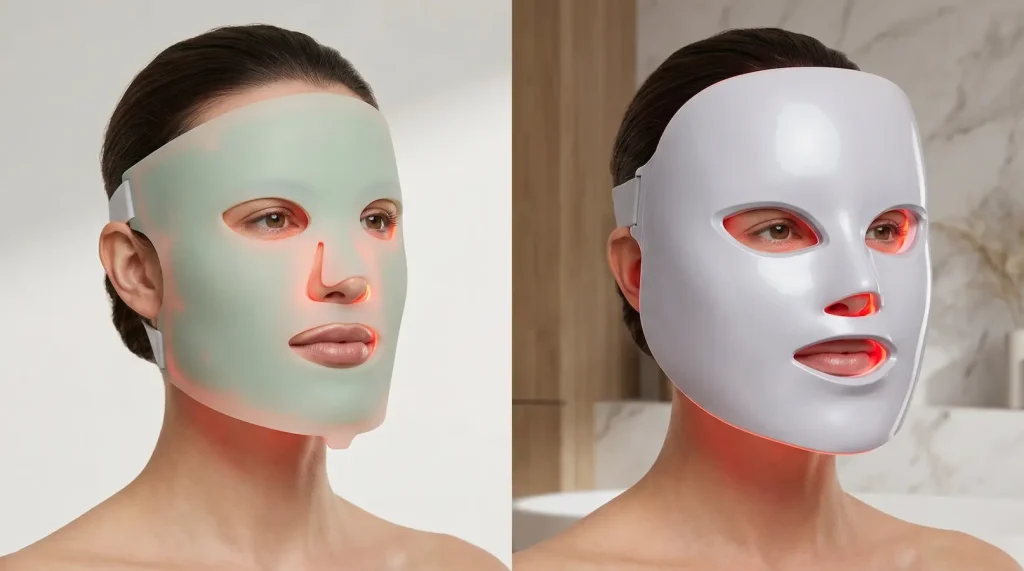
Flexible silicone LED masks provide a softer, lighter fit, while hard-shell masks support denser LED layouts, expanded coverage, and more advanced treatment features.
Flexible Silicone vs Hard Shell LED Masks
The best red light therapy mask design depends on what you value most. Flexible silicone masks usually prioritize comfort and contouring, while hard-shell masks often focus on structure, coverage, LED density, and advanced treatment modes.
Flexible silicone masks tend to sit closer against the skin with a lighter feel, while hard-shell masks maintain a more rigid shape that can support expanded jawline coverage, denser LED layouts, cooling systems, and multi-mode controls.
| Mask Type | Best For | Main Advantages | Examples |
|---|---|---|---|
|
Flexible Silicone
Soft Fit
Contour Comfort
|
Comfort-focused anti-aging routines and closer facial contouring. | Lightweight feel, closer skin contact, easier long-session comfort, simpler treatment systems. |
CurrentBody Series 2 Solawave |
|
Hard-Shell
Higher LED Density
Advanced Features
|
Users who want expanded coverage, stronger feature sets, and advanced treatment modes. | Structured LED placement, multi-mode systems, jawline coverage, cooling technology. |
MitoGLOW™ Shark CryoGlow Project E LumaLux |
What Does FDA-Cleared Mean for LED Face Masks?
FDA clearance does not automatically mean one LED face mask is more effective than another, but it can provide additional confidence around safety testing, manufacturing standards, and intended device use. Many of the top red light therapy masks in this guide are FDA-cleared, while others rely on certifications like IEC, FCC, CE, or are still in the process of obtaining FDA clearance.
In general:
- FDA-cleared masks have gone through a regulatory review process for safety and intended use
- FDA 510(k)-cleared devices are reviewed through a substantial equivalence pathway
- IEC, FCC, and CE certifications focus more on electrical and product safety standards
FDA clearance is only one part of the equation. Wavelength selection, irradiance, facial coverage, comfort, and consistency of use often matter just as much in real-world results.
Which LED Wavelengths Actually Matter?
The most important wavelengths in LED face masks are usually red light, near-infrared light, and blue light. These wavelengths are the most commonly studied in photobiomodulation research and are widely used for anti-aging, skin texture, acne-focused treatments, and overall skin support.
Most high-quality LED face masks use red light in the 630nm to 660nm range along with near-infrared light between roughly 810nm and 850nm. Some masks also include deeper near-infrared wavelengths like 1072nm, while others add green, yellow, cyan, purple, or white light modes for broader cosmetic-focused customization.
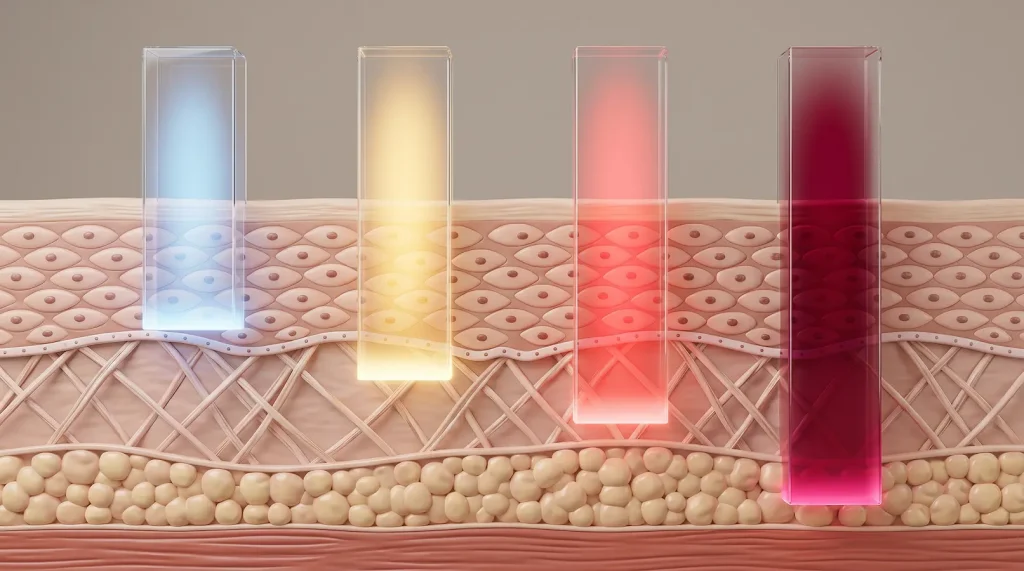
Different LED wavelengths penetrate the skin at different depths, with red and near-infrared light reaching deeper layers than blue light.
| Wavelength | Typical Range | Common Use |
|---|---|---|
|
Red Light
630nm–660nm
|
Most commonly used visible red wavelengths in LED face masks. | Often used for skin texture, fine lines, and collagen-focused treatments. |
|
Near-Infrared
810nm–850nm
|
Deeper penetrating near-infrared wavelengths used in many premium masks. | Commonly included for deeper photobiomodulation support and recovery-focused applications. |
|
Deep Near-Infrared
1072nm
|
Less common deeper near-infrared wavelength found in select advanced masks. | Typically marketed for deeper aging-focused treatment support. |
|
Blue Light
415nm–465nm
|
Common acne-focused wavelength range. | Frequently included in masks designed for breakout-prone skin. |
|
Amber / Yellow
590nm–605nm
|
Often included in multi-wavelength cosmetic systems. | Usually marketed for skin tone and brightening support. |
|
Green Light
520nm–532nm
|
Less common wavelength found in some multi-color masks. | Typically associated with complexion-focused cosmetic positioning. |
Treatment Time and Real-World Consistency
The best LED face mask is often the one you will actually use consistently. Some masks prioritize shorter sessions with higher irradiance, while others use longer routines with more moderate power density. In practice, comfort, convenience, and realistic daily use can matter just as much as raw specifications.
| Mask | Session Length | Power Density | Routine Style |
|---|---|---|---|
| Solawave Wrinkle Retreat Pro | 3 minutes | 65 mW/cm² | Fastest Routine |
| Shark CryoGlow | 4 to 8 minutes | 128 mW/cm² | High Output |
| MitoGLOW™ LED Mask | 5 to 10 minutes | 10 to 65 mW/cm² by mode | Balanced |
| Nanoleaf LED Mask | 5 to 10 minutes | 78.4 to 103.1 mW/cm² | Strong Value |
| CurrentBody Series 2 | 10 minutes | 30 mW/cm² | Simple Routine |
Best LED Face Masks by Use Case
The best red light therapy mask depends on what matters most to you. Some users prioritize flexible comfort and simplicity, while others want broader coverage, shorter sessions, acne-focused blue light, or more advanced multi-wavelength systems.
MitoGLOW™ LED Mask
Best for users who want high LED density, multiple clinically relevant wavelengths, and expanded coverage around the jawline, chin, lips, and neck.
Detailed testing available in the review .
CurrentBody Series 2
Best for users who prefer a softer silicone design with close facial contouring and a simpler red plus near-infrared treatment routine.
Nanoleaf LED Mask
Best value-focused option with FDA clearance, seven treatment presets, rechargeable portability, and strong irradiance for the price.
Solawave Wrinkle Retreat Pro
Best for users who want shorter treatment sessions with high irradiance and a streamlined anti-aging routine.
Final Verdict: Which Red Light Therapy Mask Should You Choose?
The best red light therapy mask depends on your main goal. If you want the strongest overall mix of LED density, wavelength variety, and expanded coverage, MitoGLOW™ is the most complete option. If comfort and flexibility matter most, CurrentBody Series 2 is the cleaner silicone-mask pick. If price is the priority, Nanoleaf offers one of the strongest value profiles. If consistency is your biggest challenge, Solawave’s 3-minute routine is the easiest to fit into a busy schedule.
For most buyers, the best mask is not the one with the longest spec sheet. It is the one that combines useful wavelengths, comfortable coverage, realistic treatment times, and a design you will actually use consistently.
FAQ
Are red light therapy masks actually effective?
Research on photobiomodulation suggests that red light and near-infrared light may support skin texture, fine lines, and overall skin appearance when used consistently over time. Results depend on factors like wavelength selection, treatment consistency, irradiance, and overall device quality.
What wavelengths are best for LED face masks?
The most commonly studied wavelengths are usually red light in the 630nm to 660nm range and near-infrared light between roughly 810nm and 850nm. Blue light around 415nm to 465nm is also commonly used in acne-focused LED masks.
Are FDA-cleared LED masks safer?
FDA clearance can provide additional confidence around safety testing and intended device use, but it does not automatically mean one mask is more effective than another. Wavelength selection, coverage, comfort, and treatment consistency still matter significantly.
How often should you use a red light therapy mask?
Most LED face masks recommend treatment sessions several times per week, with session lengths typically ranging from about 3 to 10 minutes depending on irradiance and device design. Following the manufacturer’s recommended schedule is usually best.
What is the difference between red light and near-infrared light?
Red light is visible and commonly used for skin-focused applications like texture and fine lines, while near-infrared light is invisible to the eye and penetrates deeper into tissue. Many premium LED masks combine both wavelengths in the same treatment system.