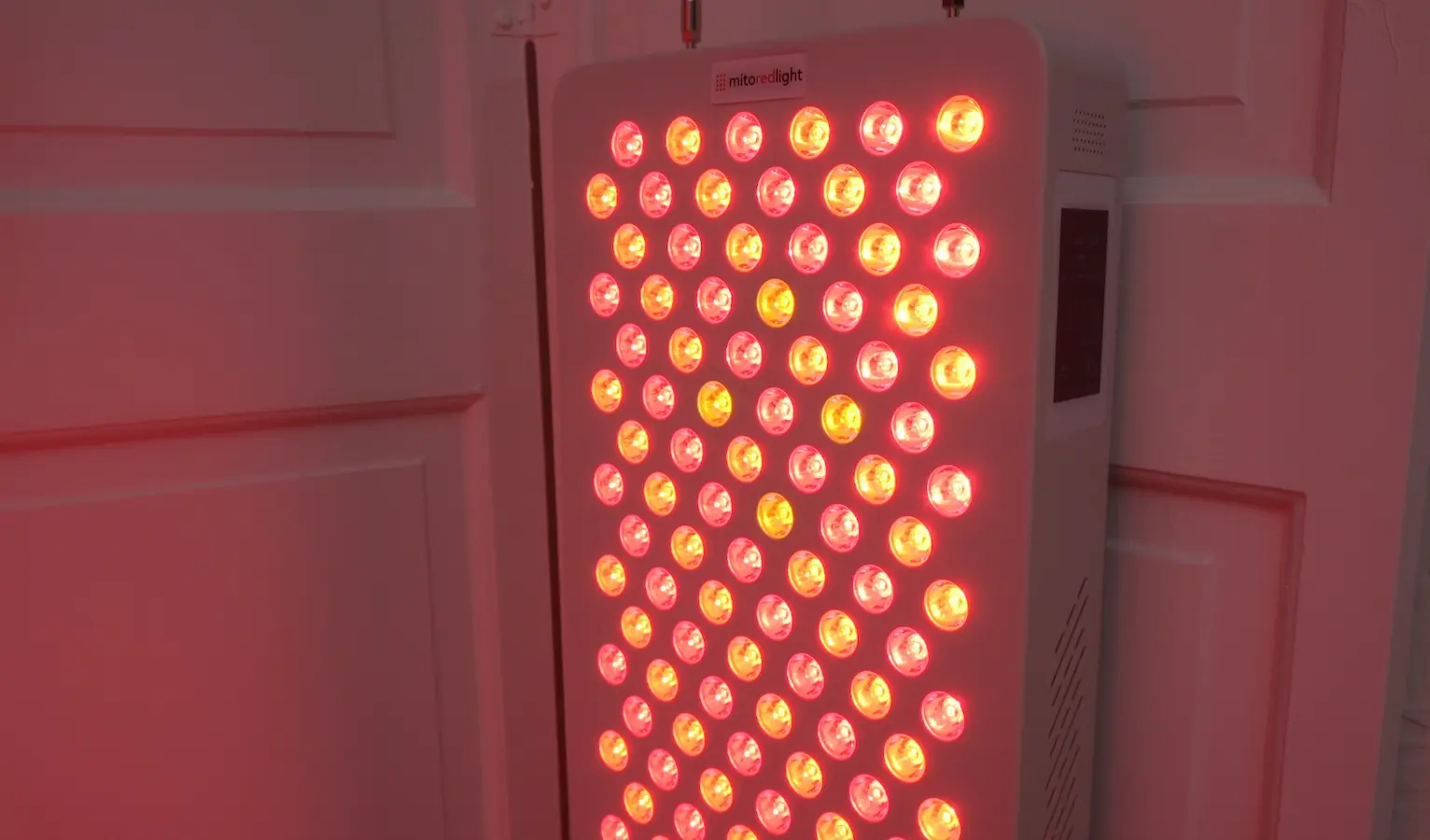

Mito Red Adapt 4.0 Max Review: 8 Wavelengths & New Control Panel
The Mito Red Light Adapt 4.0 Max is Mito’s latest multi-wavelength red light therapy panel, designed with eight distinct wavelengths and integrated smart modes for a more customizable treatment experience. In this review, I take a closer look at real-world output testing, wavelength accuracy, usability, pricing, and where the Adapt 4.0 Max fits within the broader Mito Red Light lineup.
New to photobiomodulation? Explore the complete Red Light Therapy Guide covering wavelengths, dosing, treatment distance, near infrared light, and how modern red light therapy panels work.
Affiliate Disclosure
This article contains affiliate links and discount codes. If you make a purchase using my links, I may receive a small commission at no additional cost to you. These commissions help support future reviews, testing equipment, and content for the BIOHACK Channel.
Watch the full video review for a closer look at the MitoADAPT MAX 4.0 red light therapy panel.
INTRODUCTION
The Mito Red Light Adapt 4.0 Max represents a noticeable shift in how Mito Red Light is approaching full body panel design. While many modern red light therapy panels focus primarily on increasing power output or adding more wavelengths, the Adapt series leans more heavily into treatment customization and spectral flexibility.
On paper, the panel introduces eight peak wavelengths, eleven built in modes, touchscreen controls, and dual chip LED architecture. What makes the Adapt 4.0 Max genuinely interesting, though, is how those features work together. Instead of blending multiple wavelengths together at fixed ratios, the panel dynamically routes power depending on the active mode, allowing different portions of the spectrum to receive greater emphasis.
That changes the experience considerably compared to many traditional fixed-spectrum panels.
After testing the panel’s output, spectral accuracy, EMF levels, usability, and overall design, the Adapt 4.0 Max feels less like a standard hardware refresh and more like a move toward a more software driven approach to red light therapy.
What makes the Mito Adapt 4.0 Max different?
The Mito Adapt 4.0 Max stands out for its eight peak wavelengths, dual chip LED architecture, and customizable smart modes that dynamically prioritize different portions of the red and near infrared spectrum.
Where The Adapt 4.0 Max Fits Within The Mito Red Light Lineup
The Adapt 4.0 series currently sits at the top of Mito Red Light’s panel ecosystem in terms of treatment customization and software functionality. While the MitoPRO X series focuses more heavily on balanced full-spectrum output and simplicity, the Adapt lineup pushes further into configurable spectral control and mode flexibility.
The Adapt 4.0 Max is currently the largest panel in the series and uses a 288 lens, 576 dual chip LED configuration housed inside a redesigned wide-body chassis. Compared to earlier Mito panels, the proportions feel noticeably more compact and modern while still maintaining strong full body coverage.
What ultimately separates the Adapt series from more traditional fixed-spectrum panels is the emphasis on customizable wavelength routing. Rather than treating all wavelengths equally at all times, the panel can dynamically prioritize different portions of the spectrum depending on the selected mode.
That flexibility gives the Adapt 4.0 Max a noticeably different feel compared to many current generation full body panels and positions it as Mito’s most configurable panel platform to date.
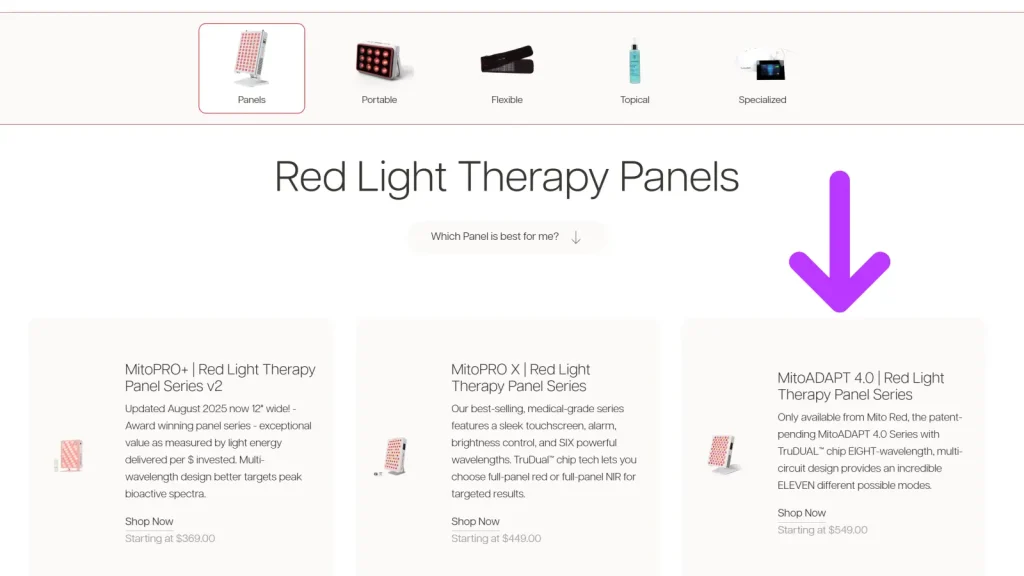
The Adapt 4.0 Max is currently the most advanced offering in Mito Red Light’s standard panel lineup, combining expanded spectral flexibility with a more refined control system.
Eight Wavelengths And A More Flexible Spectral Approach
Most current generation red light therapy panels rely on a handful of dominant wavelengths that remain blended together regardless of treatment settings. The Adapt 4.0 Max takes a more flexible approach to spectral output.
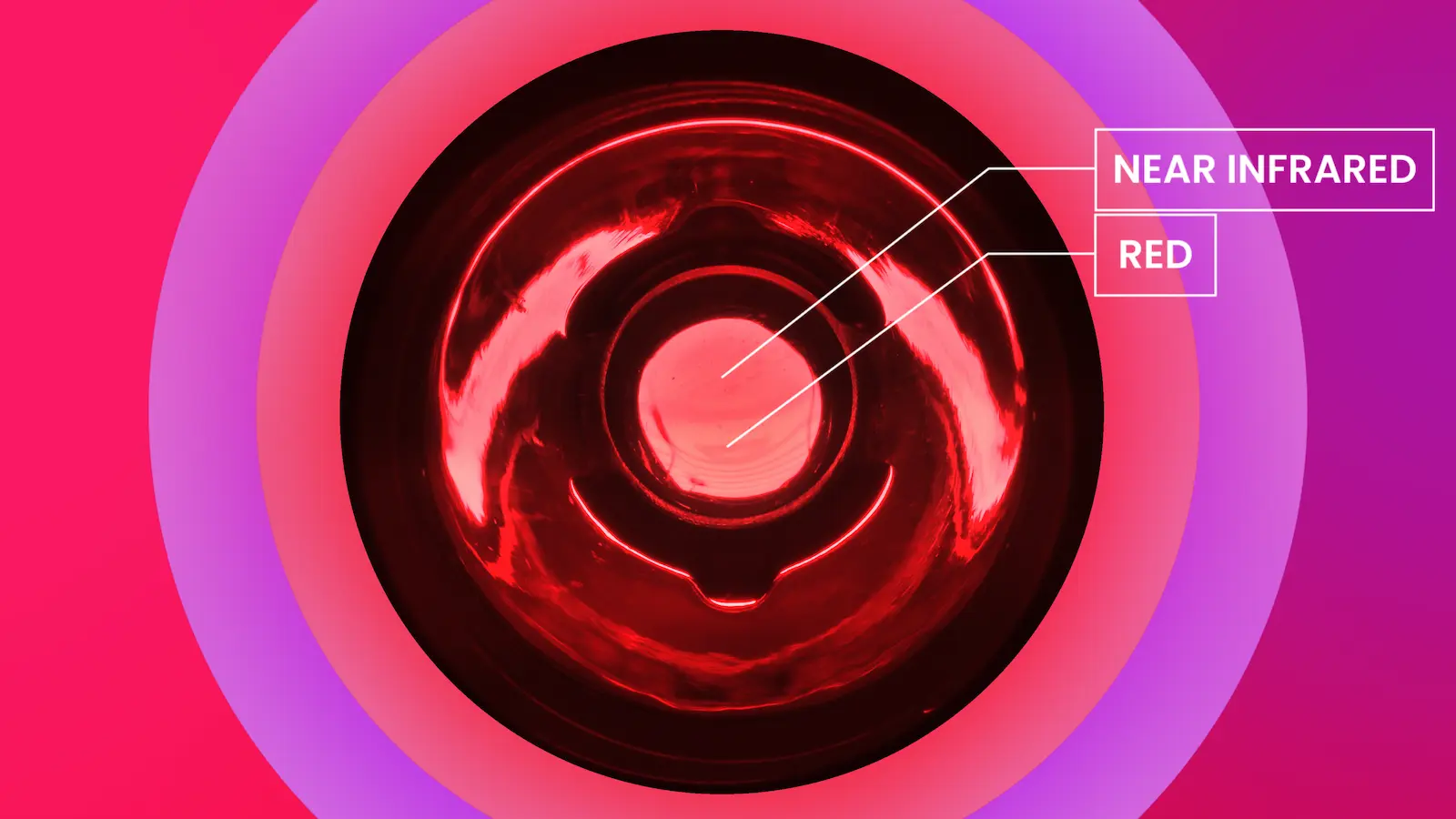
The panel uses eight peak wavelengths across both the red and near infrared spectrum, including 940nm which is still relatively uncommon in many consumer panels. More importantly, the active mode changes how power is distributed across those wavelengths, allowing different portions of the spectrum to receive greater emphasis.
In practice, this creates noticeably different output profiles depending on the selected mode. Some modes prioritize deeper red wavelengths while others shift more power toward shorter or longer near infrared ranges. There are also isolated wavelength modes that narrow the spectral profile compared to traditional “all wavelengths on at once” configurations.
During testing, all eight wavelengths appeared accurately in live spectral measurements using the iPhos spectrometer. It’s encouraging to see broader spectral implementations becoming more common, especially when paired with meaningful control over how those wavelengths are distributed.
Ultimately, the panel’s flexibility feels more important than the raw wavelength count itself.
Adapt 4.0 Max vs MitoPRO X
| Feature | Adapt 4.0 Max | MitoPRO X |
|---|---|---|
| Wavelengths | 8 | 6 |
| Peaks | 590, 630, 660, 670, 810, 830, 850, 940nm | 590, 630, 660, 810, 830, 850nm |
| Best fit | More customization | Simpler use |
| Controls | Touchscreen, 11 modes | Simpler controls |
| Advantage | Mode flexibility | Balanced output |
Touchscreen Controls And Smart Mode Experience
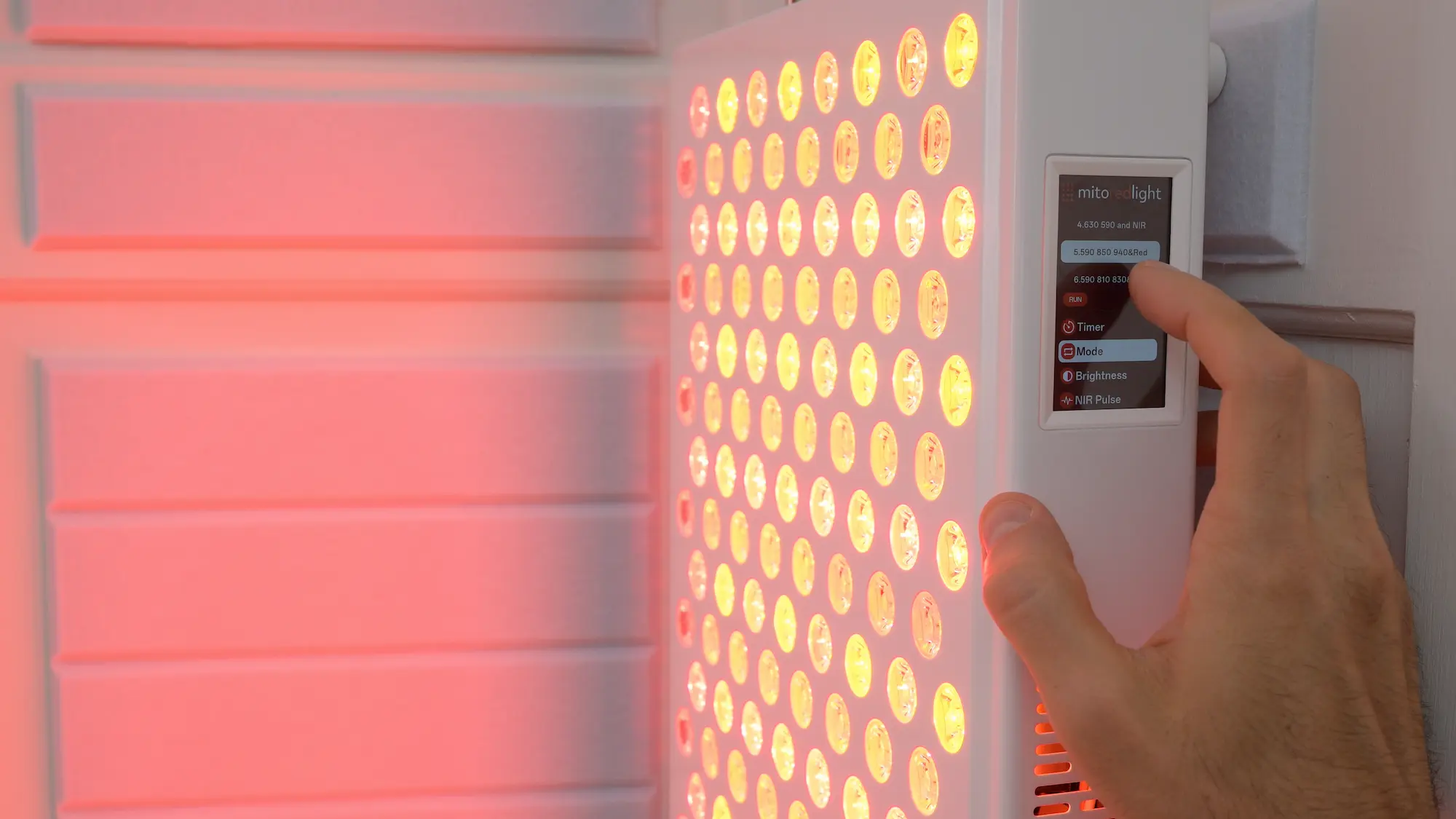
One of the biggest upgrades in the Adapt 4.0 series is the redesigned touchscreen interface. Compared to older generation panel controls, the system feels cleaner, more responsive, and easier to navigate during daily use.
The panel allows users to quickly adjust:
- session time
- light output intensity
- pulse settings
- mode selection
without digging through multiple menus. Brightness can also be adjusted in one percent increments which gives the interface a more refined feel overall.
The eleven built in modes are where the panel becomes more interesting. Rather than acting like minor presets, the modes noticeably change how power is distributed across the spectrum. Some modes emphasize deeper red output while others shift more power toward shorter or longer near infrared wavelengths.
The panel also includes:
- 10Hz near infrared pulsing
- Bluetooth controls
- session tracking
- adjustable screen brightness
Collectively, the system feels far more configurable than most consumer red light therapy panels currently on the market.
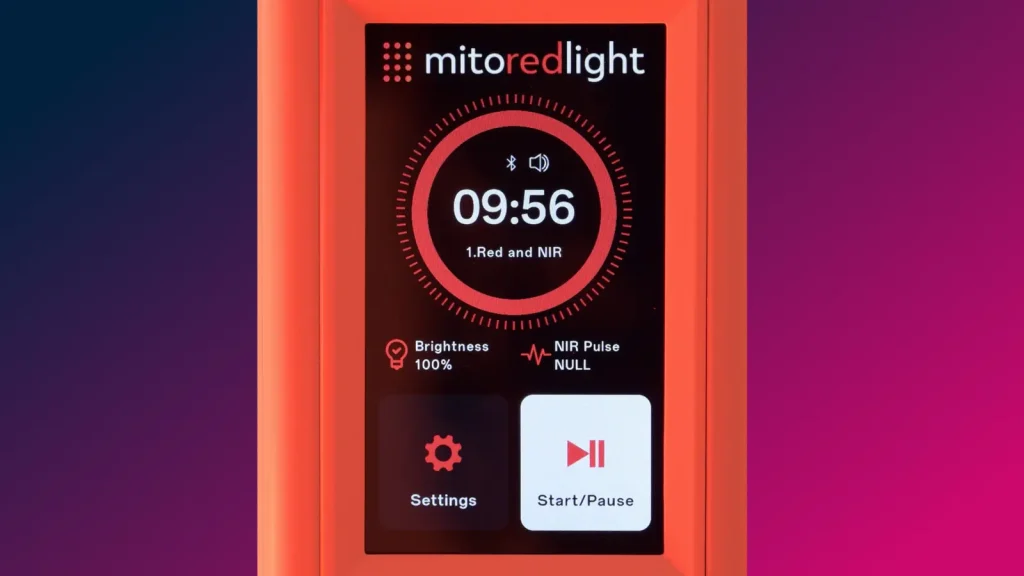
The redesigned touchscreen interface makes switching between modes and wavelength profiles much easier during daily use.
The ESPEO Spectral Range
The Adapt 4.0 Max is built around Mito Red Light’s ESPEO spectral range which spans approximately 570 to 710nm in the red spectrum and 760 to 990nm in the near infrared spectrum.
Rather than concentrating output around only a few dominant wavelengths, the goal of the ESPEO approach is broader spectral coverage across both red and near infrared ranges while still allowing different portions of the spectrum to receive greater emphasis depending on the selected mode.
This wider spectral implementation is part of what gives the Adapt 4.0 Max a more flexible feel compared to many traditional fixed-spectrum panels. Certain modes can lean more heavily into deep red output while others prioritize shorter or longer near infrared wavelengths depending on the intended treatment configuration.
The inclusion of wavelengths like 590nm, 670nm, and 940nm also helps expand the panel’s spectral distribution beyond the more common multi wavelength configurations typically found in many consumer red light therapy panels.
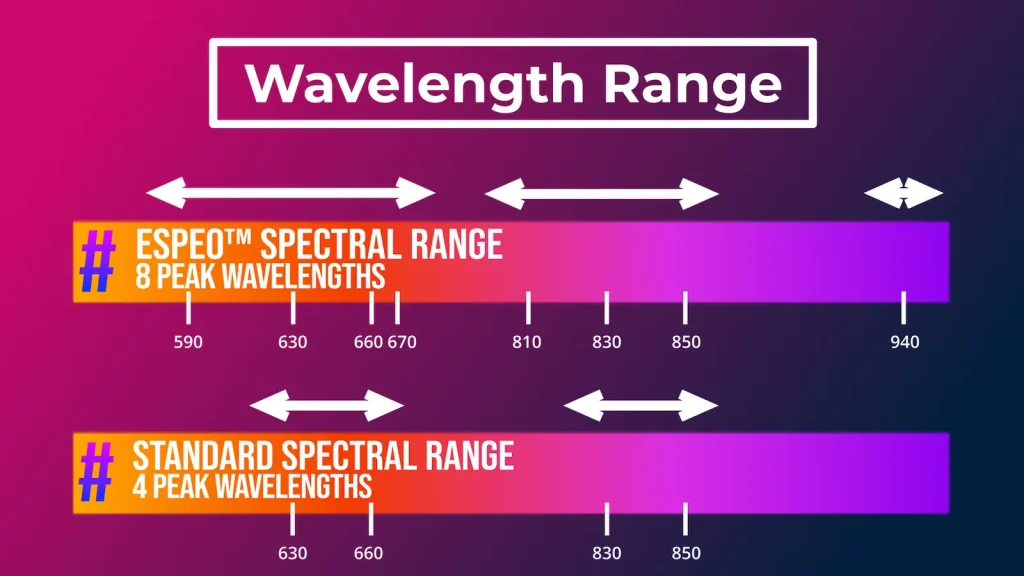
The ESPEO spectral range expands coverage across both the red and near infrared spectrum.
Real World Performance: Irradiance, EMF, And Noise
For irradiance testing, I used the VLP-2000 thermopile meter to measure both peak and average output levels across different distances. At a 6 inch distance, the Adapt 4.0 Max produced a peak irradiance of 65.1 mW/cm² with an average irradiance of 55.1 mW/cm² across the treatment area.
Output remained relatively stable throughout the 6 to 12 inch range, with especially strong beam overlap occurring around the 8 to 9 inch zone where coverage becomes more even across the body. Rather than focusing purely on center hotspot measurements, the Adapt 4.0 Max feels designed around maintaining strong usable coverage across realistic full body treatment distances.
The updated cooling system also performed well during longer sessions. Fan noise measured approximately 44.6 decibels during testing which places the panel around average compared to many current generation full body panels. It’s still noticeable in a quiet room, but not unusually distracting for a panel in this power category.
Overall, the panel balances ideal light output, broad treatment coverage, and respectable thermal performance during extended sessions.
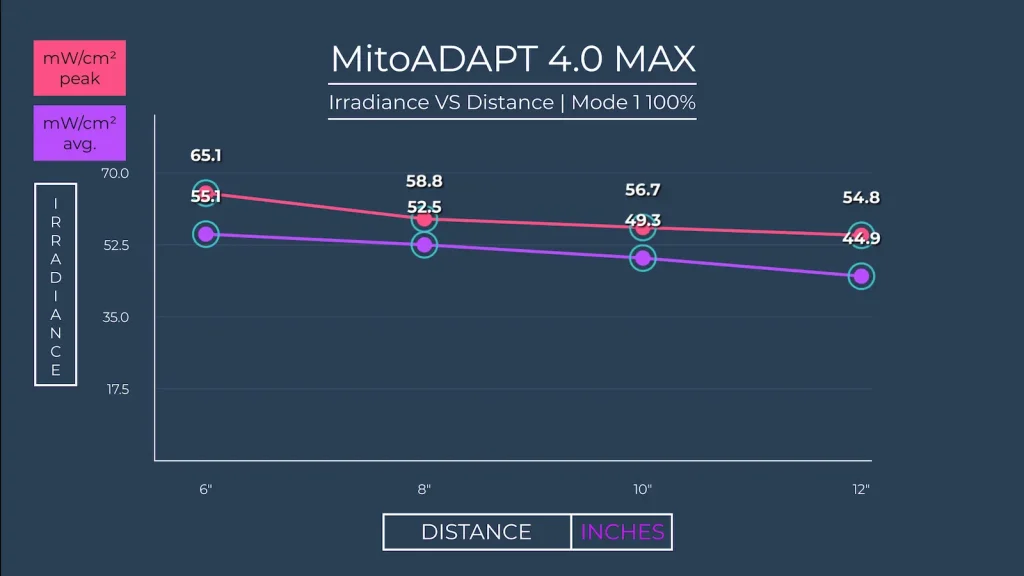
Testing included irradiance measurements, EMF readings, and real-world fan noise evaluation.
What makes the Adapt 4.0 Max feel different from traditional red light panels?
Beyond the expanded wavelength count, the Adapt 4.0 Max stands out for its customizable spectral routing, dual chip LED architecture, touchscreen controls, and more software-driven treatment flexibility. The panel feels designed around configurable treatment modes rather than fixed-spectrum operation.
Build Quality And Design Refinements
The Adapt 4.0 Max also introduces several smaller hardware refinements that make the panel feel more polished than previous generation designs.
The updated chassis uses a semi gloss white finish along with reinforced channel framing around the LED array, giving the panel a more rigid and premium appearance. Compared to older vertically stretched layouts, the shorter and wider form factor also feels more compact and modern while still maintaining strong full body coverage.
Mito also updated the hanging hardware with a redesigned door hook that helps keep the panel aligned more evenly during mounting. Around the back, the integrated handle pairs well with the panel’s compact footprint and makes repositioning the unit easier during setup.
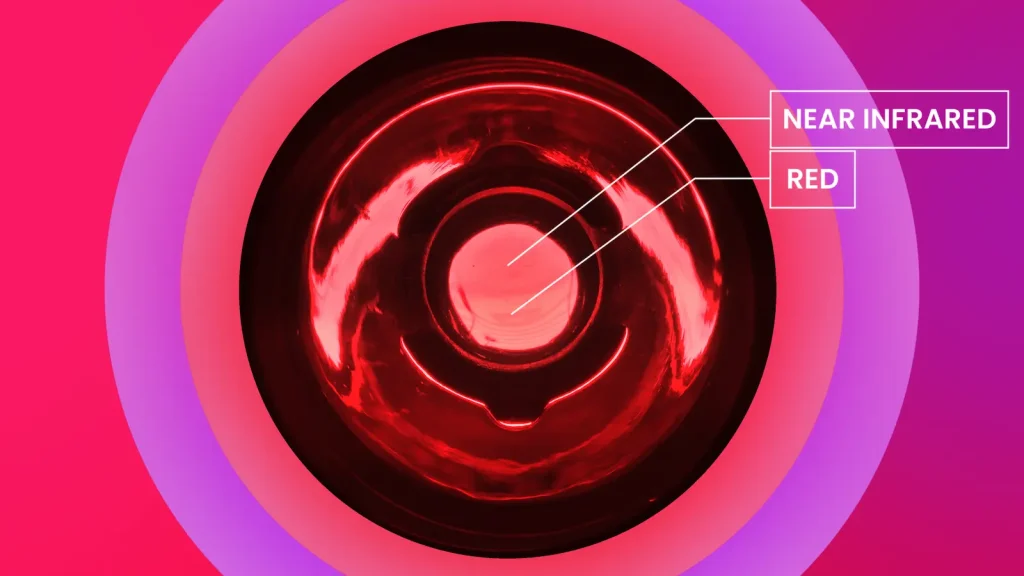
The dual chip LED layout also adds more visual depth to the front of the panel compared to flatter traditional LED arrangements. Individually, these updates are fairly subtle, but together they make the Adapt 4.0 Max feel noticeably more refined overall.
The updated chassis design feels more refined while also improving portability and making the panel easier to move around compared to previous generation cases.
8
Peak wavelengths across red and near infrared spectrum
11
Built in smart modes with dynamic spectral routing
576
Dual chip LED configuration across 288 lenses
44.6 dB
Measured fan noise during testing sessions
Pricing And Availability
The Mito Adapt 4.0 Max retails for $1,499 and is discounted to $1,425 when purchased through my affiliate link. That places it within the premium full body panel category while still undercutting some higher priced commercial-style systems.
Mito also includes free US shipping along with HSA/FSA eligibility depending on the purchase configuration. International buyers can request shipping quotes directly through Mito Red Light depending on their region and panel configuration.
Final Thoughts
The Mito Adapt 4.0 Max feels less like a traditional panel refresh and more like a move toward a more configurable approach to red light therapy.
What makes the panel stand out isn’t simply the addition of more wavelengths, but the flexibility created by the dual chip architecture and smart mode system. The ability to prioritize different portions of the spectrum depending on the selected mode gives the Adapt series a noticeably different feel compared to many fixed-spectrum panels.
The updated touchscreen interface, refined chassis design, and broader spectral implementation also help the panel feel more polished overall than previous generation designs.
Rather than focusing purely on maximum output or wavelength count, the Adapt 4.0 Max feels designed around treatment flexibility and customizable spectral control. For users who want more control over wavelength distribution and mode selection, it stands out as one of the more feature-rich panels currently available within the Mito Red Light lineup.
Frequently Asked Questions
How many wavelengths does the Mito Adapt 4.0 Max use?
The Adapt 4.0 Max uses eight peak wavelengths including 590nm, 630nm, 660nm, 670nm, 810nm, 830nm, 850nm, and 940nm.
What makes the Adapt 4.0 Max different from the MitoPRO X?
The Adapt 4.0 Max focuses more heavily on customizable spectral routing, smart modes, and touchscreen controls, while the MitoPRO X series offers a simpler full-spectrum experience.
How many smart modes does the panel include?
The panel includes eleven built in smart modes that alter how power is distributed across the spectrum.
What is the ideal treatment distance?
The strongest treatment zone appeared around 6 to 12 inches from the panel surface, with especially strong beam overlap around 8 to 9 inches.
How loud is the Adapt 4.0 Max?
Fan noise measured approximately 44.6 decibels at 6″ distance during testing, placing it around average for a full body panel in this category.