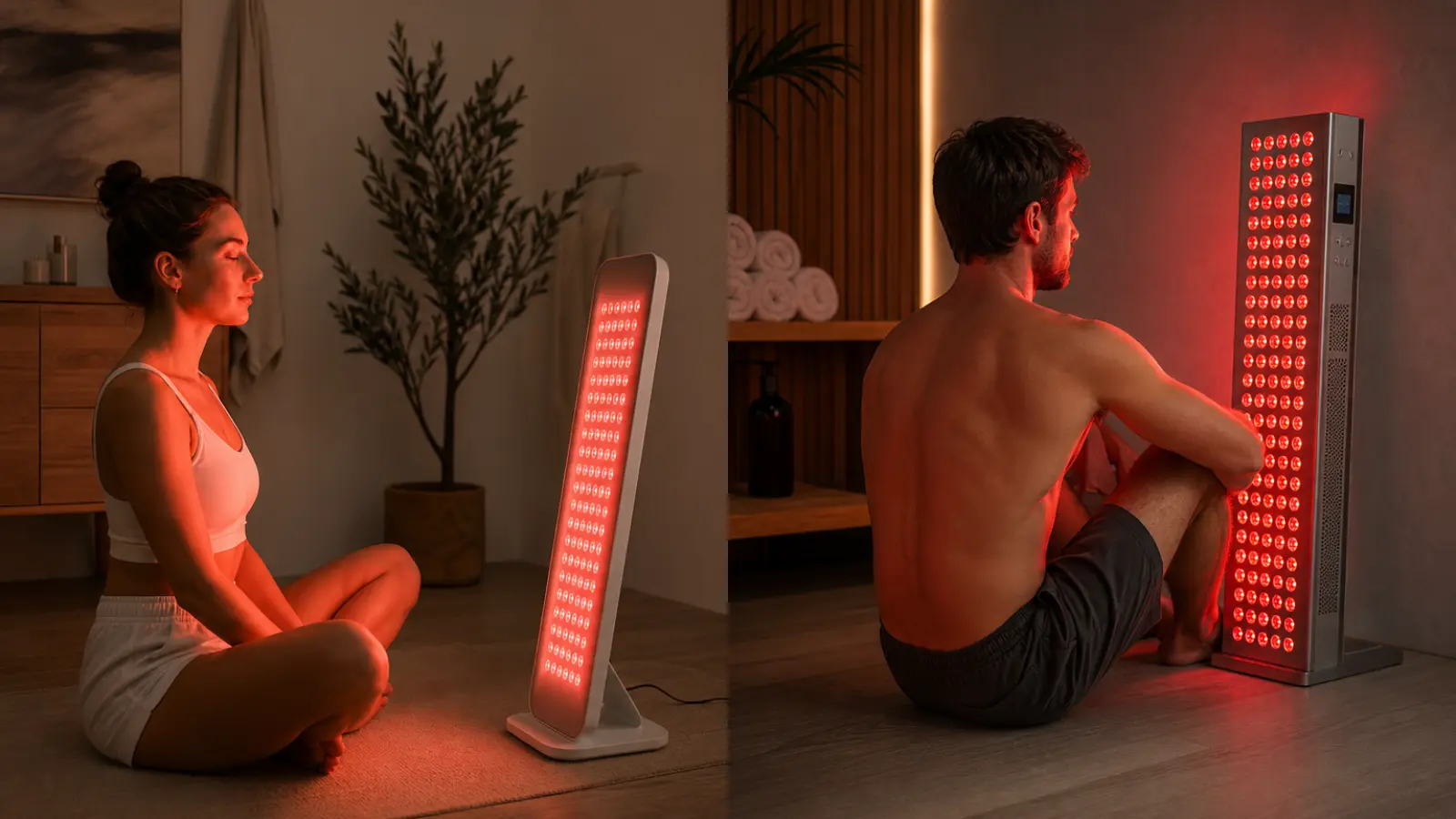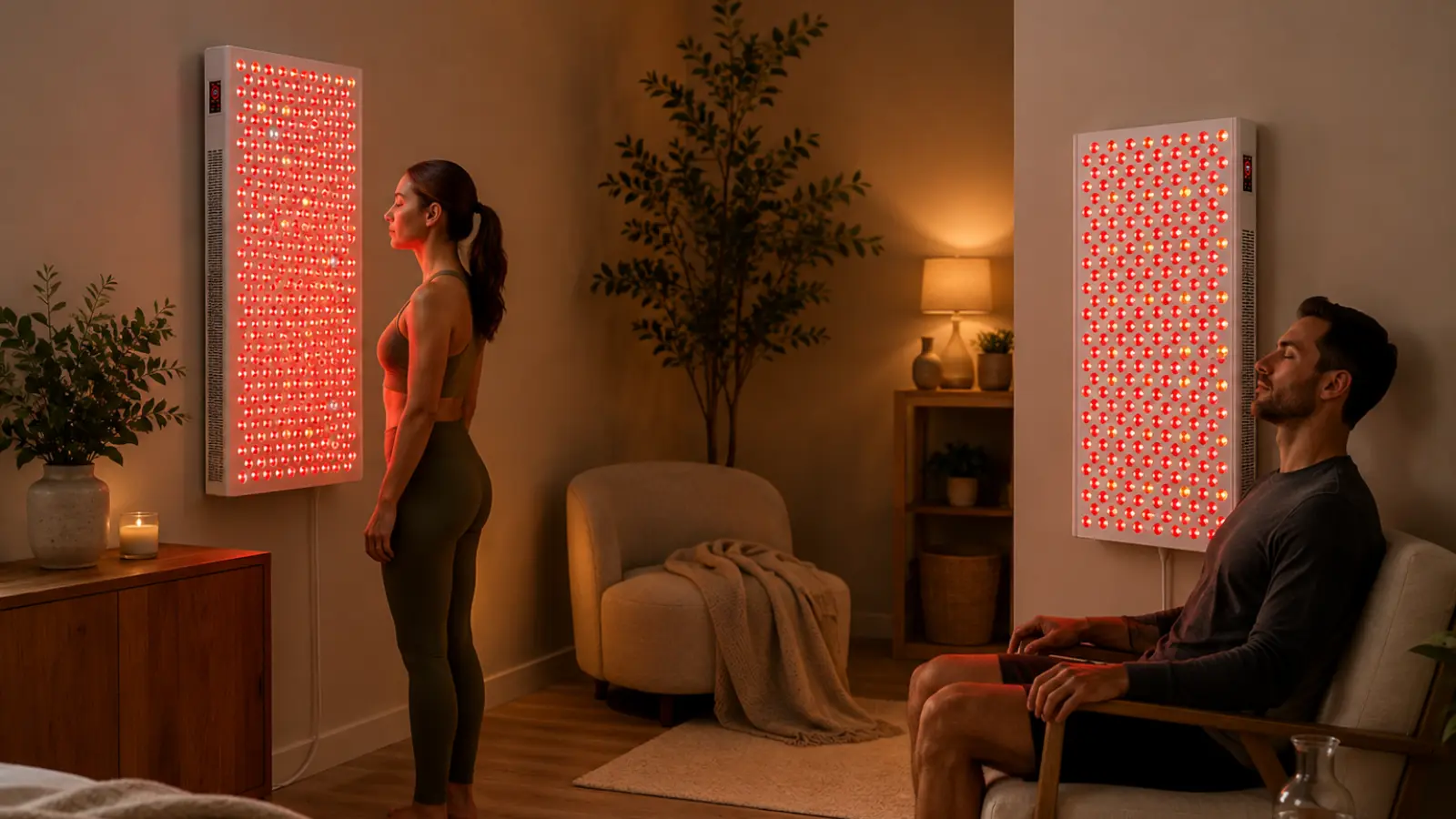

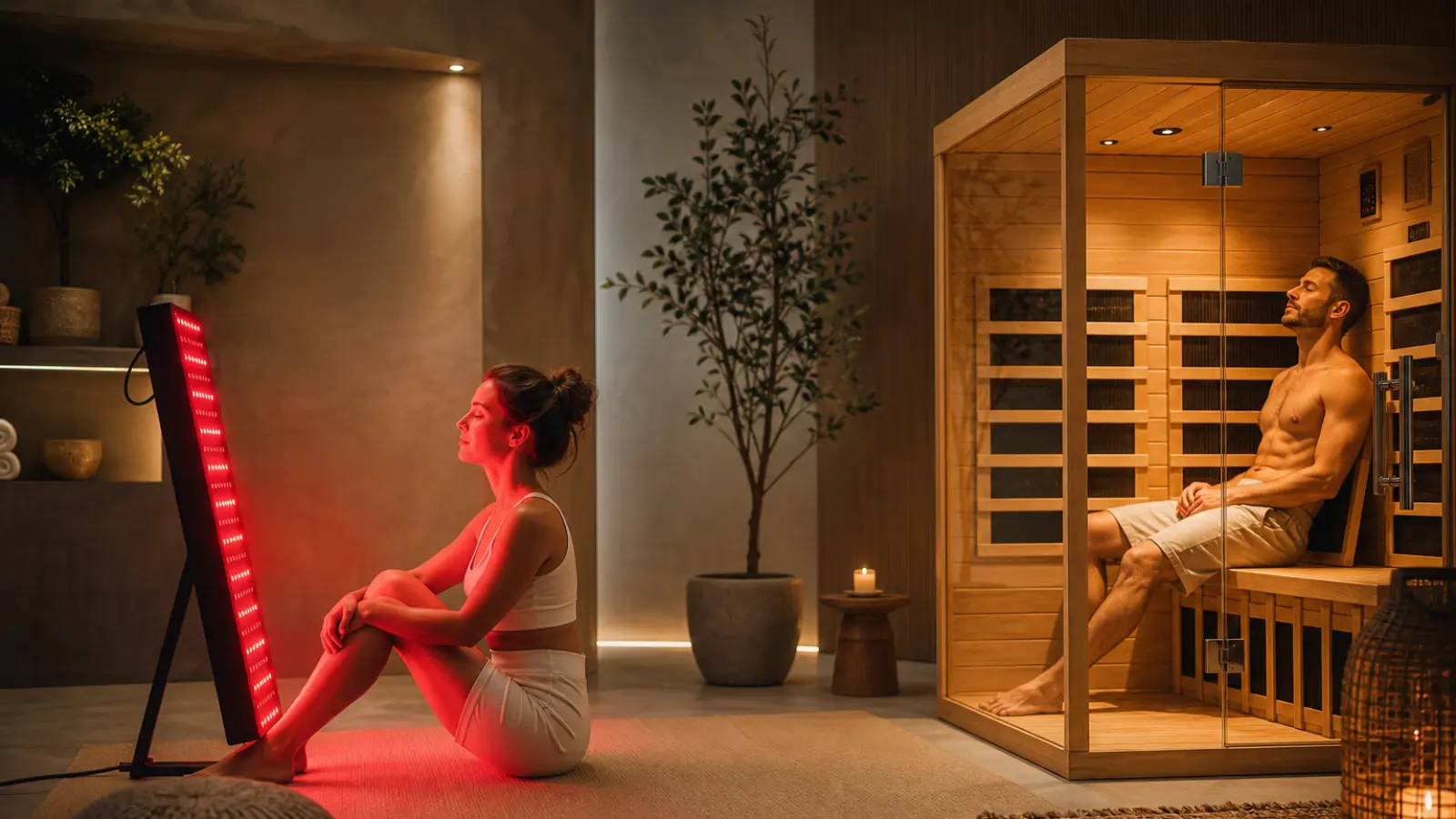
People often assume red light therapy and infrared saunas work the same way — both use invisible light, both produce warmth, and both are marketed for overlapping health benefits. But the mechanisms, effective doses, and applications are quite different. Here’s a clear breakdown.
The Fundamental Difference
Infrared saunas work primarily through heat. They use far-infrared radiation (3,000-10,000nm wavelengths) to warm the body from the inside out, elevating core temperature and triggering heat shock responses, cardiovascular effects (heart rate elevation, increased cardiac output), and profuse sweating. The therapeutic benefits come from the thermal stress response.
Red light therapy works through photobiomodulation — specific wavelengths (630-1070nm) are absorbed by cellular chromophores, particularly cytochrome c oxidase in mitochondria. The effect is cellular stimulation, not heat. A quality RLT panel produces mild warmth but does not meaningfully elevate core body temperature. Benefits come from direct cellular effects, not thermal stress.
Wavelength Comparison
| Feature | Red Light Therapy | Infrared Sauna |
|---|---|---|
| Wavelength range | 630-1070nm (visible + near-IR) | 3,000-10,000nm (far infrared) |
| Primary mechanism | Photobiomodulation (cellular) | Thermal (heat) stress response |
| Core temp increase | No | Yes — 1-3°C |
| Sweating | No | Yes — significant |
| Penetration depth | 2-10mm (varies by wavelength) | Primarily surface; heat conducts deeper |
| Session length | 10-20 minutes | 20-45 minutes |
| Cost (home) | $500-$3,000+ | $1,500-$8,000+ |
What Each Is Best For
Red Light Therapy Is Better For:
- Skin health and anti-aging — photobiomodulation directly stimulates collagen production; heat from saunas can actually damage collagen with excessive exposure
- Targeted joint and tissue treatment — localized application at specific sites
- Hair growth — scalp photobiomodulation with 650nm light
- Cellular energy and mitochondrial support — direct ATP production boost
- Daily use without recovery — no thermal stress means no need to “recover” from sessions
Infrared Sauna Is Better For:
- Cardiovascular conditioning — heat stress produces cardiovascular adaptations similar to moderate exercise
- Deep detoxification via sweating — helps mobilize and excrete heavy metals and fat-soluble toxins
- Systemic heat shock protein activation — profound HSP response with broader cellular protection effects
- Relaxation and parasympathetic nervous system activation — the sauna experience is deeply relaxing in ways RLT is not
- Metabolic rate boost — caloric expenditure during sessions (~100-300 cal/session)
Benefits Both Share
- Improved circulation and blood flow
- Reduced muscle soreness and improved recovery
- Anti-inflammatory effects (via different mechanisms)
- Improved sleep quality with consistent use
- Reported mood improvements and reduced stress
Can You Use Both?
Yes — and many biohackers and performance athletes use both as complementary tools. They address different mechanisms and aren’t redundant. A common protocol: red light therapy session first (10-15 min), followed by infrared sauna. The cellular priming from RLT may enhance the heat shock response from the sauna, though research directly studying this combination is limited.
Cost Comparison for Home Use
If budget is a constraint: red light therapy panels provide more applications per dollar and don’t require dedicated floor space, ventilation, or electrical infrastructure. A quality full-body panel runs $800-$2,500 and requires a standard outlet. A quality home infrared sauna runs $2,000-$8,000 and requires 20-30 square feet of dedicated space.
If you can afford and house both, they’re complementary. If you have to choose one: for most health goals, a quality red light therapy panel offers broader cellular benefits per dollar.