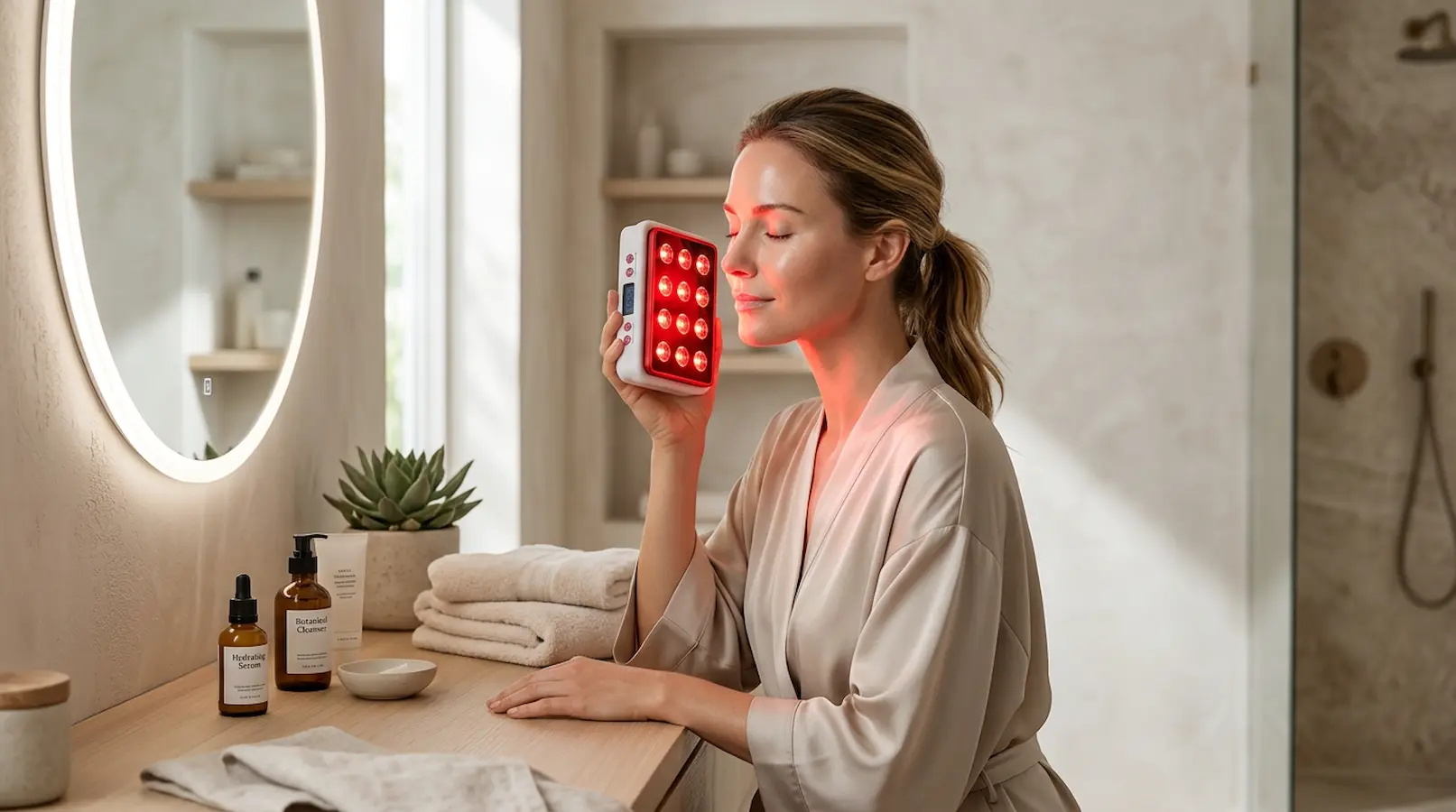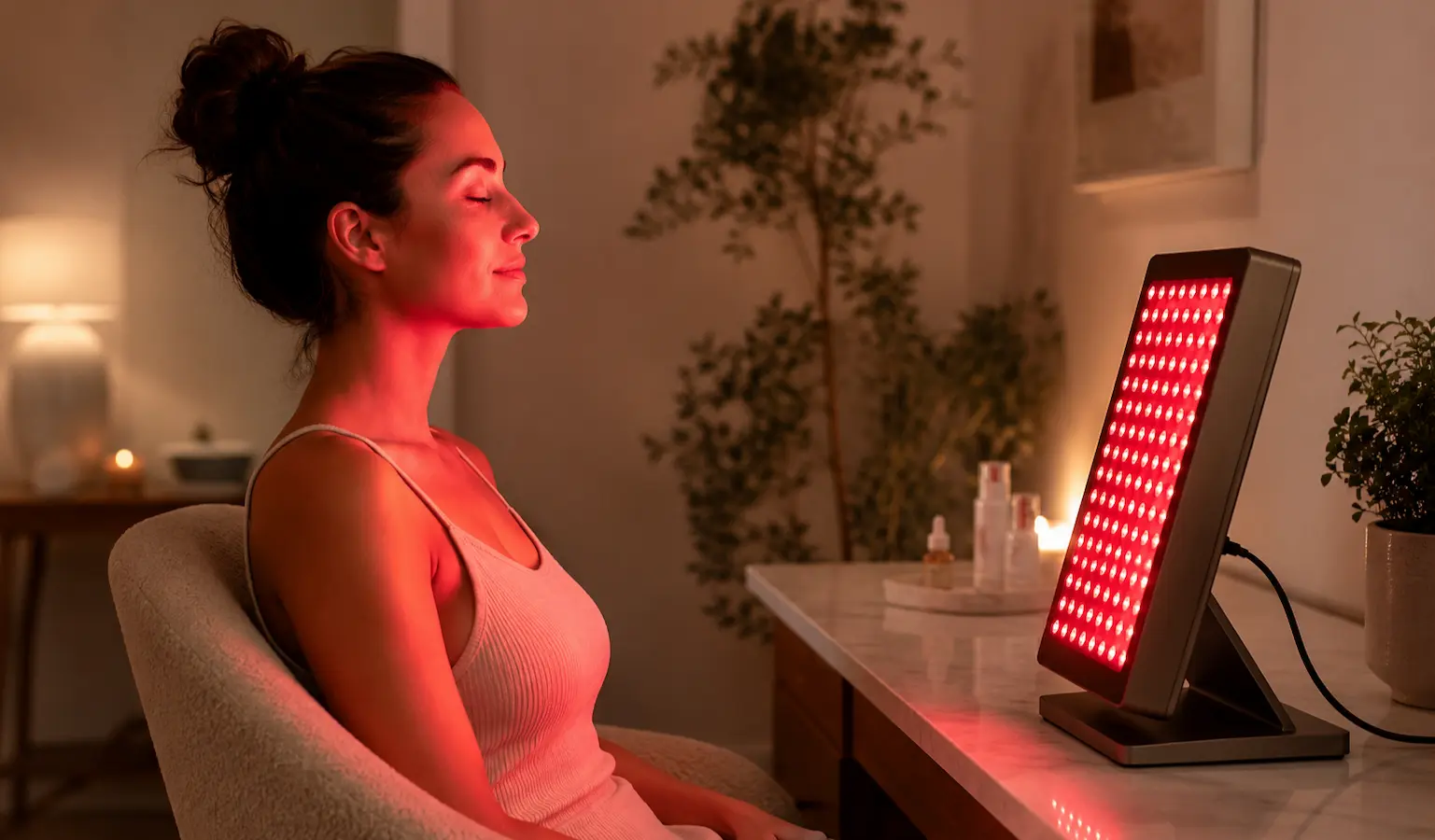
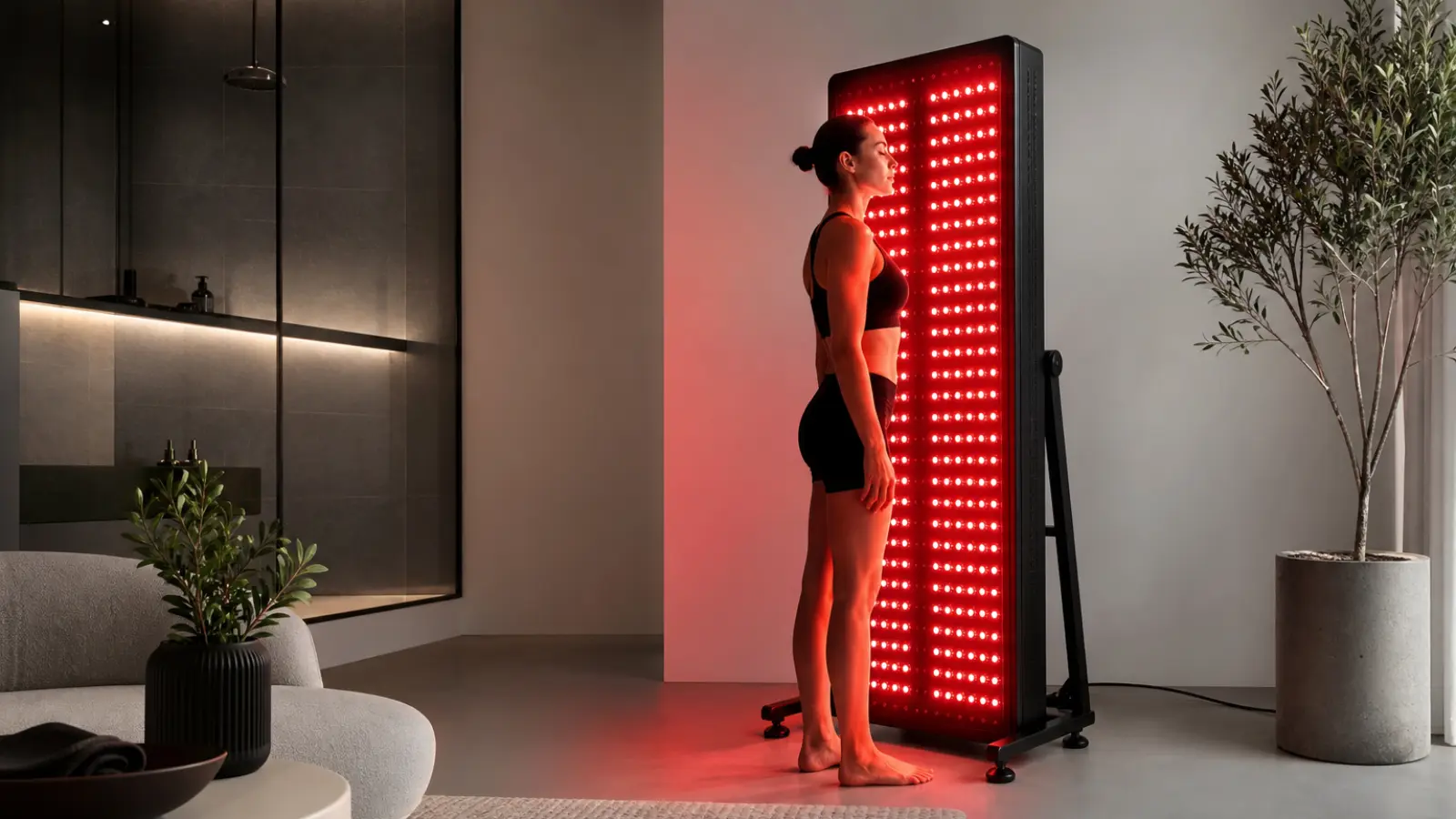
The Top Pick
The best red light therapy panel for home use in 2026 is the MitoADAPT 4.0 by Mito Red Light. No other consumer panel combines eight therapeutic wavelengths with 11 distinct operating modes in a single device. Its patent-pending TruDUAL™ multi-circuit architecture is a genuine engineering breakthrough — rather than simply offering more LEDs, it allows users to selectively activate different wavelength combinations, effectively replicating the capability of seven separate standard panels in one unit. For users who value personalization, adaptability as research evolves, and long-term value, the MitoADAPT 4.0 sets the benchmark.
Rankings in this guide are based on five weighted criteria: wavelength diversity, measured irradiance, coverage area, modularity/scalability, and value for money. Manufacturer specs are cross-referenced against independent third-party testing where available, and no fabricated data has been included.
Ranked Panels at a Glance
| # | Panel | Wavelengths | LED Count | Irradiance (6″) | Coverage | Price (Starting) | Best For |
|---|---|---|---|---|---|---|---|
| 1 | MitoADAPT 4.0 | 8 (590–940nm) | 144–576 chip | >106–140 mW/cm²* | Targeted → Full Body | $549 | Personalization & versatility |
| 2 | MitoPRO X | 6 (590–850nm) | 120–1200 chip | >130–160 mW/cm²* | Targeted → Full Body | $449 | High power + wavelength quality |
| 3 | PlatinumLED BIOMAX Pro Ultra | 7 (480–1060nm) | 432 chip | ~101 mW/cm² avg† | Half → Full Body | $1,599 | Maximum raw power |
| 4 | PlatinumLED BIOMAX 9th Gen | 7 (480–1060nm) | 200–300 chip | ~72–96 mW/cm² avg† | Targeted → Full Body | $649–$1,349 | Proven reliability + blue light |
| 5 | Joovv Solo 3.0 | 2 (660, 850nm) | 150 chip | ~72 mW/cm² peak† | Half Body (modular) | $1,699 | Modular ecosystem builders |
| 6 | Rouge Max G4 | 8 (multi-spectrum) | 576 dual-chip | ~71 mW/cm² avg† | Full Body | ~$2,599 | Full-body, multi-wavelength |
| 7 | Hooga PRO Series | 4 (630–850nm) | 60–900 chip | Up to ~189 mW/cm²* | Targeted → Full Body | $299–$3,099 | Budget-conscious upgraders |
| 8 | Hooga HG Series | 2 (660, 850nm) | 40–300 chip | 73–115 mW/cm²* | Targeted → Full Body | $149–$899 | Entry-level beginners |
| 9 | RLT Home Total Spectrum MAX | 7 (multi-spectrum) | 360 chip | ~100 mW/cm²* | Full Body | $1,795 | Anti-aging, skin health |
*Solar meter readings (manufacturer data). †Spectroradiometer/independent lab measurement. Solar and spectrometer readings differ significantly; see methodology note below.
Note on Irradiance Measurements: Two irradiance figures frequently appear for the same panel — one from consumer-grade solar meters and one from spectroradiometers. Solar meters read significantly higher than spectroradiometer measurements. Both are listed where available. Independent third-party spectroradiometer data is considered more scientifically accurate. Mito Red Light publishes both figures transparently.
#1 — MitoADAPT 4.0 (Mito Red Light)
Best for: Biohackers, protocol-driven users, and anyone who wants one device that adapts with evolving research
Launched in October 2025, the MitoADAPT 4.0 is the most versatile panel in the consumer red light therapy market. Its defining feature is the patent-pending TruDUAL™ chip design, which places multiple LED chips on separate circuits within a single lens package. This allows the device to emit eight distinct wavelengths — 590nm, 630nm, 660nm, 670nm, 810nm, 830nm, 850nm, and 940nm — and selectively combine them into 11 operational modes.
Key Specs:
- Wavelengths: 590nm (25%), 630nm (25%), 660nm (25%), 670nm (25%) — Red circuits; 810nm (25%), 830nm (25%), 850nm (25%), 940nm (25%) — NIR circuits
- LED Count: 144 chip (MIN) / 432 chip (MID) / 576 chip (MAX)
- Irradiance at 6″: >106–140 mW/cm² (solar meter) / >56–60 mW/cm² (spectroradiometer)
- Independent lab review (Adapt 4.0 Max): peak 74 mW/cm², average 58 mW/cm² at 6″
- Coverage: Targeted (MIN) → Full body (MAX at 36″×12″)
- Certifications: ETL electrical safety, UL General Medical Equipment, FDA Class II OTC, ISO 13485, MDSAP
- Warranty: 3 years | Return: 60 days
- Price: $549 (MIN) — $1,499 (MAX single panel)
Eleven Modes at a Glance:
| Mode | Wavelengths Active | Intended Use Case |
|---|---|---|
| 1 – Full Spectrum | All 8 | Full-body rejuvenation, daily baseline |
| 2 – Red Spectrum | 590, 630, 660, 670nm | Skin tone, fine lines, surface healing |
| 3 – Segmented Red + NIR | 660, 670 + 810–940nm | Zone targeting (face/skin + joints) |
| 4 – Amber + NIR | 590, 630 + 810–940nm | Circulation, thyroid, neurovascular |
| 5 – Deep NIR + Red | 850, 940 + red | Muscle recovery, lymphatic drainage |
| 6 – Mito-NIR + Red | 810, 830 + red | Cognitive support, cellular vitality |
| 7 – Red Only (Collagen) | 660, 670nm | Collagen synthesis, post-procedure healing |
| 8 – Amber Red Only | 590, 630nm | Sensitive skin prep, vascular tone |
| 9 – Deep NIR Only | 850, 940nm | Joints, bone-adjacent tissue |
| 10 – Core NIR Only | 810, 830nm | Brain performance, sleep rhythm |
| 11 – Broad NIR Only | 810, 830, 850, 940nm | Systemic recovery, athletic performance |
Pros:
- Only consumer panel offering 8 wavelengths including both amber (590nm) and deep NIR (940nm)
- 11 modes effectively replaces 7 standard single-purpose panels in one device
- Evenly distributed wavelength output — no single wavelength dominates
- Touchscreen control + Bluetooth app with session tracking and subjective feedback logging
- ETL + UL + FDA Class II certified; independently third-party tested
- Modular and scalable (MID + MAX combinations available)
- Transparent dual-measurement irradiance reporting
Cons:
- Spectroradiometer-measured average irradiance (~58 mW/cm²) is lower than competitors focused on raw power
- MitoADAPT panels are not cross-compatible with MitoPRO+ or MitoPRO X arrays
- Higher per-panel price versus basic competitors at the entry level
- 940nm lacks as extensive a human research base as 810–850nm range
Who It’s Best For: Users who want a single device with the flexibility to explore different wavelength protocols, support multiple wellness goals (skin, recovery, sleep, cognition), and adapt their routine as new research emerges. Excellent for households where multiple users have different goals.
#2 — MitoPRO X Series (Mito Red Light)
Best for: Users prioritizing high measured irradiance with multi-wavelength coverage
The MitoPRO X builds on Mito Red Light’s proven MitoPRO+ platform with an upgraded six-wavelength formula and modern user interface. It covers the validated therapeutic window comprehensively: 590nm, 630nm, 660nm (red) and 810nm, 830nm, 850nm (NIR), with careful spectral allocation guided by Cytochrome C Oxidase peak action spectra research.
Key Specs:
- Wavelengths: 590nm (6%), 630nm (22%), 660nm (22%), 810nm (17%), 830nm (17%), 850nm (17%)
- LED Count: 120 chip (300X) / 300 chip (750X) / 600 chip (1500X) / 1200 chip (MegaX)
- Irradiance at 6″: >130–160 mW/cm² (solar) / >60–73 mW/cm² (spectroradiometer)
- Coverage: Targeted (300X at 14.5″×9.5″) → Full body (MegaX at 64″×17″)
- TruDUAL™ dual-chip design with dual independent circuits
- Certifications: IEC 60601-1, IEC 60601-2-83, IEC 60601-1-2, FDA Class II, ISO 13485, MDSAP
- Warranty: 3 years | Return: 60 days
- Price: $449 (300X) — $1,299 (1500X) — $2,649 (MegaX)
Pros:
- Strong spectroradiometer-validated irradiance (>73 mW/cm² on 750X and 1500X)
- Comprehensive IEC 60601 medical device certifications
- Scales from targeted treatment to full-body with multiple size options
- Touchscreen control and Bluetooth app integration
- Six carefully proportioned wavelengths target CCOX peak action spectra
- One of the most competitively priced multi-wavelength panels per watt of output
Cons:
- Fewer wavelength modes than MitoADAPT 4.0 (Red / NIR / Both — 3 modes only)
- MitoPRO X is not modular with MitoADAPT or MitoPRO+ arrays
- 590nm allocation is modest (6%), limiting amber-specific benefits vs. MitoADAPT 4.0
Who It’s Best For: Users who want high measured power output, multiple clinically relevant wavelengths, and strong certifications — at a competitive price point. Ideal as a primary panel for targeted or half-body daily sessions.
#3 — PlatinumLED BIOMAX Pro Ultra
Best for: Users who prioritize maximum raw irradiance and seamless multi-panel expansion
The BIOMAX Pro Ultra is PlatinumLED’s flagship redesigned panel, launched in mid-2025. Independent testing confirmed an average irradiance of 101 mW/cm² across nine points — the highest average reading among major consumer panels tested by independent reviewers in 2025. The zero-gap frame design allows multiple panels to connect without dark spots between them, which is a significant advantage for users building a full-body setup.
Key Specs:
- Wavelengths: 480nm (2%), 630nm (9%), 660nm (39%), 810nm (5%), 830nm (5%), 850nm (36%), 1060nm (4%)
- LED Count: 432 single-chip LEDs (30% more than BIOMAX 900)
- Irradiance: Peak 120 mW/cm² / Average 101 mW/cm² (independent spectroradiometer)
- Dimensions: 36″×12″×3″, 31 lbs
- Zero-gap construction for seamless panel combinations
- Price: $1,599
Pros:
- Highest independently verified average irradiance among mainstream consumer panels
- Includes rare 1060nm deep NIR and 480nm blue light in addition to core spectrum
- Zero-gap design enables best-in-class multi-panel setups
- 20% more powerful than its predecessor, the highly regarded BIOMAX 900
- PlatinumLED’s 3-year warranty and strong brand reputation
Cons:
- 39% of light concentrated at 660nm; 36% at 850nm — most power in just 2 of 7 wavelengths
- Single-chip LED design; less wavelength flexibility than dual-circuit panels
- At $1,599, premium priced for a single panel
- Blue light (480nm) at 2% is a minimal dose; largely a marketing differentiator
Who It’s Best For: Power-focused users who want shorter treatment times, maximum tissue penetration per minute, and a zero-gap modular setup for whole-body coverage.
#4 — PlatinumLED BIOMAX 9th Generation
Best for: Reliability-focused buyers who want a proven multi-wavelength panel with voice control
The 9th Generation BIOMAX update added voice activation as its headline feature — a first in the consumer RLT market. The underlying spectral formula remains PlatinumLED’s well-regarded seven-wavelength R+|NIR+ spectrum. Independent testing of the BIOMAX 450 found peak irradiance of 96 mW/cm² and an average of 72 mW/cm². The full BIOMAX range (300, 450, 600, 900) is modular, allowing users to start with a smaller panel and add units over time.
Key Specs:
- Wavelengths: 480nm, 630nm, 660nm, 810nm, 830nm, 850nm, 1060nm
- LED Count: BIOMAX 900 — 300 LEDs; BIOMAX 450 — (proportionate)
- Irradiance (BIOMAX 450 tested): peak 96 mW/cm², avg 72 mW/cm²
- BIOMAX 900 specs: 36″×12″×3″, 33 lbs, 380W power draw
- Rated LED lifespan: 100,000 hours
- Price: BIOMAX 600 ~$1,049; BIOMAX 900 ~$1,349
- 3-year warranty, 60-day return
Pros:
- Industry-leading track record; extensive independent reviews confirm consistent performance
- Voice activation for hands-free control
- Includes 1060nm deep NIR (unique to PlatinumLED in this tier)
- Fully modular — panels connect seamlessly for larger treatment areas
- Well-documented spectral analysis available publicly
Cons:
- Power heavily concentrated at 660nm (39%) and 850nm (36%); other wavelengths receive a small fraction
- 1060nm deep NIR allocation at only 4% limits its therapeutic contribution
- More expensive than comparable Mito Red offerings for similar irradiance
- Pro Ultra’s launch has made the 9th Gen BIOMAX a step below PlatinumLED’s own flagship
Who It’s Best For: Users who want a well-proven, independently validated multi-wavelength panel with strong build quality, a modular pathway to full-body coverage, and PlatinumLED’s established brand support.
#5 — Joovv Solo 3.0
Best for: Users building a modular full-body system over time with strong ecosystem support
Joovv was among the earliest companies to bring red light therapy panels to mass consumer awareness, and the Solo 3.0 reflects that heritage with strong build quality, medical-grade standards, and a modular design that remains unique in how it connects panels. The Solo 3.0 delivers just two wavelengths (660nm and 850nm), but independent testing confirmed a peak irradiance of 72.4 mW/cm² and a total panel output of 84.9W — a notable improvement over its predecessor.
Key Specs:
- Wavelengths: 660nm and 850nm
- LED Count: 150 single-chip 3W LEDs
- Irradiance: Peak 72.4 mW/cm² (independent spectroradiometer)
- Total panel output: 84.9W
- Modular: connects to Joovv Mini, other Solo units for Half-Max, Max, Duo, Quad, Elite configurations
- FDA cleared (Class II), Bluetooth app, 10Hz NIR pulsing option
- Warranty: 2 years | Return: 60 days
- Price: $1,699
Pros:
- Industry-proven modular ecosystem — expand to full body at any time
- Strong Joovv app with session tracking and Bluetooth control
- 10Hz pulsing option on NIR channel
- Medical-grade build quality and FDA clearance
- Large and established customer support infrastructure
Cons:
- Only two wavelengths — significantly limited spectrum versus competitors at similar price
- At $1,699, the price-to-spec ratio is poor compared to Mito Red and PlatinumLED options
- 2-year warranty (vs. 3 years from Mito Red and PlatinumLED)
- Lower average irradiance than competitors at a higher price
Who It’s Best For: Users who are committed to the Joovv ecosystem, already own a Joovv device, or prioritize the brand’s long-standing reputation and modular connectivity over spectral diversity.
#6 — Rouge Max G4
Best for: Full-body, multi-wavelength coverage in a single floor-standing panel
The Rouge Max G4 is a full-body floor panel designed for users who want comprehensive coverage without assembling a multi-panel system. At 6 feet tall with 576 dual-chip 5W LEDs across 8 wavelengths, it is one of the few single panels that can treat the entire body simultaneously. An independent Reddit user reported solar meter readings of 146.4 mW/cm² at 6 inches and a spectrometer reading of 71 mW/cm². Named “Best Panel of the Year” by at least one independent reviewer for 2025.
Key Specs:
- Wavelengths: 8 optimized wavelengths (red and NIR spectrum)
- LED Count: 576 5W dual-chip, no-flicker
- Irradiance: 146.4 mW/cm² (solar meter) / ~71 mW/cm² (spectrometer) at 6″
- Power consumption: 900W
- Dimensions: ~72″ tall (full body coverage), 48 lbs
- Expected LED lifespan: 50,000 hours
- App remote control available
- Warranty: 3 years
- Price: ~$2,599 (Max G4)
Pros:
- True full-body coverage in a single panel
- 8 wavelengths on dual-chip LEDs
- No-flicker design and app control
- Strong community reviews for build quality
Cons:
- Large footprint — requires dedicated floor space
- Heavy (48 lbs) — not easily repositioned
- Higher price point for a single panel
- Irradiance (~71 mW/cm² spec) is lower than competing panels at shorter heights
- Less brand recognition in the US than Mito Red or PlatinumLED
Who It’s Best For: Users who want single-device, full-body coverage, have dedicated floor space, and value spectral breadth over top-end irradiance intensity.
#7 — Hooga PRO Series
Best for: Budget-conscious users who want dual-chip LEDs and modular expandability
The Hooga PRO Series is a middle-tier option that bridges the gap between the basic HG entry panels and premium offerings. Dual-chip LEDs emit four wavelengths (630nm, 660nm, 810nm, 850nm) simultaneously from each LED, improving light distribution across the treatment area. PRO panels support modular connectivity, allowing users to link units for larger coverage as their needs evolve. The PRO750 offers solid irradiance at $599, making it a competitive value option.
Key Specs:
- Wavelengths: 630nm, 660nm, 810nm, 850nm (quad-chip — all 4 from each LED)
- PRO750: $599, ~189 mW/cm² solar meter reading
- PRO1500: $1,199, 300 dual-chip LEDs, 36″×8.6″×3.1″, modular
- PRO4500: $3,099, 900 LEDs, full-body
- Flicker-free, modular connectivity
- 3-year warranty
Pros:
- Quad-chip LED design ensures even spectral distribution across treatment area
- Modular and expandable over time
- Competitive pricing versus major brands for similar specs
- Flicker-free technology for extended use comfort
Cons:
- Limited to 4 wavelengths — no amber or extended NIR
- Hooga’s brand reputation and customer service infrastructure is smaller than Mito Red or PlatinumLED
- Solar meter irradiance figures likely inflate real-world measurements
- Less elegant controls than Mito Red or PlatinumLED touchscreen interfaces
Who It’s Best For: Users who want more than a basic 2-wavelength panel but don’t need premium features, and who want the option to expand their setup modularly over time.
#8 — Hooga HG Series (HG300 / HG500 / HG1000)
Best for: First-time buyers and budget-conscious entry-level users
The Hooga HG series is one of the most value-accessible red light therapy lines available. With 660nm and 850nm wavelengths — the two most widely studied in photobiomodulation research — these panels deliver core therapeutic benefits without unnecessary complexity. The HG500 offers over 94 mW/cm² at 6 inches with 100 LEDs for just $359, making it one of the best value panels in its size class. The HG1500 ($899) provides full-body-adjacent coverage at 115 mW/cm².
Key Specs:
- Wavelengths: 660nm + 850nm (single-chip LEDs)
- HG300: 60 LEDs, 73 mW/cm², 12.2″×8.2″, ~$239
- HG500: 100 LEDs, 94 mW/cm², 18.8″×8.2″, $359
- HG1000: 200 LEDs, 98 mW/cm², 35.8″×8.2″, $599
- HG1500: 300 LEDs, 115 mW/cm², $899
- Built-in timer, door hanging kit, 3-year warranty
- Low EMF at recommended distance
Pros:
- Most affordable entry into clinically relevant wavelengths
- Solid irradiance figures for the price tier
- Simple operation — no app required
- Built-in timer and door hook included
- 3-year warranty at the budget tier is competitive
Cons:
- Only two wavelengths — no flexibility or customization
- Single-chip LEDs provide less uniform light distribution versus dual-chip designs
- No touchscreen, no app, no pulsing
- Not modular with PRO series or other brands
Who It’s Best For: Beginners testing red light therapy for the first time, users with limited budgets, or those who need a secondary targeted device for a specific body area.
#9 — RLT Home Total Spectrum MAX
Best for: Skin health and anti-aging focused users seeking a science-backed full-body panel
The RLT Home Total Spectrum MAX is a 49.2-inch full panel with 360 LEDs and seven wavelengths, including a blue light channel and a 1064nm deep NIR channel. It delivers 100.53 mW/cm² at 6 inches and supports pulsing frequencies from 0 to 5,000 Hz — one of the widest pulsing ranges in the consumer market. Seven preset performance modes plus a fully custom mode give users meaningful protocol flexibility.
Key Specs:
- Wavelengths: 7 (including blue, red, NIR, and 1064nm infrared)
- LED Count: 360
- Irradiance: 100.53 mW/cm² at 6″ (manufacturer data)
- Pulsing: 0–5,000 Hz
- Dimensions: 49.2″×11.8″×2.6″, 30.8 lbs
- Certifications: FDA, CE, RoHS
- LED lifespan: 100,000 hours
- Price: ~$1,795 (frequently discounted from MSRP $2,387)
- 3-year warranty
Pros:
- Broadest pulsing frequency range of any panel reviewed (0–5,000 Hz)
- 7 preset modes simplify protocol selection for new users
- Strong build quality reported in independent reviews
- FDA, CE, and RoHS certified
Cons:
- Higher MSRP; regularly sold at discount, making the “real” price somewhat ambiguous
- RLT Home is a newer brand with less community testing data than Mito Red or PlatinumLED
- Specific wavelength distribution breakdown not publicly detailed
- No Bluetooth app or smart home integration reported
Who It’s Best For: Users focused on skin anti-aging, comprehensive light coverage, and who want preset treatment protocols without manual customization.
What Makes a Good Red Light Therapy Panel?
Ideal Wavelength Ranges
Photobiomodulation (PBM) research identifies two primary “therapeutic windows” where light interacts with chromophores in human cells, particularly Cytochrome C Oxidase in the mitochondrial respiratory chain:
- 630–670nm (Visible Red): Penetrates the skin surface (up to ~4mm). Primary benefits include collagen stimulation, wound healing, surface inflammation reduction, and skin tone improvement.
- 810–850nm (Near-Infrared): Penetrates deeper tissues — reaching muscles, joints, tendons, and superficial organs. Used for muscle recovery, joint support, and deeper anti-inflammatory effects.
- 590nm (Amber): Emerging evidence suggests benefits for nitric oxide release, skin tone, and vascular health. Less extensively studied than red or NIR, but included in panels like the MitoADAPT 4.0 and MitoPRO X.
- 940nm and 1060nm (Extended NIR): Deepest-penetrating wavelengths in consumer panels. 940nm is relatively uncommon; 1060nm is available in PlatinumLED BIOMAX and RLT Home products. Research on extended NIR in consumer home applications is still emerging.
When multiple wavelengths are used simultaneously, they can work synergistically — shorter wavelengths that are extinguished at shallower depths allow longer wavelengths to continue deeper, effectively “saturating” a wider range of tissue with therapeutic light.
Irradiance vs. Distance
Irradiance — measured in milliwatts per square centimeter (mW/cm²) — is the most meaningful single spec for evaluating a panel’s real-world effectiveness. The key insight is that irradiance follows an inverse-square relationship with distance: doubling your distance from a panel reduces irradiance by approximately 75%. Positioning matters enormously.
For home use, the generally accepted optimal irradiance range is 20–200 mW/cm² at treatment distance:
- Skin surface applications (collagen, fine lines): 20–50 mW/cm²
- Pain relief and inflammation: 50–100 mW/cm²
- Deep tissue (muscles, joints): 100–200 mW/cm²
The therapeutic dose is calculated as:
Dose (J/cm²) = [Irradiance (mW/cm²) × Session Time (seconds)] ÷ 1000
A panel delivering 60 mW/cm² for 10 minutes (600 seconds) delivers 36 J/cm² — within the effective range for most applications (3–50 J/cm²).
Why Panel Size Matters
Panel size directly determines how much of your body receives light simultaneously:
- Small panels (under 12″): Targeted — face, knee, shoulder, neck
- Mid panels (12–24″): Upper or lower body segment coverage
- Large panels (36″+): Half-body or near-full-body coverage per position
- Full-body panels (60″+) or dual-panel arrays: Head-to-toe coverage in one session
Larger panels reduce total treatment time but are heavier, more expensive, and require more installation space. For most home users, a mid-to-large panel used in two positions (front and back) is sufficient.
Treatment Time vs. Power
Higher irradiance panels allow proportionally shorter sessions to achieve the same therapeutic dose. A panel at 100 mW/cm² requires half the session time of one at 50 mW/cm² to deliver equivalent joules. However, this relationship is bounded by the biphasic dose response (Arndt-Schulz Law) — excessively high doses can become inhibitory rather than therapeutic.
How to Choose the Right Panel for Home Use
Step 1: Define Your Primary Goal
| Goal | Wavelength Priority | Irradiance Target | Panel Size |
|---|---|---|---|
| Skin anti-aging, collagen | 630–670nm | 20–50 mW/cm² | Small–Mid |
| Muscle recovery, sports | 810–850nm | 50–100 mW/cm² | Mid–Large |
| Joint pain relief | 810–850nm + 940nm | 50–150 mW/cm² | Targeted–Mid |
| General wellness, energy | Full spectrum | 40–80 mW/cm² | Mid–Large |
| Full-body daily sessions | All ranges | 60–120 mW/cm² | Large or dual-panel |
Budget Tiers
- Under $400 (Entry-Level): Hooga HG series. Covers the two most researched wavelengths (660nm, 850nm). Excellent for first-time users or targeted use.
- $400–$800 (Mid-Range): MitoPRO X 300X, MitoADAPT MIN 4.0, Hooga PRO300/750. Gains multi-wavelength capability, better controls, and certifications.
- $800–$1,500 (Advanced): MitoPRO X 1500X, MitoADAPT MAX 4.0, BIOMAX 9th Gen, BIOMAX Pro Ultra. Full-body coverage, premium specs, validated irradiance.
- $1,500+ (Professional-Grade Home): Joovv Solo/Max systems, Rouge Max G4, MitoADAPT full-body combos. For serious users with dedicated space.
Small vs. Large Panels
Small panels (under 12″) excel at targeted applications — they can be placed precisely on a knee, face, or shoulder and used at close distances for concentrated dosing. Large panels are necessary for whole-body sessions. The downside of large panels is less flexibility for targeted use; the downside of small panels is that full-body coverage requires multiple repositioning steps.
Mounting Options
All reviewed panels support door hanging (over-door hook + cables). Most mid-to-large panels also offer:
- Floor stands: Best for freestanding use; easiest to reposition
- Wall mounts / L-brackets: Permanent, space-efficient
- Universal stands: Vertical or horizontal configurations; ideal for multi-panel arrays
- Door hangs: Most common; free with most panels
Frequently Asked Questions
Q: What size red light therapy panel should I buy?
For most home users, a 24–36-inch mid-to-large panel like the MitoPRO 750X, MitoADAPT MID 4.0, or BIOMAX 450 strikes the best balance between coverage, portability, and cost. A single 36-inch panel covers from shoulder to hip when standing and can be supplemented with targeted sessions. If full-body is the priority, consider a panel combo (e.g., MitoADAPT MID + MAX) or a purpose-built floor panel.
Q: Are bigger panels better?
Bigger panels cover more surface area per session, reducing total time in front of the device. However, irradiance per unit area does not automatically increase with panel size — larger panels spread output over a wider area. The key metric remains mW/cm² at your actual treatment distance, not panel size alone.
Q: How far should you sit from a panel?
For most full-size panels delivering 60–100+ mW/cm² at 6 inches, standing 6–12 inches away is the standard starting point. For skin-focused treatments, 12–18 inches provides a slightly lower but well-distributed dose. For deep tissue targets like joints or muscles, 1–6 inches maximizes penetration depth. Always verify the irradiance output at your chosen distance using the manufacturer’s published data.
Q: What is a good irradiance level?
For home use, panels delivering 40–120 mW/cm² at treatment distance cover most therapeutic applications effectively. Skin care and anti-aging work well at 20–50 mW/cm², while muscle recovery and deep tissue applications benefit from 50–150 mW/cm². Values above 200 mW/cm² at very close range may enter the inhibitory zone of the biphasic dose response.
Q: How often should you use a red light panel?
Most protocols recommend 4–5 sessions per week, 10–20 minutes per targeted body area at appropriate distance. Daily use is generally considered safe for healthy individuals. Starting at 3 days per week with 5–10 minute sessions and progressively increasing exposure is a common beginner approach to assess individual response.
Q: Does wavelength diversity really matter?
Based on available evidence, combining multiple wavelengths covering the 630–670nm and 810–850nm ranges provides broader and potentially synergistic tissue coverage compared to single or dual-wavelength panels. Whether extending beyond these core ranges to amber (590nm) or 940nm/1060nm offers meaningful additional benefit at home dosing levels is still being studied. Panels covering the 5-wavelength core (630, 660, 810, 830, 850nm) have the strongest research backing.
Q: What certifications should I look for?
At minimum, look for ETL or UL electrical safety certification and FDA OTC Class II device status. For highest confidence, panels with IEC 60601-2-83 (specific to home light therapy equipment), ISO 13485 manufacturing certification, and independently published third-party irradiance test data offer the greatest transparency and safety assurance.
Q: Can multiple panels be combined?
Yes, and this is the most cost-efficient path to full-body coverage. Brands like Mito Red Light, PlatinumLED, Hooga PRO, and Joovv all offer modular systems where panels connect to each other via rails or frames. Note that within the Mito Red ecosystem, MitoADAPT panels and MitoPRO panels are not cross-compatible — plan your setup within one panel family from the start.
Q: Is red light therapy safe for home use?
Red light therapy as delivered by the reviewed panels — at the wavelengths (600–1000nm) and irradiance levels typical of home devices — has a strong safety profile in peer-reviewed literature. The primary precautions are eye protection (goggles are typically included), avoiding use over active cancers without physician guidance, and monitoring for photosensitizing medications. None of the panels in this guide emit UV radiation. All reviewed panels note flicker-free and low-EMF designs.
Why the MitoADAPT 4.0 Wins: Technical Summary
The MitoADAPT 4.0’s lead over competitors rests on three technical differentiators that no other consumer panel currently replicates simultaneously:
- Wavelength breadth (8 wavelengths including 590nm amber and 940nm deep NIR): Most panels focus 70–80% of power on just two wavelengths. The MitoADAPT 4.0 distributes output equally across all eight, ensuring each wavelength contributes meaningfully to the session rather than serving as a minor additive.
- Mode architecture (11 combinations from a single device): Achieved through the patent-pending TruDUAL™ multi-circuit design where each LED lens package contains multiple independent chip circuits. This means a user can run amber-only, core NIR-only, deep NIR + red, or full-spectrum in the same session or on different days — without purchasing additional hardware.
- Adaptability as science evolves: Because the MitoADAPT 4.0 covers a wider spectral range than any competing panel, users can continue refining their protocol as emerging research clarifies optimal combinations for specific goals. A device with 2 or even 5 fixed wavelengths cannot serve a newly validated amber protocol or a deep NIR protocol without purchasing additional equipment.
The tradeoff is that the MitoADAPT 4.0’s spectroradiometer-measured irradiance (~58–74 mW/cm²) is lower than the BIOMAX Pro Ultra’s 101 mW/cm² average, because the same total output is distributed across eight wavelengths rather than concentrated in two. For users who prioritize maximum raw power over spectral diversity, the BIOMAX Pro Ultra (#3) is a legitimate alternative. For everyone else — and for most home users whose sessions target multiple goals — the MitoADAPT 4.0’s combination of breadth, personalization, smart controls, and transparent certifications makes it the most well-rounded choice in the 2026 market.
References
- Mito Red Light Launches MitoADAPT 4.0 — A Next-gen, Multi-wavelength Panel. Designed for home use, MitoADAPT 4.0 offers 11 unique wavelength modes, enabling users to explore different protocols.
- Mito Red Light — MitoADAPT 4.0 Overview (YouTube). The Swiss Army knife of red light panels.
- MitoPRO X | Red Light Therapy Panel Series. Dimensions: 23″ X 10″ X 3″; LED Peak Wavelengths: 590nm, 630nm, 660nm, 810nm, 830nm and 850nm.
- MitoADAPT 4.0 | Red Light Therapy Panel Series. With 8 Wavelengths and eleven modes, the MitoADAPT 4.0 is equivalent to 7 standard devices in one.
- Mito Red Adapt 4.0 Max Review — Light Therapy Insiders. Peak irradiance: 74 mW/cm²; Average irradiance (9-point test): 58 mW/cm².
- Red Light Therapy Panels 2026: What’s New & What Matters. Mito’s new Adapt 4.0 introduces eight wavelengths and keeps the 590 nm amber.
- MitoPRO™ X | Red Light Therapy Panel Series. Dimensions, 14.5″ X 9.5″ X 2.5″.
- BioMax Ultra PRO Panel Review: Overpowered & Overpriced? PlatinumLED’s new Biomax PRO Ultra panel boasts a 20% power increase.
- New BioMax Pro Panel vs BioMax 9th Gen. The Pro Ultra packs 30% more LEDs.
- Biomax Pro Ultra Review: PlatinumLED’s Most Powerful Panel. Price & Value — retails for $1,599.
- New 9th Gen PlatinumLed BioMax Review. Near Infrared Light (810nm, 830nm, 850nm, 1060nm).
- The Most Powerful Red Light Therapy Panel Ever Made? (YouTube). The Biomax PRO Ultra features 7 different wavelengths.
- PlatinumLED Therapy Lights: BIOMAX 900. Number of wavelengths: 7; Dimensions: 36″ x 12″ x 3″.
- NEW 9th Gen PlatinumLed BioMax Review: Check THIS Out!
- BioMax 900 Review: The Most Epic Panel On The Market? (YouTube)
- Best Red Light Therapy Panel 2025: Epic Comparison.
- Joovv Solo 3.0 Review: Bad Value But Great Bells & Whistles.
- Joovv’s Next Generation Difference.
- Joovv Solo 3.0 Quick Review — Decent BUT That Price (YouTube).
- Joovv Solo 3.0 Review: Super-Important Info Revealed! (YouTube)
- Joovv Red Light Therapy Limited Warranty. The Joovv Generation 2.0 and 3.0 modular devices come with a 60-day return period and a 2-year warranty.
- Joovv vs. PlatinumLED vs. Mito Red Light: Comparing the Best Red Light Therapy Panels.
- Rouge Max G4 — Rouge Care. A full-body red light therapy panel with eight optimized wavelengths.
- Review of Rouge Max G4 (Reddit r/redlighttherapy). Panel: 48lbs.
- Best Red Light Panel 2025: BioMax Pro Ultra vs Rivals.
- Hooga Red Light Therapy Panels Compared: HG, PRO & ULTRA.
- HG vs Pro vs Ultra: Which Hooga Red Light Therapy Panel Is Best?
- PRO Series Red Light Therapy Panels | Dual-Chip LEDs — Hooga. Up to 189 mW/cm² irradiance at 6 inches.
- Hooga PRO1500 Red Light Therapy Panel — Recovery For Athletes.
- HG500 Red Light Therapy Panel | Mid-Size 660nm 850nm Device.
- The Hooga HG300 for Red Light Therapy At Home — Rehabmart.com. Irradiance: 73 mW/cm² at 6″.
- Total Spectrum MAX Red Light Therapy Panel for Home, 360 LEDs. Pulsing frequencies from 0 to 5,000 Hz.
- Is RLT Home Red Light Therapy The Ultimate Anti-Aging Skincare Solution?
- Red Light Wavelength: Everything You Need to Know.
- Unlocking the Power of Light on the Skin — PMC/NIH. Photobiomodulation (PBM) is a safe phototherapy.
- Photobiomodulation effects of pulsed-NIR laser (810 nm) and LED (630 nm).
- 630nm vs 850nm: Red and Near-Infrared Light Compared — Lumaflex.
- What Is the Best Distance for Red Light Therapy? — Lumebox.
- What To Look for in a Red Light Therapy Panel: Buying Guide.
- The Complete Red Light Therapy Dosage Guide: Science-Based.
- Red Light Therapy Irradiance: Dosage Guide For Best Results.
- Irradiance vs. Fluence: The Math of Effective RLT Dosage.
- Red Light Therapy Dosage: What’s the Right Dose for Your Condition?
- 2026 Clinic Red Light Therapy Panel Buying Guide & Scorecard.
- The Distance Rule: How Far Should You Stand From Your Panel?
- Mito Red Light Launches MitoADAPT 4.0 — Patent-pending TruDUAL™ Multi-wavelength Panel.